The air does not cool when the sun goes down. That is the first thing you notice when summer grips the southern coast.
In a city built entirely of vertical stone and reflective glass, the night offers no sanctuary. I remember standing on a narrow balcony in North Point past midnight, watching the humidity cling to the facade of a fifty-story residential tower like a damp shroud. My shirt was soaked just from standing still. Down below, the street swallowed the day's trapped energy, radiating it back upward in steady, invisible waves.
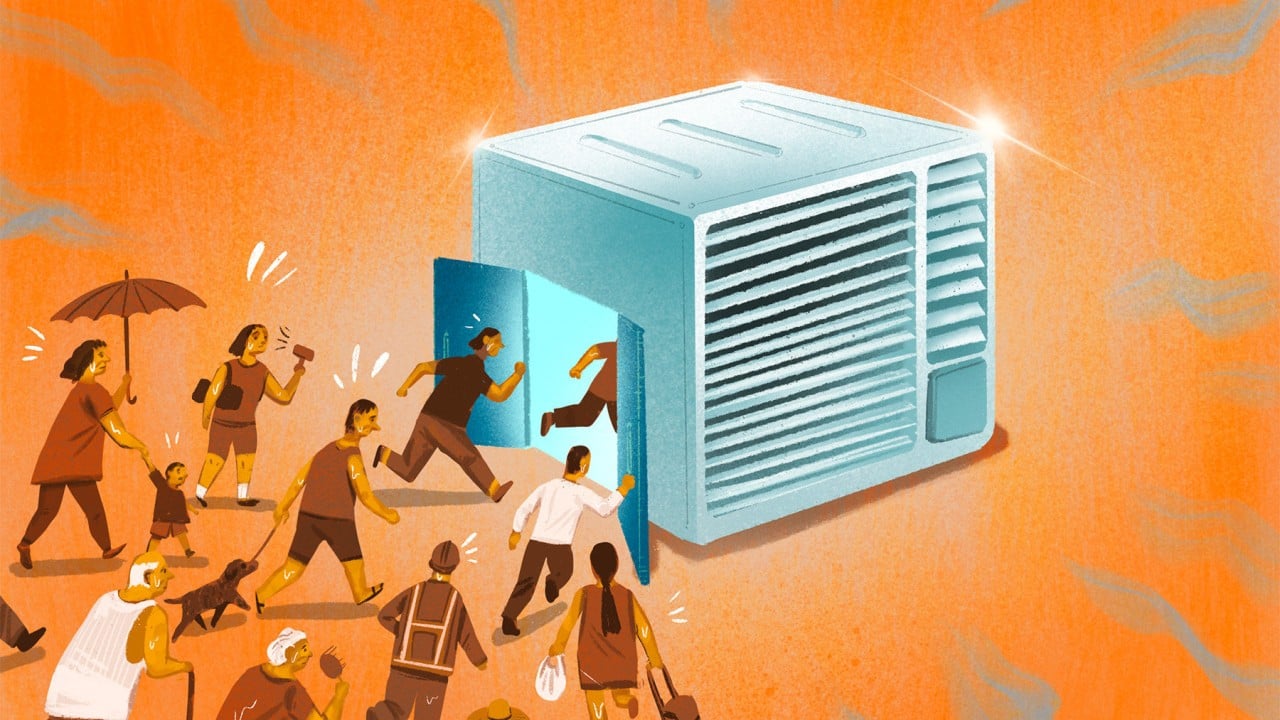
Air conditioning units hummed a deafening, unified chorus from every window frame, dripping hot condensation onto the pavement below. Inside those apartments, elderly residents lay beneath thin sheets, listening to the whir of electric fans pushing heavy air across skin that refused to dry. They are the invisible casualties of an urban climate that has quietly rewritten its own rules.
Hong Kong is running a fever. And the thermometer is still climbing.
The Architecture of a Heat Trap
To understand why this city bakes while other coastal areas find relief, you have to look down at the ground and up at the sky.
Urban climatologists call it the urban heat island effect, but that clinical term fails to capture the physical reality of living inside a pressure cooker. Imagine a dense grid of towering canyons carved out of granite and steel. When sunlight strikes these surfaces during the day, materials like asphalt and concrete greedily absorb the thermal radiation. They store it. They hoard it.
As evening arrives, instead of releasing that heat into the open sky, the closely packed skyscrapers trap it in a perpetual loop of reflection and absorption. Street-level wind corridors—the natural sea breezes that once swept off Victoria Harbour—are blocked by unbroken walls of high-rise development. The wind dies. The heat stays.
Consider the numbers behind the sweat. Urban temperature anomalies in Hong Kong routinely push readings several degrees higher in built-up districts like Sham Shui Po or Mong Kok compared to the rural country parks just a short distance away. When ambient daytime temperatures cross critical thresholds, the city's elderly population faces a stark biological limit. The human body cools itself by sweating, but when the air is already saturated with moisture and trapped by concrete, sweat refuses to evaporate. The cooling mechanism fails.
The stakes are not theoretical. They are measured in emergency room admissions, rising electricity grids teetering under peak loads, and restless nights where sleep becomes an impossible luxury for anyone without a reliable climate-control system.
The Human Cost Behind Closed Doors
Mrs. Wong lives on the twelfth floor of a tenement building in Kowloon. She is eighty-two years old, and her world has shrunk to the dimensions of a three-room flat with single-pane windows that catch very little cross-breeze.
(Note: Mrs. Wong is a composite character based on recurring demographic interviews and public health data concerning urban vulnerability during extreme weather events.)
For decades, she has managed the seasonal heat with stoic resignation. But the summers of recent years are different. The heat does not break with a sudden autumn storm; it lingers deep into October, stretching the physiological burden across months rather than weeks. Her small electric fan churns warm air, offering little more than the illusion of comfort.
When the mercury stays above thirty degrees Celsius well into the night, the human cardiovascular system remains locked in overdrive. The heart pumps harder to push blood to the skin for cooling, placing immense strain on individuals with underlying health conditions. For those living in subdivided flats—notoriously cramped, partitioned apartments where airflow is virtually nonexistent—the indoor temperature can easily exceed the outdoors.
It is a silent crisis. There are no dramatic floods or dramatic tremors to broadcast on the evening news. There is only the quiet accumulation of heat stress, eroding health one sleepless night at a time.
Rewriting the Blueprint for Survival
Adapting a high-density metropolis to an overheating planet requires a radical shift in how we think about urban design. You cannot simply bulldoze the skyline. You have to change how the city breathes.
Government planners and environmental scientists have begun mapping urban ventilation corridors, identifying specific pathways where sea breezes must be protected from future high-rise blockades. These are not merely aesthetic green spaces; they are ecological lungs. If you allow wind to sweep through the urban core, you flush out the trapped thermal mass before it can settle over residential neighborhoods.
At the same time, the surface of the city itself is undergoing a quiet transformation. Traditional dark asphalt, which acts as a thermal sponge, is gradually being tested alongside cool-pavement coatings and high-albedo roof treatments. Paint a roof white, and you reflect solar radiation back into the atmosphere rather than letting it soak into the building's top-floor apartments.
Vertical greening is moving from a decorative luxury to an infrastructural necessity. Covered exterior walls and rooftop gardens do more than look pleasant on architectural brochures. Plants cool the surrounding air through transpiration, acting as natural evaporative air conditioners for entire city blocks.
Yet, hardware and architecture are only half the battle. The social fabric must be woven just as tightly as the physical infrastructure. Community networks play an indispensable role when the heat index spikes. Neighborhood watch groups, volunteer welfare organizations, and localized alert systems ensure that elderly residents living alone receive check-ins, hydration supplies, and temporary access to air-conditioned community cooling centers before heat exhaustion turns into a medical emergency.
The Path Forward
The changing climate does not negotiate with human schedules. Every summer now serves as a testing ground for the resilience of our urban systems, challenging the limits of engineering, public health, and social equity.
We can no longer treat extreme heat as a temporary inconvenience. It is the new baseline of urban existence. The future of the city will not be decided by how tall we can build, but by how well we can protect the lives unfolding in the shadows of those towers when the temperature refuses to drop.
Midnight approaches, and the neon signs of Victoria Harbour cast a long, shimmering glow across the water. Up in the concrete canyons, the air remains heavy, waiting for a wind that has yet to arrive.