The sound of Central Park South isn’t the sirens, the chatter of tourists, or the hum of yellow cabs. It is the rhythmic, metallic clatter of iron shoes striking asphalt. For over a century, that sound has been marketed as romance on four legs. It is the backdrop of cinematic proposals, holiday postcards, and the collective fantasy of a gentler, slower New York City.
Then the pavement meets the heat of midsummer, or the blinding rush of cross-town traffic, and the fantasy cracks wide open.
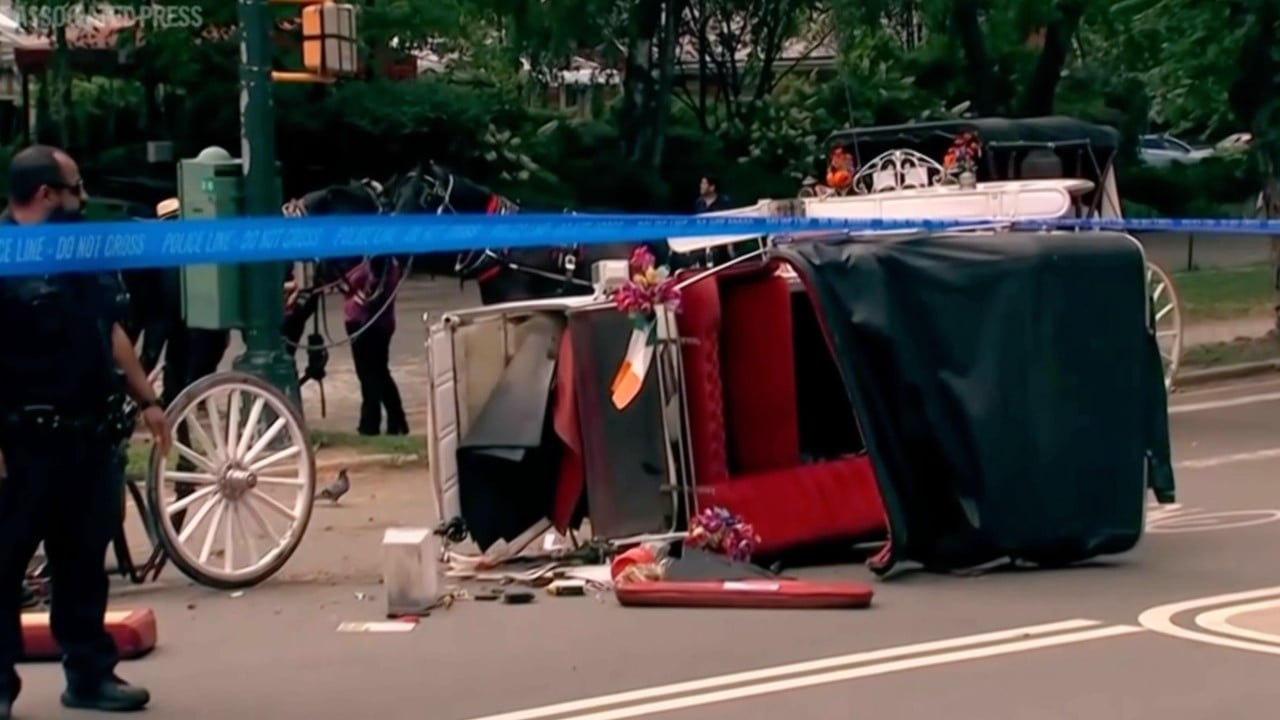
A few months ago, that crack became a chasm. An Indian teenager, visiting the city with his family, stepped into the crosscurrents of Manhattan traffic near the park. In a chaotic sequence of events involving a spooked horse, a heavy wooden carriage, and the unforgiving physics of a crowded boulevard, the boy’s life was cut short. His name joined a quiet, tragic ledger of people and animals broken by an anachronism.
Now, the city hall corridors are echoing with a debate that has simmered for decades but has finally reached a boiling point. The Mayor of New York City is pushing for a permanent end to the horse-drawn carriage industry.
It is a battle fought in the name of progress, safety, and animal welfare. But beneath the political grandstanding lies a deeper truth about how we treat the living elements of our history when they no longer fit into the modern world.
The Weight of Two Worlds
To understand why this practice persists, you have to stand at the corner of 59th Street and Fifth Avenue during rush hour.
Picture a draft horse. Let us call him Max—a hypothetical composite of the hundreds of horses working these streets today. Max weighs roughly 1,800 pounds. His ancestors were bred to pull plows through soft, yielding earth, or to haul timber across forest floors. His hooves are wide, designed to distribute weight over soil.
Instead, Max spends eight hours a day on stone.
On a typical July afternoon, the ambient air temperature in New York might hit 90 degrees. But asphalt acts as a thermal sponge. At ground level, where Max’s nostrils are positioned just feet above the exhaust pipes of idling tour buses, the temperature radiates at well over 110 degrees. He is surrounded by a sensory blitzkrieg: air brakes hissing, bike couriers darting past his blind spots, construction crews operating jackhammers, and thousands of pedestrian smartphones flashing in his periphery.
Horses are prey animals. Their evolutionary survival mechanism is simple: when terrified, run.
When a horse spooks in a pasture, it runs until the danger fades. When a horse spooks on Central Park South, it runs into a two-ton SUV. The carriage behind it becomes a battering ram. The result is rarely a minor fender bender. It is broken bones, shattered wood, and, as we have tragically learned, lost lives.
The argument from the carriage drivers has always been rooted in tradition and livelihood. These are often multi-generational family businesses. They argue that their horses are family members, cared for with deep affection, stabled properly, and vetted regularly. They see themselves as the last guardians of Old New York, a living connection to an era before the combustion engine sterilized the streets.
But tradition is a fragile shield against a changing ecosystem.
The Math of Modern Danger
The reality is that New York City in the twenty-first century is not the New York City of 1860, when the carriage trade was the standard mode of transit. The density of the city has transformed the activity from a leisurely stroll into a high-stakes obstacle course.
Consider the physical toll on the streets. Data from urban safety studies reveals a stubborn pattern of incidents involving horse carriages in Manhattan over the last two decades. Horses collapsing from heat exhaustion, bolts into traffic caused by sudden noises, and collisions with vehicles are not anomalies. They are structural certainties when you mix unpredictable animals with high-density urban transit.
Let us look at the mechanics of a modern carriage ride through an intuitive analogy.
Imagine driving a vehicle with no steering wheel, a braking system that relies entirely on the verbal compliance of a living being, and a navigation system driven by instinct rather than logic. Now, operate that vehicle on a road where every other driver is moving at twice your speed and looking at a screen.
It is a recipe for disaster. The tragedy involving the young tourist from India was not an unpredictable act of God. It was the statistical inevitability of an outdated system failing under modern pressure.
The Mayor’s current push focuses on a transition. The proposal is not merely to ban the carriages and leave the drivers destitute, but to replace the horses with electric, vintage-styled brass-era replicas. The drivers would keep their medallions, their tour routes, and their livelihoods. The tourists would still get their nostalgic journey through the park.
The only thing missing would be the heartbeat.
The Cost of Moving On
Change is rarely clean. The resistance from the industry is fierce because it touches on identity. To a driver who has spent thirty years holding the reins, an electric car is a soulless substitute. It lacks the personality, the bond, and the ancient partnership between human and beast.
There is also the question of the horses themselves. If the industry closes tomorrow, where do these animals go? Animal advocacy groups promise sanctuaries and green pastures. History suggests that the sudden influx of hundreds of massive, expensive-to-feed draft horses into the rescue market can overwhelm the system. It is a logistical puzzle that requires more than just sentimentality to solve; it requires significant funding and long-term oversight.
Yet, holding onto a dangerous tradition out of fear of the transition is a failure of imagination.
The tragedy of a young life cut short during a family vacation cannot be brushed aside as the cost of doing business or preserving charm. A city that prides itself on being the capital of the modern world cannot continue to tolerate a spectacle that risks the lives of its visitors and relies on the exploitation of animals in an environment they were never evolved to endure.
The debate will continue to rage in city council meetings, on opinion pages, and along the crowded sidewalks of Central Park. All the while, the horses keep walking, their shoes hitting the pavement in that steady, hypnotic rhythm.
But the music has changed. The romance is gone. Every clack of a hoof against the asphalt now sounds less like a callback to a golden age, and more like a countdown to the next collision.
The city is moving forward, as it always does. The iron shoes are losing their grip on the concrete, and the shadows of the skyscrapers are growing longer, waiting for the day when the park belongs entirely to the living, and the ghosts of the old ways are finally allowed to rest.


