A plastic chair scrapes against a linoleum floor in Nuuk. Outside, the wind off the Labrador Sea carries the scent of frozen salt and wet granite, a smell that hasn't changed since the Norse longships first drifted into these fjords. Inside, a local official stares at a map of Greenland that looks less like a country and more like a massive, jagged tooth of ice.
For generations, the world viewed this place as a geographic afterthought. It was a vast white void on the flight path between New York and London.
Not anymore.
The ice is thinning. As it retreats, it exposes ancient, dark rock that holds something the modern digital economy cannot live without. Neodymium. Praseodymium. Dysprosium. These are not household names, but they are the silent fuel of the twenty-first century. They run the motors in electric vehicles, spin the turbines of wind farms, and guide precision missiles. Right now, China controls the vast majority of the supply chain for these critical minerals.
Washington is terrified of that monopoly.
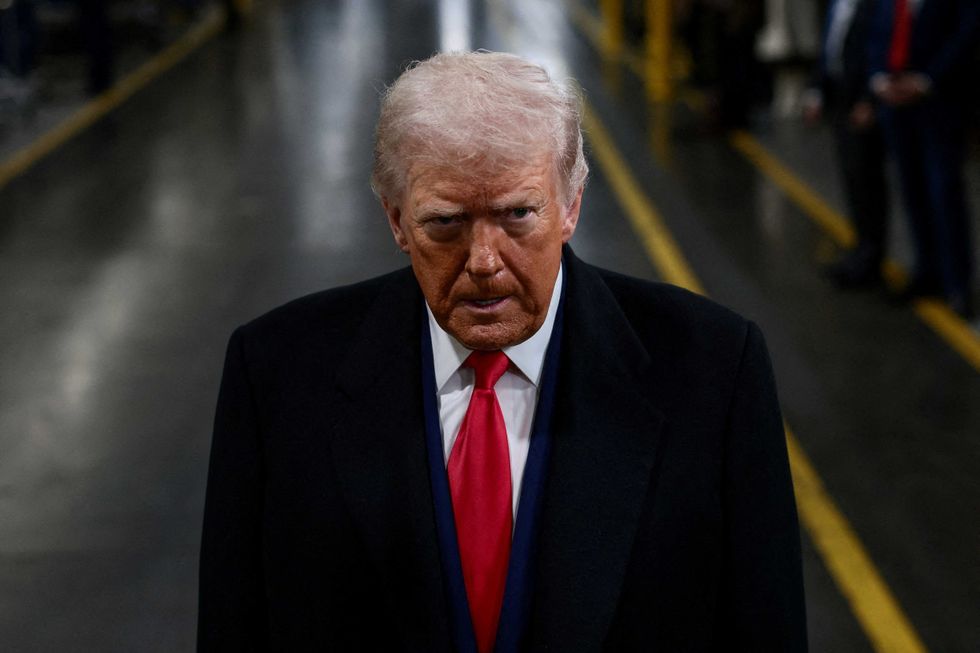
When Donald Trump first proposed buying Greenland during his first presidency, the world laughed. It sounded like an archaic joke from the era of Manifest Destiny, a nineteenth-century real estate deal proposed by a twenty-first-century developer. The Danish government called it absurd. The international press treated it as a viral punchline.
But the laughter missed the point. The proposal wasn't a sudden whim; it was a clumsy manifestation of a deep, enduring American geopolitical anxiety. Now, with a second term underway, the strategy has shifted from a bombastic real estate offer to something far more calculated, quiet, and effective. Economic encirclement.
The Weight of the Rock
Consider a hypothetical miner named Malik. He represents a generation of Greenlanders caught between an ancient hunting culture and an incoming tide of global capital. Malik knows that the ice sheet, which covers 80% of his island, is a ledger of the past and a gateway to the future. If a foreign superpower funds the road to the coast, builds the deep-water port, and buys the rights to the dirt beneath his boots, who actually owns the land?
The United States doesn't need to plant a flag in the ice to control Greenland. They just need to control the checkbook.
The strategy relies on infrastructure diplomacy. Greenland, an autonomous territory of Denmark, has a population of fewer than 60,000 people. Its economy has historically relied on fishing and financial subsidies from Copenhagen. It lacks the massive capital required to build modern airports, deep-water harbors, and the heavy industrial mining complexes needed to extract minerals from remote fjords.
When a small nation needs billions of dollars for infrastructure, it faces a dangerous choice. For years, Chinese state-backed companies offered to build Greenland’s new airports. To Washington, this was an existential threat—a red flag on the literal and figurative horizon. A Chinese-funded airport in Greenland could easily become a dual-use military facility, placing Beijing’s influence right in the middle of NATO’s backyard.
The American response was swift. Pressure was applied to Denmark. Loans and investment packages were assembled. The Chinese bids were quietly pushed aside.
This wasn't about philanthropy. It was about denial. The primary goal of American policy in the Arctic is often not to build something magnificent, but to ensure that rivals cannot build there at all.
The New Colonialism Wears a Suit
The tension lies in the definition of sovereignty. Greenlanders have fought for decades for greater independence from Denmark. They achieved self-rule in 1979 and expanded self-government in 2009. Many see mining as the ticket to full financial independence—a way to cut the umbilical cord to Copenhagen.
But swapping dependency on a European monarchy for dependency on American defense conglomerates and mining syndicates feels, to many locals, like an existential trap.
The stakes are invisible until they are absolute. American interest in the region is driven by the Pentagon’s Defense Production Act, a Korean War-era law used to fund domestic and allied production of materials critical to national security. By funneling millions of dollars into exploration projects and processing facilities across the Arctic, Washington is effectively creating an exclusive economic zone.
If American capital dictates which mines open, which roads are built, and where the raw ore is shipped for processing, Greenland’s hard-won independence becomes a legal fiction. The decisions that govern the daily lives of people in Nuuk or Narsaq are made in boardrooms in Arlington and Washington.
The trade-off is brutal. Reject the foreign investment, and the economy remains stagnant, dependent on dwindling fish stocks and Danish handouts. Accept it, and the island risks becoming a corporate resource colony, its pristine landscapes scarred by open-pit mines designed to feed the green transition of richer nations.
The Friction of the Edge
This is where the grand strategy of superpowers collides with the reality of life on the ice. The Arctic is an unforgiving place to do business. Equipment freezes. Steel becomes brittle. The shipping lanes are choked with ice for months at a time.
It is easy for policymakers in Washington to draw lines on a map and talk about securing the supply chain. It is a different matter entirely to extract thousands of tons of rock from a remote cliffside without destroying the fragile ecosystems that support local communities.
The Kvanefjeld project in southern Greenland is a prime example of this friction. The site contains one of the world’s largest deposits of rare earth metals, but it also contains uranium. The political fallout over the mine tore through Greenlandic society, leading to protests, a government collapse, and an eventual ban on uranium mining that put the project on ice.
Washington watched this play out with intense anxiety. The ban was a victory for local environmentalists, but a massive setback for Western efforts to break the Chinese monopoly on critical minerals. It revealed the limits of economic power. You can buy influence, you can offer loans, and you can pressure allied governments, but you cannot easily override the democratic will of a people terrified of seeing their homeland poisoned.
The pressure, however, does not dissipate. It merely shifts shape. If large-scale mining is blocked, the focus turns to maritime control. The Arctic is melting, opening up new, shorter trade routes between Asia and Europe. The nation that controls the ports of Greenland controls the northern gateway.
The Cost of Comfort
We live in a world that demands a seamless digital experience. We want phones that charge in minutes, electric cars that travel hundreds of miles on a single charge, and clean, renewable energy grid systems. We want these things to feel clean, ethical, and modern.
The cold truth is that the green revolution is incredibly dirty. It requires tearing up remote corners of the earth to extract the elements that make high-tech life possible. The transition away from fossil fuels is not a transition away from extraction; it is a shift to a different kind of mining, one that is highly concentrated in geopolitically volatile regions.
When we talk about a power grab in Greenland, we are not talking about soldiers marching across the tundra. We are talking about the slow, steady application of economic leverage. It is the promise of prosperity wrapped in the reality of subordination.
The official in Nuuk closes the map. The wind outside continues to howl against the glass, indifferent to the shifting alliances of men. The ice will continue to melt, the rock will continue to emerge, and the corporate lawyers will continue to arrive on the flights from Copenhagen and New York.
Greenland remains caught in the middle of a quiet, freezing war of attrition, where the weapons are contracts, the battlefields are deep-water bays, and the ultimate prize is total control over the raw materials of tomorrow. The people who live there are left to wonder if the wealth beneath their feet will be their liberation, or simply the price of their assimilation into another empire's shadow.