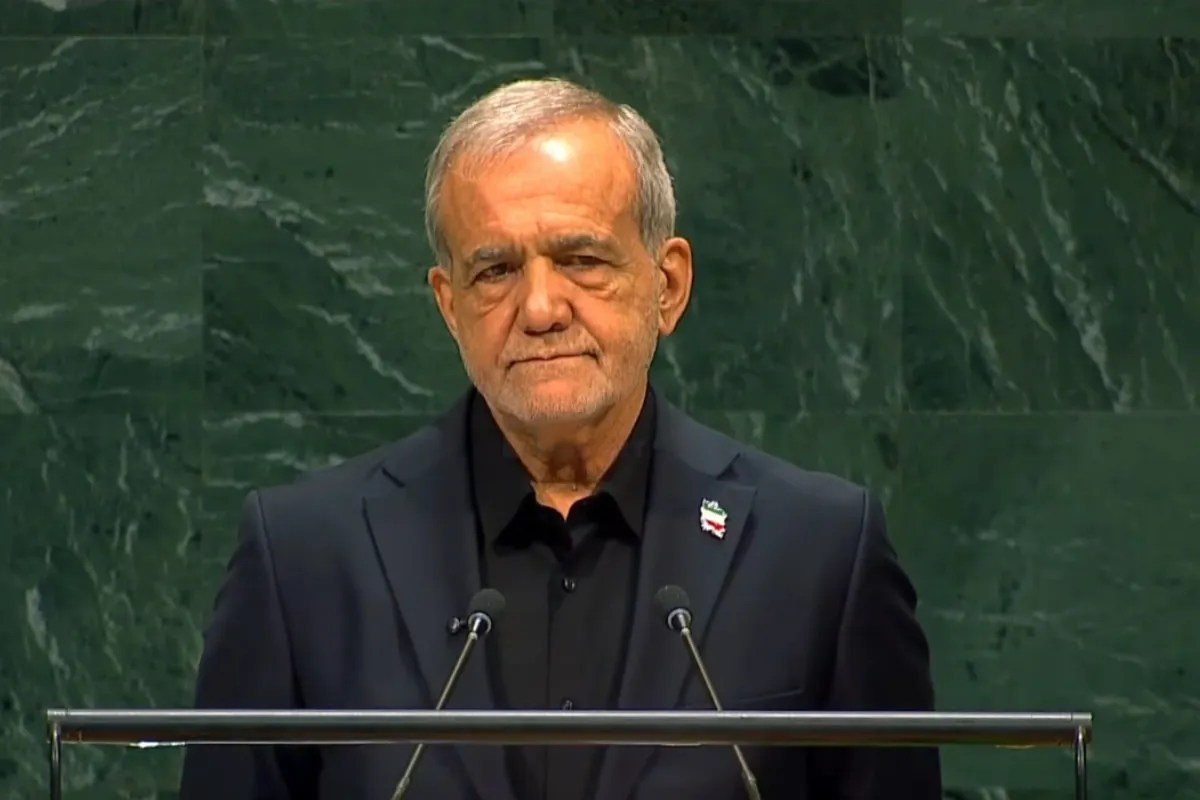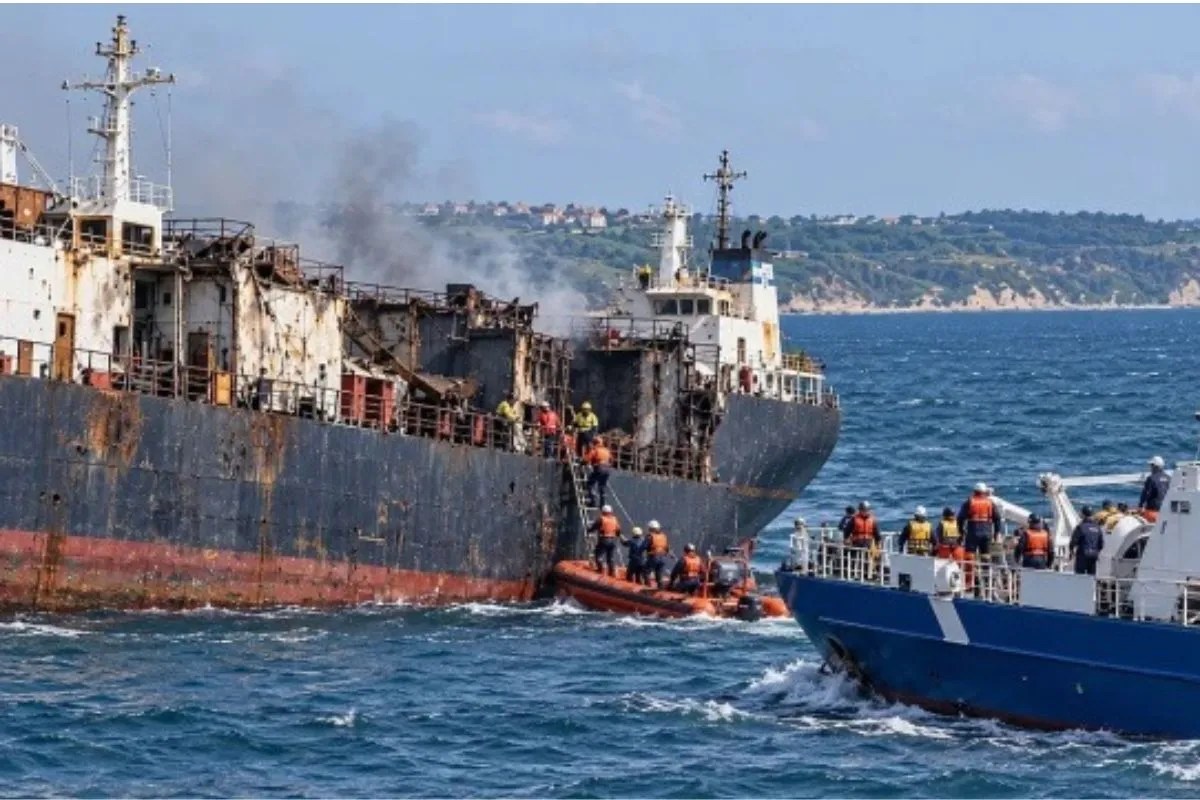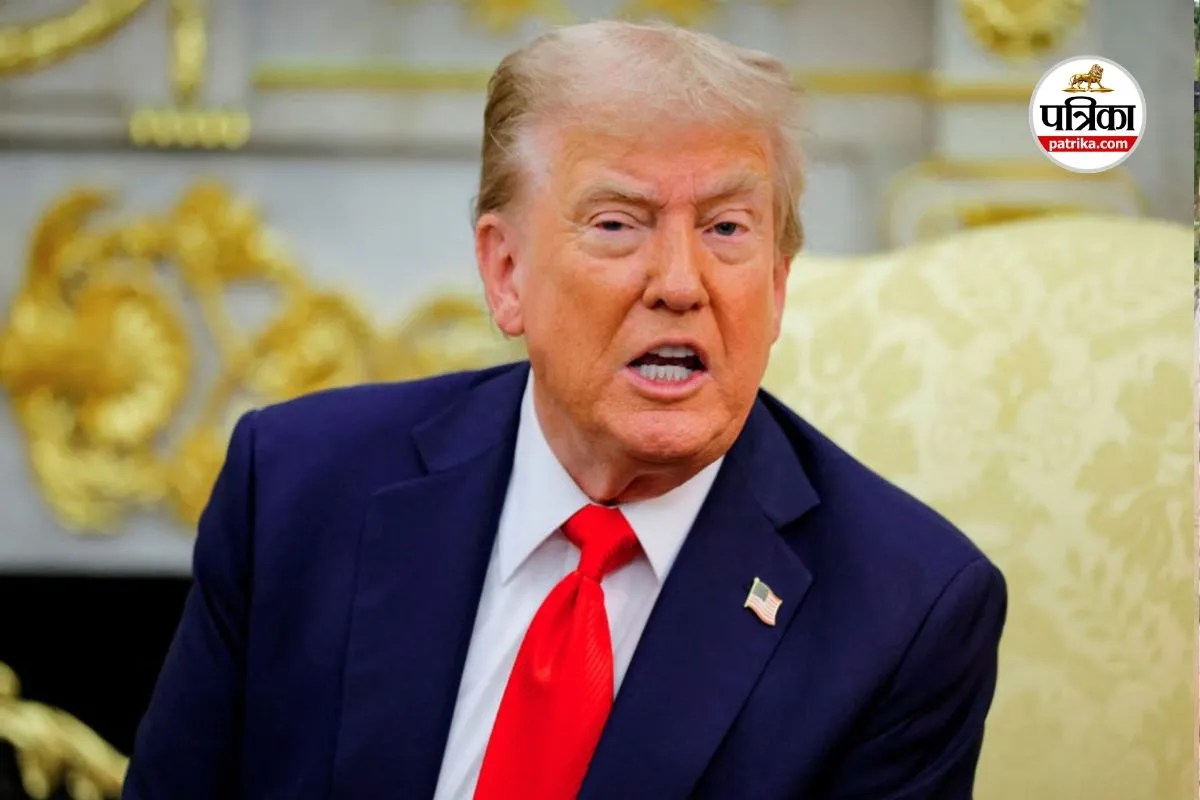
Coercive rhetoric between Washington and Tehran operates not as spontaneous political theater, but as a calculated signaling mechanism designed to alter an adversary's expected utility calculation before kinetic or economic thresholds are breached. When U.S. President Donald Trump issues an explicit ultimatum—warning that Iran will face severe consequences if found culpable for security threats or direct attacks—the statement functions as an asymmetric deterrence maneuver. Standard news coverage reduces these exchanges to personality-driven headlines, overlooking the structural mechanics of attribution, the game-theoretic constraints of conditional threats, and the economic transmission channels through which these warnings immediately reprice regional risk.
The Structural Mechanics of Conditional Ultimatums
In international relations theory, specifically within Thomas Schelling’s framework of compellence and deterrence, a conditional threat ("if found guilty, consequences will follow") introduces a deliberate variable: the standard of proof. Unlike pure deterrence, which establishes a static red line, conditional compellence links retaliation to an evidentiary threshold controlled entirely by the threatening state.
This architecture serves three operational objectives for the U.S. administration:
- Preserving Decision-Making Optionality: By tying retaliation to a finding of culpability rather than an immediate trigger, Washington avoids locking itself into automatic escalation. Intelligence assessments regarding covert operations, proxy networks, or asymmetric plots are rarely binary. Retaining control over the "guilty" verdict allows the executive branch to calibrate the timing and scale of a response based on domestic political bandwidth, force posture readiness in the Central Command (CENTCOM) area of responsibility, and allied alignment.
- Compressing Adversary Plausible Deniability: Tehran’s historical security doctrine relies heavily on gray-zone operations—utilizing regional proxy networks, cyber intrusions, and maritime harassment to impose costs while maintaining formal separation from the point of origin. Explicit warnings targeting state culpability aim to collapse this buffer. The strategic message is that forensic attribution will no longer be bounded by formal state borders or direct chain-of-command documentation; circumstantial or intelligence-grade links will suffice to trigger state-level penalties.
- Establishing Domestic and International Pre-Justification: Publicly framing a warning around accountability lays the rhetorical groundwork for subsequent kinetic strikes or secondary sanctions. Under international law frameworks regarding self-defense and state responsibility, demonstrating prior warning and clear attribution mitigates diplomatic friction with European and Gulf partners whose airspace, bases, or financial systems are required for enforcement.
The Attribution Bottleneck and Intelligence Asymmetry
The central operational vulnerability in any deterrence model predicated on "proof of guilt" is the attribution bottleneck. In asymmetric conflicts, the gap between what an intelligence community knows and what a government can publicly declassify without compromising sources and methods creates a credibility deficit.
When Washington warns Tehran of severe repercussions over alleged security threats—whether involving direct diplomatic talks, maritime chokepoints, or plots targeting personnel—the strategic efficacy depends on Tehran believing that U.S. signals intelligence (SIGINT) and human intelligence (HUMINT) have penetrated its operational security. If the Iranian leadership assesses that U.S. intelligence lacks granular visibility into Islamic Revolutionary Guard Corps (IRGC) external operations, the threat loses deterrent value and is discounted as domestic posturing.
Conversely, if Tehran believes its operational compartments are compromised, the warning forces an immediate, costly internal audit. Covert networks must freeze communications, abort active plots, or purge suspected vulnerabilities. In operational terms, a credible ultimatum imposes an immediate organizational tax on the adversary even before a single sanction is signed or a munition is launched.
The Three Pillars of Asymmetric Cost Imposition
To evaluate what "facing the consequences" actually entails in the current geopolitical environment, analysts must separate rhetorical hyperbole from executable statecraft. Modern U.S. coercive instruments against Iran fall into three distinct operational tiers, each with specific activation timelines and diminishing marginal returns.
Tier 1: Financial and Energy Chokepoint Enforcement
Economic statecraft remains the primary non-kinetic lever, though its elasticity has decreased over successive sanctions regimes.
- Secondary Banking Isolation: Targeting remaining financial conduits in third-party jurisdictions (such as the United Arab Emirates, Turkey, or East Asian clearinghouses) that facilitate Iranian petrochemical and crude oil settlements.
- Maritime Logistics Interdiction: Sanctioning shadow-fleet vessels, hull insurers, and port operators to raise the transaction costs of Iranian exports.
- The Limitation: Iran has spent over a decade constructing a parallel, sanctions-resistant trade architecture relying on bilateral currency swaps, barter arrangements, and non-Western payment rails. Tightening financial screws produces inflationary pressure inside Iran—devaluing the rial and straining state subsidies—but rarely forces immediate capitulation on core national security programs.
Tier 2: Precision Kinetic Degradation
When economic levers fail to alter behavior, military options shift from deterrence to denial. Rather than full-scale territorial invasion, modern U.S. force posture favors standoff precision strikes designed to degrade specific capabilities while managing escalation spirals.
- Asymmetric Asset Targeting: Neutralizing high-value IRGC naval assets, drone manufacturing facilities, or ballistic missile storage sites to degrade power-projection capacity.
- Command-and-Control Disruption: Utilizing offensive cyber operations and electronic warfare to blind radar networks and sever communications between Tehran and regional proxy nodes.
- The Limitation: Kinetic strikes carry high escalation variance. While they destroy physical infrastructure, they also create intense domestic pressure on Tehran to retaliate in order to preserve regime legitimacy, risking a tit-for-tat cycle that threatens regional energy infrastructure.
Tier 3: Diplomatic and Coalition Realignment
The third lever involves altering the diplomatic environment to isolate Tehran from neutral or hedging powers.
- Snapback Mechanisms and Multilateral Censure: Pressuring European signatories and international bodies to formally designate Iranian state organs as terrorist entities or trigger broad United Nations sanctions frameworks.
- Regional Defense Integration: Accelerating intelligence sharing and integrated air-and-missile defense architectures between the United States, Israel, and Gulf Cooperation Council (GCC) states.
- The Limitation: Global geopolitical fragmentation limits the ceiling of diplomatic isolation. Major powers such as China and Russia view Iran as a strategic counterweight to Western influence and maintain independent economic and diplomatic channels with Tehran, blunting the impact of Western-led isolation campaigns.
Second-Order Effects on Global Markets and Regional Security
Media coverage frequently treats U.S.-Iran warnings as bilateral disputes, missing the immediate second-order transmission effects across global supply chains and regional security architectures.
First, heightened rhetoric directly alters the geopolitical risk premium priced into global energy markets. Even without physical blockades in the Strait of Hormuz, elevated threat levels increase war-risk insurance premiums for commercial shipping transiting the Persian Gulf. Energy traders and sovereign buyers must hedge against sudden supply disruptions, injecting volatility into crude benchmarks and complicating central bank inflation targets globally.
Second, direct warnings from Washington alter the risk calculus of regional Gulf states. Countries like Saudi Arabia and the United Arab Emirates, which have pursued diplomatic détente with Tehran to insulate their domestic economic diversification plans from regional conflict, face an acute hedging dilemma. An overt U.S.-Iran confrontation forces Gulf capitals to choose between aligning openly with Washington—thereby becoming primary targets for Iranian retaliatory missile and drone salvos—or denying the U.S. military operational access to regional bases, which strains their foundational security guarantees.
Third, the linkage of security warnings to potential direct negotiations creates a high-stakes bargaining paradox. In coercive diplomacy, threats are often deployed to force an adversary to the negotiating table from a position of weakness. Yet for a revolutionary regime whose ideological legitimacy rests on resistance to foreign pressure, negotiating under an explicit public ultimatum carries severe domestic political costs. Hardline factions within Tehran use external threats to marginalize pragmatic voices advocating diplomatic off-ramps, inadvertently narrowing the diplomatic window the threats were meant to open.
Strategic Forecast and Operational Imperatives
The trajectory of U.S.-Iran friction will not be decided by the volume of public warnings, but by the alignment between Washington's stated red lines and its demonstrated willingness to absorb retaliatory costs. A deterrent threat that is repeatedly issued without proportional enforcement erodes credibility across all theaters, signaling to other state actors that U.S. red lines are negotiable.
For institutional decision-makers, risk analysts, and policy practitioners operating within or exposed to the Middle East theater, reliance on diplomatic de-escalation is a flawed baseline assumption. Organizations must execute three immediate operational adjustments:
- Stress-Test Supply Chain Exposure to Maritime Chokepoints: Logistics and energy-dependent enterprises should model extended disruption scenarios in the Strait of Hormuz and Red Sea corridors, securing alternative routing agreements and hedging against sudden spikes in maritime freight and war-risk insurance rates.
- Audit Third-Party Counterparty Risk: Financial institutions and multinational corporations must tighten compliance screening across intermediary hubs in the Middle East and Asia, anticipating aggressive U.S. Treasury secondary sanctions targeting covert trade networks.
- Monitor Attribution Indicators Over Rhetoric: Rather than reacting to daily political statements, security teams should track concrete leading indicators of escalation: U.S. carrier strike group deployments, regional air-defense posture shifts, and sudden evacuations of non-essential diplomatic personnel. When these operational shifts coincide with public attribution warnings, the transition from coercive signaling to kinetic execution is imminent.