Dust settles. It always settles.
Thirty-two centuries ago, a hand pressed a bronze chisel into cold limestone. Each strike was deliberate, carving hieroglyphs into a surface meant to outlast kings, empires, and memory itself. The scribe did not know that his ink-stained fingers were drafting a treasure map for a future he could not fathom. He only knew that the name Mesen had to be recorded.
For over three thousand years, the city of Mesen remained a ghost.
Egypt is a land written in layers. Walk across the black soil of the Nile floodplains today, and you are treading upon the roofs of houses that fell when pharaohs still breathed. Beneath every palm grove lies a shard of pottery; beneath every modern canal runs the ancient ghost of a pharaonic waterway. Yet some places vanished so completely that even their shadows dissolved. Mesen was one of them. Mentioned in fragmented texts, whispered about in administrative tallies from the New Kingdom, it hovered on the edge of history like a dream fading at dawn.
Until now.
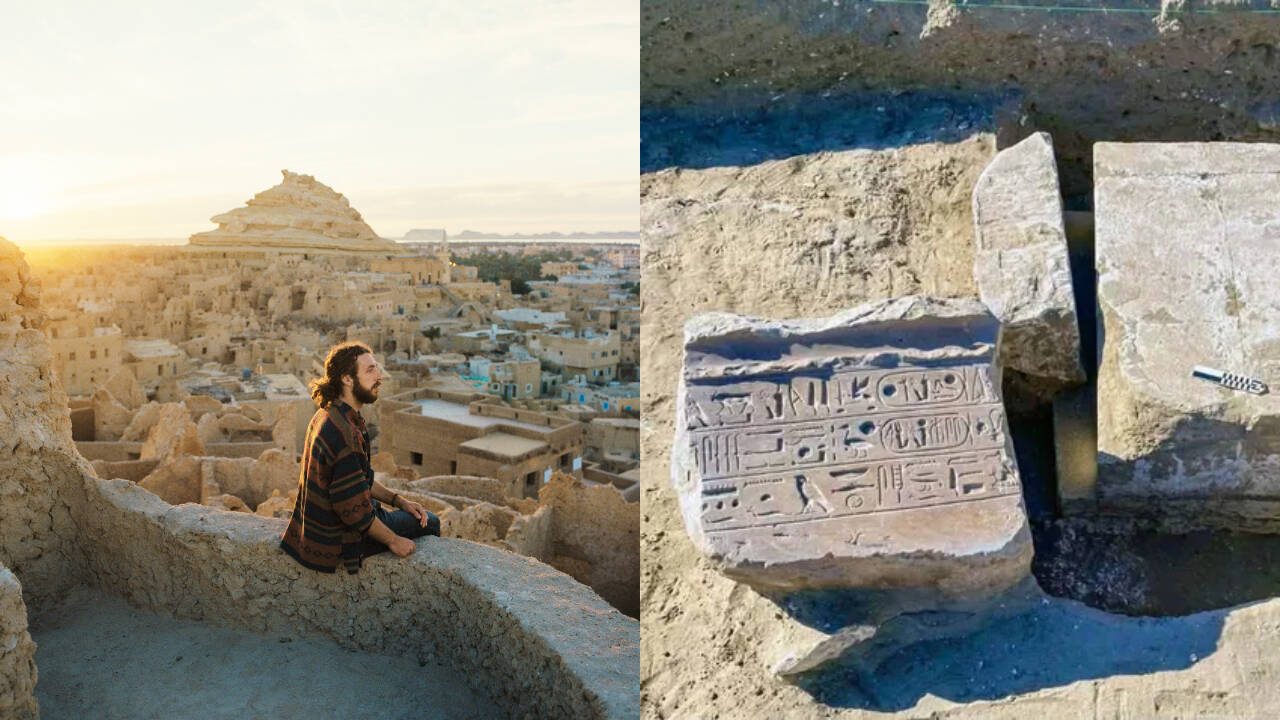
Picture Dr. Al-Masri wiping sweat from his brow, staring down at a slab of stone recently pulled from the earth. To an untrained eye, it is merely grey rubble, scarred by time and stained by millennia of damp soil. To an epigrapher, it is an explosion of light.
The inscription speaks of movements. It speaks of grain stores, of royal decrees, of the precise geography of a borderland that shielded the eastern approaches of Egypt. Most importantly, it anchors a name to a physical coordinate. It tells us where Mesen stood, or at least, where the road to it began.
History is rarely lost all at once. It is eroded. A flood shifts a river channel by fifty yards. A garrison packs its bronze weapons, abandons its mudbrick barracks, and marches toward the horizon as a new dynasty claims the throne. Wind piles sand over the thresholds. Weeds choke the courtyards. Within a generation, the stone walls are no longer homes; they are quarries for the next village. Within two generations, they are merely hills. Within three, they are flat earth, silent and undisturbed.
We forget how loud the ancient world actually was.
We tend to view antiquity through museum glass—clean, silent, monochromatic white marble and weathered brown clay. We forget the noise. The shouting of merchants haggling over barley prices in the shadow of massive pylons. The rhythmic clanking of copper smiths hammering shields. The low, guttural roar of oxen dragging limestone blocks through the mud. Mesen was not a monument built for eternity; it was a living, breathing, chaotic organism. People lived there. They fell in love in the narrow alleyways. They argued over debts. They buried their children under the floors of their mudbrick homes, hoping the gods would watch over them.
And then they left.
The 3,200-year-old inscription changes the coordinates of our imagination. For decades, historians argued over where the frontier outposts of the Ramesside period truly lay. Maps were drawn in pencil and erased in frustration. Theories clashed in academic journals, fueled by sparse geographical markers that pointed in three directions at once. A single piece of stone, inscribed during the reign of Ramses II—an era of colossal monuments and desperate geopolitical maneuvering—cuts through the noise.
Consider the sheer audacity of carving words into stone. It is an act of defiance against oblivion. The scribe who shaped those hieroglyphs knew that he, too, would turn to dust. His family would be forgotten. His language would evolve, fracture, and eventually die, replaced by Coptic, then Arabic, shifting like the desert dunes. Yet he carved anyway. He wanted the world to remember where Mesen was.
He wanted us to find him.
Archaeology is often romanticized as a matter of grand discoveries—golden masks unearthed by torchlight, hidden tombs echoing with centuries-old air. The reality is far more humbling. It is measured in centimeters of dirt scraped away with trowels, in sore backs, in hours spent squinting at blurred photographs of eroded stone under harsh overhead lamps. It is an exercise in listening.
When you look at the newly analyzed inscription, you are not just reading administrative notes about grain distribution or military patrols. You are eavesdropping on a conversation held in the dark. The text places Mesen within a specific network of royal estates and administrative hubs. It connects the dots of a forgotten infrastructure.
Why does Mesen matter? Why should anyone today care about a dusty garrison or a trading post abandoned three millennia ago?
Because we are haunted by lost things.
Every missing city represents a chapter torn from the human story. When a place like Mesen vanishes, a piece of our collective memory goes dark. We lose the nuances of how ancient societies managed their borders, how they fed their armies, how they negotiated the fragile peace between the fertile riverbanks and the unforgiving desert waste.
The discovery doesn't just locate a coordinate on a map. It restores a voice.
The physical search for Mesen is now entering its most intense phase. Armed with the inscription, researchers are deploying ground-penetrating radar, magnetometry, and satellite imagery to peer beneath the modern topsoil of the Nile Delta. They are looking for anomalies—the ghostly outlines of buried walls, the rectangular signatures of ancient storehouses, the quiet geometry of streets laid out by engineers who worshiped the sun.
Technology has given us new eyes, but the soul of the search remains human. It requires patience. It requires the willingness to dig through tons of sterile earth on the gamble that the next shovel-blade will strike something extraordinary.
Think of the child who will walk through the reconstructed gates of Mesen twenty years from now. They will press their hand against the cold stone of a museum display case, looking at the very inscription that started this entire journey. They won't see academic citations or peer-reviewed papers. They will see a bridge. A direct line connecting their own beating heart to the hand of a scribe who lived under the same Egyptian sun three thousand years ago.
The desert always keeps its secrets until it is ready to surrender them. But the stones remember. And every so often, when the light hits an excavation trench just right, the past speaks.
Listen.