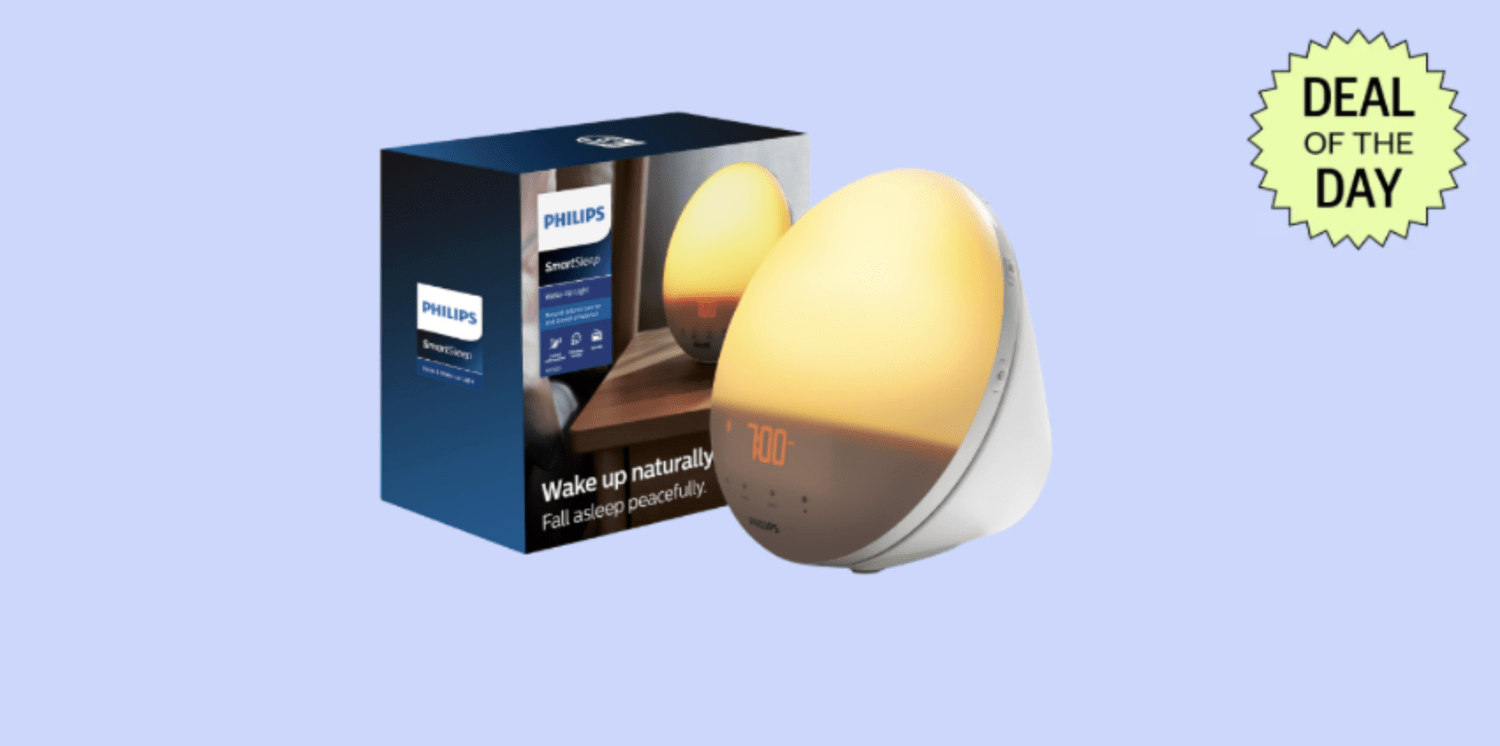
The standard acoustic alarm clock relies on a biological contradiction. Waking an organism via an abrupt, high-decibel auditory stimulus forces an immediate transition from slow-wave or rapid-eye-movement sleep into an acute sympathetic nervous system surge. This mechanical shock triggers a sudden spike in cortisol and adrenaline, bypassing the body's natural endocrine preparation sequence. Sleep inertia—the persistent cognitive grogginess lasting from minutes to hours post-wakening—is not merely a minor inconvenience; it is the physiological cost of forcing an abrupt state change across neural networks that require gradual metabolic re-entry.
To evaluate the utility of sunrise simulation technology, one must first deconstruct the human circadian timing system. The master biological clock resides in the suprachiasmatic nucleus of the hypothalamus. This neural cluster synchronizes peripheral clocks throughout the body via light-dark cycles, primarily mediated by intrinsically photosensitive retinal ganglion cells. These specialized photoreceptors express melanopsin, a pigment maximally sensitive to short-wavelength blue light around 480 nanometers. When photons in this specific spectral band strike the retina during the biological dawn window, signaling cascades suppress pineal melatonin synthesis and initiate a graded elevation in core body temperature and cortisol production.
Sunrise alarm clocks attempt to replicate this photic transition artificially. By introducing a programmable gradient of increasing illuminance over a designated duration—typically 15 to 60 minutes prior to the target wake time—these devices mimic the gradual solar transit observed in natural environments. However, consumer market implementations vary wildly in engineering execution, spectral output, and photometric accuracy. A rigorous evaluation requires examining the physical and biological parameters that dictate whether a device functions as an effective circadian intervention or an expensive bedside lamp.
The Photometric Parameters Of Photoperiodic Waking
Evaluating the efficacy of any light-based intervention requires precise quantification of illuminance and spectral composition. Standard units of luminous flux, such as lux, measure light as perceived by the human eye under photopic conditions, which heavily weights green wavelengths. Yet, melanopsin-containing retinal ganglion cells operate under distinct sensitivity curves known as equivalent melanopic illuminance.
Many commercial sunrise simulators achieve high lux ratings at the source (the lamp surface) while failing to deliver sufficient melanopic lux at the corneal plane of the user. Because illuminance follows the inverse-square law, a device positioned two meters away from a sleeping individual experiences exponential degradation in photon density. If a unit specifies a maximum output of 300 lux, but the user places it on a distant nightstand, the actual photon flux reaching the retina during the initial phase of the simulation cycle drops below the threshold required to trigger melanopsin signaling effectively.
Furthermore, spectral distribution matters profoundly. Inexpensive white LEDs often utilize a blue pump diode coated with yellow phosphor, creating a sharp spike at 450 nanometers followed by a broad trough and a secondary peak. While this spectrum appears white to human photopic vision, it may lack the broader spectral continuity necessary to simulate natural solar elevation accurately. Conversely, advanced engineering approaches integrate multi-channel LED arrays capable of shifting color temperature from a deep, warm amber (resembling twilight or early dawn) to a crisp, high-temperature white matching noon daylight. This dynamic color shifting aligns with the natural circadian response curve, where longer wavelengths gently prepare the visual system before short-wavelength activation begins.
The Endocrine Cost Function Of Sleep Fragmentation
To understand why traditional alarms fail, examine the endocrine cost function of forced awakening. When a sudden acoustic stimulus sounds, the amygdala activates the hypothalamic-pituitary-adrenal axis, releasing corticotropin-releasing hormone, which cascades into adrenocorticotropic hormone and subsequent cortisol release. This evolutionary survival mechanism—designed for acute predation threats—is maladaptive when deployed daily to signal the start of an office workday.
The chronic activation of this stress pathway correlates with elevated baseline blood pressure, impaired glucose regulation, and prolonged sleep inertia. Sleep inertia itself is characterized by reduced frontal lobe perfusion and suppressed electroencephalographic alpha activity. During this window, analytical reasoning, working memory, and psychomotor vigilance are severely degraded.
Sunrise simulation alters this cost function by initiating endocrine preparation prior to consciousness. As the gradual photon density increases across the eyelids during the final stage of sleep, the suprachiasmatic nucleus signals the adrenal glands to secrete cortisol in a flattened, extended curve rather than a vertical spike. Melatonin levels drop asymptotically rather than precipitously. By the time the auditory backup alarm sounds—if one is used at all—the user's core body temperature has risen, blood pressure has adjusted to an active state, and the brain has transitioned from delta or theta wave dominance to alert beta or alpha states. The transition is continuous rather than discrete.
Hardware Constraints And Engineering Trade-offs
Designing an optimal sunrise simulator involves navigating stringent hardware trade-offs. Thermal management is the primary constraint. High-intensity LED arrays generate localized heat, which degrades phosphor efficiency and shifts the chromaticity coordinates over time. To maintain stable color temperature and prevent lumen depreciation, manufacturers must incorporate adequate heat sinking or active cooling. However, active cooling fans introduce acoustic noise, which undermines the core objective of a silent, peaceful awakening environment.
Power delivery electronics present a second engineering challenge. Low-cost pulse-width modulation used to dim LEDs often operates at frequencies detectable by sensitive human vision or prone to audible coil whine. For a device intended to sit inches from a user's head for hours at a time, electrical noise and flicker must be entirely eliminated. Premium units employ constant-current reduction dimming topologies, ensuring ultra-smooth transitions across the entire intensity curve, starting from imperceptible micro-lumens up to full operational brightness.
Diffusion optics represent the third critical variable. Point-source LEDs create harsh hotspots that cause localized glare rather than ambient room illumination. Achieving a uniform, glare-free light output requires multi-layer optical diffusers that scatter photons evenly across 360 degrees or direct a focused, directional wash toward the user's sleeping position. The choice between ambient room illumination and targeted bed illumination dictates the physical form factor of the device. Ambient models require high total luminous flux to illuminate an entire bedroom, whereas targeted units rely on precise optical geometry to concentrate photons onto the user's closed eyelids from a bedside distance.
Comparative Analysis Of Sleep Interventions
To contextualize sunrise simulation within the broader domain of sleep optimization, one must compare it against alternative interventions: acoustic white noise generators, pharmacological sleep aids, wearable vibratory alarms, and cognitive behavioral therapy for insomnia.
Pharmacological aids manipulate neurotransmitter receptor sites directly—such as GABA-A agonism via hypnotics—to induce sleep onset, but they frequently disrupt sleep architecture, suppressing slow-wave and REM sleep while causing residual daytime sedation. They address sleep maintenance rather than awakening quality.
Wearable vibratory alarms eliminate acoustic disruption for partners but introduce physical tactile shock to the wrist. While effective at waking heavy sleepers without sound, localized vibration does not engage the hypothalamic photic pathway. It bypasses the endocrine preparation sequence entirely, resulting in a somatic shock similar to an acoustic alarm, albeit mediated through tactile mechanoreceptors rather than the cochlea.
Behavioral consistency—maintaining a fixed circadian anchor point—remains the baseline requirement for optimal sleep health. However, modern societal schedules frequently require waking before the natural solar photoperiod. In winter months or high-latitude environments, the natural dawn occurs hours after the required wake time. Sunrise simulation bridges this temporal gap by artificially anchoring the biological clock to a consistent external photic cue, mitigating seasonal affective fluctuations and stabilizing circadian phase alignment.
Economic Realities Of The Sleep Technology Market
The commercial market for sleep hardware is characterized by significant pricing asymmetry. Low-end units priced under thirty dollars typically utilize low-count, single-color LEDs with rigid, step-function brightness increments. These devices often lack real-time clock battery backups, fail during brief power interruptions, and provide insufficient luminous flux to impact melanopsin pathways meaningfully.
Mid-tier devices introduce multi-color mixing and programmable curves but often compromise on acoustic quality, build materials, or software reliability. Proprietary mobile applications required to operate basic hardware functions introduce unnecessary friction, privacy vulnerabilities, and planned obsolescence when companion software support ceases.
High-end units prioritize hardware durability, clinical-grade spectral accuracy, and intuitive tactile controls that eliminate the need for smartphone dependency in the bedroom. The marginal utility of spending over two hundred dollars on a sunrise simulator lies not in novel gimmicks, but in the precision of the dimming curve, the absence of electronic noise, and the thermal management required to maintain photometric stability over years of continuous operation.
Implementation Protocol For Photic Optimization
Deploying a sunrise simulation device effectively requires adherence to strict spatial and temporal protocols. Placement is the primary variable governing utility.
The device must be positioned within the user's direct line of sight while sleeping, typically between one to two meters from the pillow, oriented toward the face. If placed behind the user or blocked by curtains, the photon density reaching the closed eyelids falls below the threshold required to trigger melanopsin activation.
Duration programming should match individual chronotype requirements. For morning types, a fifteen-minute ramp is sufficient to transition the endocrine system. For evening types or individuals with delayed sleep phase syndrome, a sixty-minute ramp provides the extended photic exposure necessary to advance the circadian phase effectively.
The acoustic backup alarm should be configured as a secondary failsafe rather than the primary wake mechanism. When properly calibrated, the light intensity should prompt spontaneous awakening two to five minutes prior to the scheduled acoustic alarm time. If the user consistently sleeps through the light phase without waking, the peak illuminance is inadequate for their distance, or their baseline sleep debt is severe enough to override photic arousal signals. In such cases, addressing chronic sleep deprivation must precede technological optimization.
Strategic Procurement Framework
Selecting a sunrise alarm clock requires evaluating specific technical specifications over marketing claims. Buyers must verify the maximum lux output at operational distance, the presence of multi-channel LED color mixing spanning from amber to cool white, and the absence of pulse-width modulation flicker.
Devices relying on single-color white LEDs with harsh stepped dimming curves fail to provide the biological nuance required for smooth endocrine transitions. Conversely, hardware featuring high-CRI multi-element arrays, silent power supplies, and intuitive onboard controls without mandatory app connectivity deliver superior long-term utility.
Optimization of the sleep environment requires a systematic approach. Eliminate ambient light pollution using blackout shades, stabilize ambient room temperature between 15 and 19 degrees Celsius, and deploy a properly calibrated photic alarm to anchor the circadian rhythm. The objective is not merely purchasing a bedside accessory, but engineering a reliable biological trigger that aligns modern wake schedules with ancestral neurobiology.