Fifty-one lives are gone. Ten people remain missing.
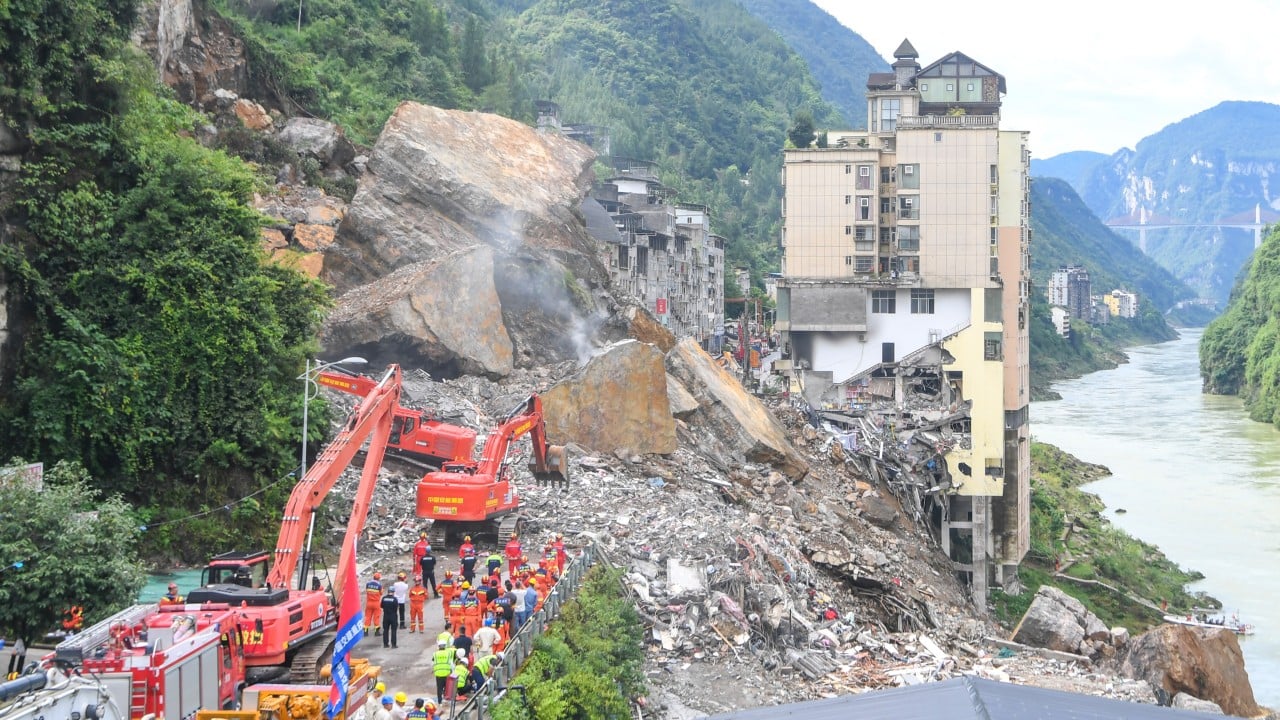
When a massive mountain slope collapsed into a residential and commercial street in Pengshui County, Chongqing, on July 17, it triggered a logistical nightmare for emergency responders. Land operations have officially wrapped up, but the grim final tally of the southwest China landslide highlights a recurring crisis in the region's rugged terrain. More than 1,080 rescue personnel spent 325 grueling hours battling shifting earth, extreme heat, and massive boulders.
You don't just clear a disaster zone like this overnight.
The Scale of the Recovery Operation
The numbers behind the search effort are staggering. Crews excavated over 330,000 cubic metres of material after more than ten residential buildings and a minibus were crushed by falling rocks and soil.
The geography itself fought back. Teams dealt with severe elevation changes, tight spaces, and treacherous river conditions. Because part of the debris field spilled toward the Wujiang River, authorities had to deploy underwater divers and specialized robots.
Heavy machinery alone wasn't enough. Rescuers had to manually blast away massive boulders blocking access to potential pockets where survivors might have been trapped.
While the land search has ended, dredging operations in the river continue to find the remaining ten individuals still unaccounted for.
Evacuations and Immediate Aftermath
Disaster response isn't just about pulling people from the rubble. It is about managing the human fallout in real time.
Local authorities safely evacuated over 1,100 residents from the danger zone. Ten people were rescued directly from the wreckage, with three requiring brief hospital stays before being discharged.
Emergency management teams set up temporary housing and support services for displaced families. Government statements indicate that post-disaster resettlement is moving forward systematically, though the emotional scars for Pengshui County will last much longer than the cleanup.
A Broader Pattern of Geological Hazards
This catastrophe didn't happen in a vacuum. It arrived less than two weeks after a separate landslide in northwestern Gansu province buried 33 people, leaving 21 dead.
China's topography makes it uniquely vulnerable to sudden slope failures, especially during heavy seasonal weather patterns that saturate mountain soils. Steep terrain combined with intense human settlement creates high-risk zones where natural shifts turn deadly in seconds.
Engineering solutions help, but nature often outpaces modern mitigation efforts.
Traffic in the affected district is expected to resume soon as infrastructure repair crews move in behind the search teams. Yet, the tragedy serves as a brutal reminder of the risks tied to mountain-adjacent communities across the region.

/GettyImages-157526585-93425538070d4422ad42d22af28c0758.jpg)