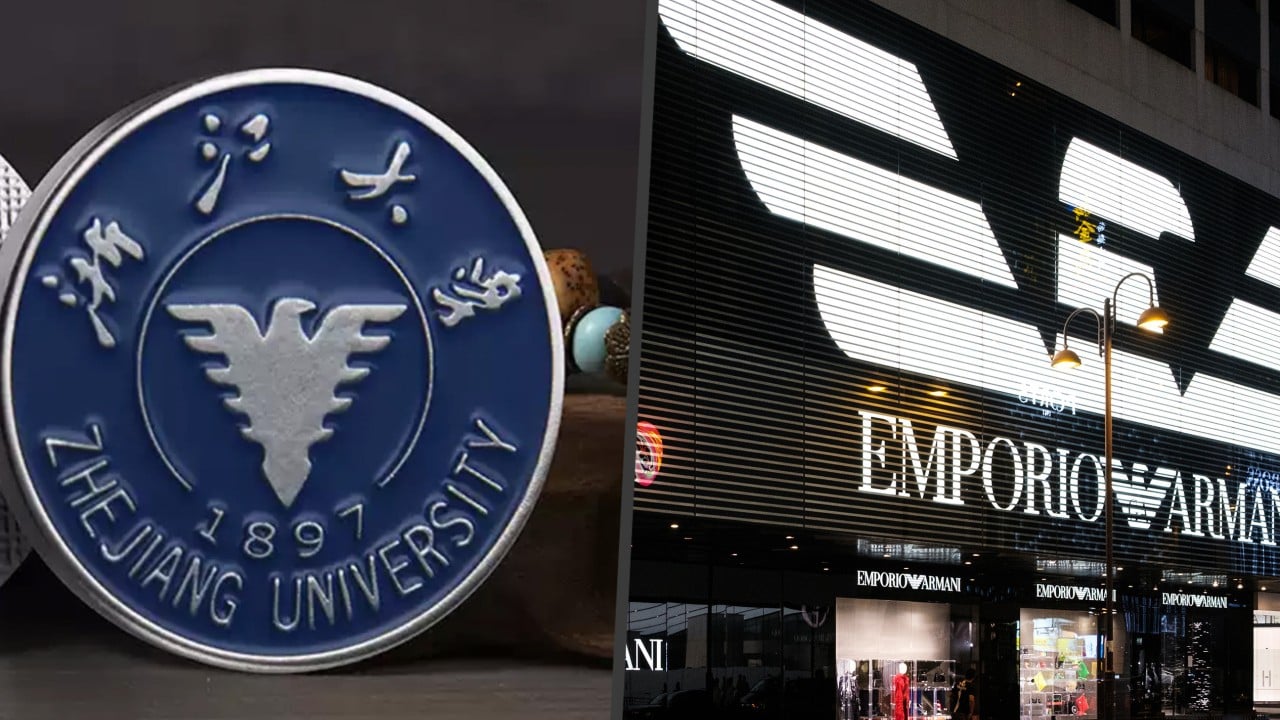
Zhejiang University just built a massive legal wall around its school crest, and the internet is convinced it's throwing shade at Armani.
The prestigious institution in Hangzhou recently locked down full-class registration for its iconic "Qiushi Eagle" emblem across all 45 trademark categories. If you look at the badge, the stylized bird sitting right in the center shares an uncanny visual resemblance with the famous eagle logo used by Italian fashion house Giorgio Armani. You might also find this similar coverage interesting: Why the India Australia Uranium Deal Is an Absolute Illusion.
Naturally, Chinese social media exploded. Weibo racked up over 400 million views on the topic, with netizens joking that the university's law students are eagerly waiting to sue the luxury brand for some real-world litigation practice.
The university claims the timing is a coincidence. Zhang Yifeng, a consultant from the firm representing the school, confirmed they filed the paperwork late last year after noticing small businesses slapping the eagle design onto cheap souvenir caps and shirts. He flatly denied any intentional beef with the Italian fashion giant. As discussed in latest coverage by Investopedia, the results are widespread.
But you can't blame the public for connecting the dots. The real driver behind this sudden defensive panic isn't Armani. It's a terrifying legal precedent set by another luxury titan just weeks ago.
The Milk Tea Paranoia Changing Chinese Business
To understand why a top-tier university is registering an eagle under medical, agricultural, and industrial manufacturing categories, you have to look at what happened to Molly Tea.
The domestic Chinese milk tea chain was hit with a massive intellectual property lawsuit by French luxury powerhouse Louis Vuitton. The court ordered Molly Tea to shell out a staggering 10.3 million yuan ($1.5 million) for trademark infringement.
That judgment sent shockwaves through Chinese institutions and businesses. The message was loud and clear. If you don't legally lock down your visual identity, global luxury brands will come for your wallet, even if your designs have deep roots in your own local history.
Zhejiang University's eagle has been around since the 1920s. The current stylized iteration was finalized back in 1991. "Qiushi" translates to "seeking truth," a nod to the school's origin as the Qiushi Academy in 1897. The school has been using this exact bird for decades, but without a multi-class trademark registration, they were sitting ducks.
The Hypocrisy of Global Luxury Trademarks
This massive rush to register academic and cultural symbols highlights a growing frustration among historians and intellectual property experts in China. There's an aggressive double standard playing out in the global market.
When Louis Vuitton sued Molly Tea, critics quickly pointed out the ultimate irony. The iconic LV monogram pattern itself draws heavy and obvious inspiration from Tang Dynasty treasures, specifically the ancient baoxiang floral motifs and shidi persimmon patterns.
These designs floated freely as public domain resources for centuries. Western brands frequently borrow these historical decorative patterns, add minor commercial tweaks, register them globally, and then use those very trademarks to sue domestic Chinese companies who try to use their own ancestral design aesthetics.
Zhejiang University looked at this playing field and decided to act aggressively. By locking up all 45 trademark categories, they ensured that no foreign brand can swoop in, claim the stylized eagle pattern in a random consumer goods category, and then turn around and sue the university for selling its own branded school merch.
Aggressive Defense is the Only Strategy Left
Is a legal war between Zhejiang University and Armani actually going to happen? Almost certainly not.
Armani has historically been fiercely protective of its eagle device. The brand recently fought a fierce legal battle against a Chinese watchmaker using a winged logo called "PARUI," and it lost an appeal in the Swiss Federal Administrative Court because the overall visual impressions were deemed different enough. Armani also successfully challenged a tech company trying to register a striped "V" logo in Europe because it looked too much like their bird.
Because Zhejiang University's registration is defensive, it simply means both logos will continue to coexist in their respective markets. The university won't be taking over Milan fashion week, and Armani isn't going to force a century-old university to redesign its campus gates.
But the takeaway for any business owner, institution, or creator is clear. Relying on the historical longevity or the local fame of your logo won't save you in a modern trademark dispute.
If you want to protect your brand identity from predatory litigation, you need to follow the university's playbook. File your trademarks early, cover categories beyond your primary industry, and build a legal shield before someone else forces you to buy back your own history.