Dissent in China is not dead. It just evolved. Most foreign media coverage paints a picture of total submission within the Great Firewall. You see images of facial recognition cameras, grid-managed neighborhoods, and a public that seems to have accepted absolute party control.
That view is wrong. It misses the gritty reality of modern Chinese dissidents.
To understand how people contest the regime today, you have to look past the old 1989 stereotypes. Nobody is marching en masse in Tiananmen Square. Instead, resistance has turned into a game of high-stakes hide-and-seek. It is lonely. It is dangerous. But it is happening right under the nose of the Chinese Communist Party (CCP).
The strategy shifted from loud, organized political movements to hyper-localized, flash-mob style defiance and digital guerrilla warfare. Activists in Beijing and other major cities aren't trying to overthrow the state overnight. They are trying to puncture the illusion of total consensus.
Defying the Grid on the Streets of Beijing
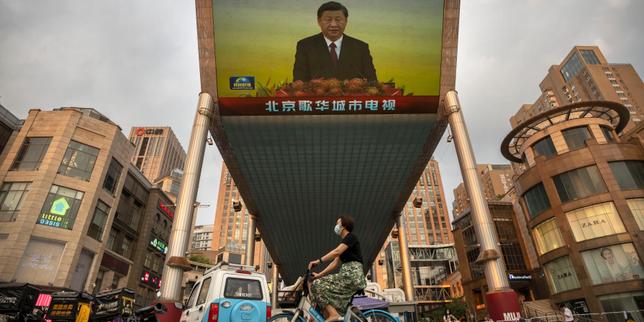
Living in Beijing means living inside a panopticon. The government uses a system called wangge hua guanli, or grid management. It divides neighborhoods into literal geometric blocks. Each block has assigned monitors who watch for anything unusual. Combine that with the Bright Eyes surveillance project, which aims for 100% video coverage of public spaces, and open protest becomes practically suicidal.
Yet, people find the blind spots.
Take the 2022 Sitong Bridge protest by Peng Lifa. He chose a chaotic, crowded transit hub. He dressed as a construction worker to blend in. Before police tackled him, he hung banners and set a tire on fire to draw immediate attention. He knew he would get caught. His goal wasn't survival; it was the signal.
Modern dissidents use this exact blueprint. They don't look for sustained protests. They look for high-impact, short-duration disruptions.
- Airdrop Activism: Using Apple’s AirDrop feature in crowded subway cars to share anti-regime posters before Apple limited the feature under pressure from Beijing.
- Flash Graffiti: Spray-painting slogans on public walls or inside public restroom stalls—places where cameras cannot easily look—and photographing them to distribute online.
- The White Paper Method: Holding blank sheets of paper. It says everything without saying a single word that can be technically classified as illegal.
These actions look small. If you look closer, they shatter the regime's most important psychological weapon: the idea that everyone else agrees with the Party. When a resident sees a slogan scrawled in a Beijing stairwell, they realize they aren't alone in their frustration. That realization is explosive.
Outsmarting the Algorithm with Digital Guerrilla Tactics
The battle online is even more fierce than on the streets. The Cyberspace Administration of China (CAC) employs hundreds of thousands of censors. They use automated keyword blocking, image recognition, and manual deletion to keep the internet clean.
If you type a banned name or event on WeChat, your message simply vanishes. Sometimes, your entire account goes with it.
To fight back, Chinese internet users became the most linguistically creative population on earth. They treat language like a moving target.
When the government censors a specific phrase, netizens invent a homophone—a word that sounds identical but uses different characters. During the early days of internet censorship, the term for censorship, hexie (harmonized), was replaced by the word for river crab, which sounds exactly the same. More recently, critics of Xi Jinping's indefinite rule used images of Winnie the Pooh or referred to him as "The Emperor" or "Chairman of Everything."
When censors caught on to those terms, the tactics shifted to visual and structural subversion.
People post historical analogies. They discuss the fall of the Qing Dynasty or the excesses of the Cultural Revolution to criticize current policies. They rotate images upside down to bypass automated computer vision filters. They embed text into video game textures or write code that generates political poetry.
It is a exhausting cycle. Censors block a word, users invent a new one, censors block that, and the cycle repeats. But this constant friction strains the censorship apparatus. It forces the state to spend billions of dollars tracking the ever-shifting slang of its own youth.
The Cost of Standing Alone
Let's be completely honest about the reality of this struggle. The psychological toll on domestic dissidents is brutal. The CCP rarely relies solely on mass arrests anymore. They prefer a strategy of social isolation and administrative strangulation.
They call it "drinking tea" (he cha). Security agents invite an activist for a seemingly polite chat. The subtext is clear: we know who you are, we know where your parents live, and we can destroy your life with a keystroke.
The state systematically cuts off a dissident's ability to survive. They pressure landlords to evict them. They contact employers to get them fired. They block their bank accounts and ban them from buying high-speed rail or plane tickets using the social credit and national registry systems.
This creates a suffocating loneliness. Friends pull away out of self-preservation. Family members beg them to stop, terrified of collective punishment. To be an active dissident in Beijing is to exist in a social desert. You are surrounded by millions of people, yet completely isolated.
International human rights organizations like Amnesty International and Human Rights Watch have documented this pattern for years. The goal isn't just to punish the individual; it's to make their lifestyle so miserable that anyone else thinking of dissenting decides it's simply not worth it.
The Decentralized Network and Global Echoes
Because centralized organizations are immediately crushed, resistance became entirely decentralized. There is no leader. There is no underground headquarters. Instead, the movement operates like a distributed network.
Activists inside China capture footage or data of state abuses. They smuggle this information across the Great Firewall using Virtual Private Networks (VPNs). Once outside, a network of exiled activists, diaspora communities, and anonymous accounts on platforms like X and Instagram amplify the content.
Accounts like "Teacher Li is not your teacher" became clearinghouses for raw, uncensored news from inside China. During major incidents, citizens send videos to these accounts. The outside world sees it, and then the information filters back into China through roundabout digital channels.
This loop creates an international echo chamber that Beijing struggles to control. The regime cares deeply about its global image. When local abuses are broadcast globally in real-time, it forces the central government to intervene, occasionally granting small wins to local protesters just to quiet things down.
What You Can Do to Support the Underground Movement
Blunt political pressure from foreign governments often backfires, giving Beijing ammunition to claim that all dissent is the work of "foreign hostile forces." True support means empowering the citizens themselves to bypass state control.
First, support the development and distribution of open-source censorship circumvention tools. Projects that maintain robust VPN protocols and decentralized hosting networks are the literal lifelines for activists inside the country. Without secure access to the outside web, internal resistance loses its megaphone.
Second, pay attention to the specific, localized labor and environmental protests that happen daily across China. China Labor Bulletin tracks thousands of wildcat strikes and local demonstrations every year. Highlighting these specific, material grievances rather than just abstract political ideals helps protect activists from being easily branded as treasonous Western agents while supporting their fight for basic dignity.