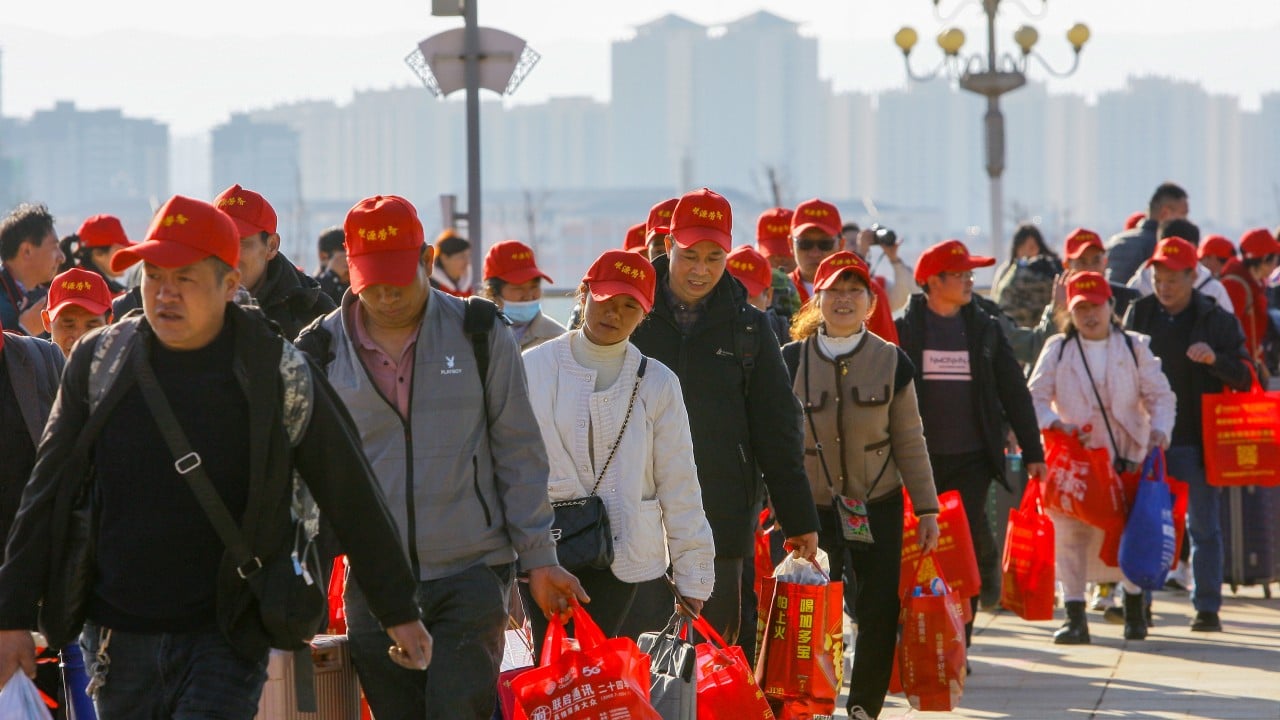
Western media outlets and mainstream financial analysts are throwing a victory parade for China’s migrant workers. They see Beijing’s recent moves to strip away hukou (household registration) restrictions from social insurance enrollment as a monumental shift. The lazy consensus says this policy changes everything. It promises to unlock a consumer spending boom, grant equal rights to 300 million internal migrants, and fix the country's demographic crisis.
They are completely misreading the room.
Removing the hukou hurdle from social insurance is not a generous welfare upgrade. It is a desperate revenue-grabbing mechanism designed to patch up a bleeding provincial pension system at the expense of the exact people it claims to protect.
For decades, the hukou system acted as an explicit barrier. If you moved from a rural village to a tier-one manufacturing hub like Shenzhen, you couldn’t access local public schools, healthcare, or pensions. The standard narrative insists that breaking this barrier is a progressive win.
Here is the brutal reality: forcing migrant workers into the formal urban social security apparatus is a financial death sentence for their immediate livelihood. It forces them to trade tangible, hard-earned cash today for the vague, mathematically compromised promise of a state pension decades from now.
The Mathematical Mirage of Urban Pensions
The mainstream press loves to interview think-tank academics who praise policy alignment. Let us look at the actual balance sheets instead.
China’s pension system is heavily fragmented, run largely at the municipal and provincial levels. Wealthy, coastal manufacturing hubs sit on massive surpluses. Rural provinces and old industrial rust belts are functionally bankrupt, relying on direct fiscal injections from the central government to pay current retirees.
When a migrant worker enters the urban employee social insurance system, they encounter five distinct funds: pension, medical, unemployment, work injury, and maternity.
| Insurance Type | Typical Employee Contribution | Typical Employer Contribution |
|---|---|---|
| Pension | 8% | 16% |
| Medical | 2% | 6% - 10% |
| Unemployment | 0.5% | 0.5% - 1% |
For a migrant worker making 6,000 RMB a month, that 10% employee deduction is a massive blow to daily survival. It is the difference between sending money home for a parent’s medical care or starving their own immediate consumption.
Worse, the system is fundamentally designed to penalize mobility. Under current regulations managed by the Ministry of Human Resources and Social Security, a worker must contribute to the urban employee pension system for a cumulative minimum of 15 years to draw a pension upon retirement. If they fail to hit that mark, or if they choose to permanently return to their rural village, transferring those funds is an administrative nightmare.
You can generally transfer your individual contribution account (the 8%). But the employer's massive 16% contribution? That stays behind in the municipal coffers of the city you are leaving.
The city wins. The worker loses. It is an extraction mechanism masquerading as social progress.
Why Migrant Workers Are Actively Resisting 'Inclusion'
The naive assumption embedded in global financial reporting is that migrant workers are desperate to get into this system. I have spent years tracking labor supply chains and discussing factory floor economics with manufacturing executives in Guangdong and Zhejiang.
The real-world data shows the exact opposite: migrant workers routinely strike deals with factory owners to avoid social insurance enrollment.
Imagine a scenario where a factory owner offers a worker two choices. Option A: A compliant contract with a gross salary of 6,000 RMB, which nets out to around 5,000 RMB after social insurance deductions, while costing the employer an extra 1,200 RMB in taxes. Option B: An informal agreement where the worker gets 5,500 RMB in cold, hard cash, and the factory owner saves 700 RMB in overhead.
In the vast majority of cases, both parties choose Option B.
Is this illegal under China's Labor Contract Law? Absolutely. Is it a widespread structural reality? Unquestionably.
By removing the hukou restriction, Beijing is not suddenly making social insurance attractive to these workers. It is giving local tax bureaus the legal teeth to crack down on informal employment arrangements. The primary goal is to force millions of gig workers, delivery drivers, and construction laborers to start paying into a system that desperately needs their cash injections to sustain the aging urban population.
The Crushing Burden on Small Businesses
Let us look at the other side of the ledger. The narrative claims this policy shift creates a stable, loyal workforce for businesses. This is pure fantasy.
China’s private sector—the famous "56789" dynamic (contributing 50% of tax revenue, 60% of GDP, 70% of innovation, 80% of urban employment, and 90% of new jobs)—is currently gasping for air. Profit margins in low-end manufacturing and service industries are razor-thin, frequently hovering between 3% and 5%.
Forcing a small or medium enterprise (SME) to fully onboard its migrant workforce onto the official social insurance registry increases total labor costs by 20% to 30% instantly.
When labor costs spike that aggressively in a deflationary economic environment, businesses do not just absorb the hit. They execute a predictable playbook:
- They slash base wages to offset the mandatory insurance contributions.
- They accelerate automation, replacing low-skilled migrant labor with robotic assembly lines.
- They shut down entirely, shifting operations to Southeast Asia or Latin America.
The "lazy consensus" argues that removing hukou barriers stabilizes the labor market. In truth, it creates structural unemployment for the exact demographic it claims to lift up.
Dismantling the Consumption Myth
The ultimate justification offered by macroeconomists for this policy change is the holy grail of rebalancing: domestic consumption. The logic goes like this: if migrant workers have a safety net, they will stop hoarding precautionary savings and start buying cars, smartphones, and domestic services.
This thesis breaks down under basic scrutiny.
Migrant workers do not save money because they lack an urban medical insurance card. They save money because they have zero generational wealth, their rural land rights are illiquid, and the structural costs of life in China—specifically education and housing—remain astronomically high.
Providing a migrant worker with an urban pension plan that pays out a meager, inflation-eroded sum in the year 2050 does nothing to alter their consumption patterns in 2026. A safety net that requires you to give up 10% of your current disposable income does not stimulate spending; it completely suppresses it.
The Real Solution Nobody Wants to Implement
If Beijing actually wanted to solve the migrant welfare crisis, it would not be tweaking enrollment criteria for an outdated, localized insurance pool. It would execute a structural overhaul that addresses the root causes of the inequality.
First, it would completely nationalize the pension system. It would pool all contributions into a single, centrally managed fund, erasing the geographic boundaries that allow wealthy cities to hoard surpluses while migrant-sending provinces starve.
Second, it would decouple basic public services—like primary education and emergency healthcare—from employment-based social insurance entirely. A child’s right to attend a school in Shanghai should not depend on whether their parent is enrolled in a formal corporate pension scheme.
Third, it would grant full, tradeable property rights to rural land. Right now, migrant workers hold land use rights, but they cannot sell their plots on an open market to accumulate true capital.
But doing these things would require taking wealth away from powerful urban elites and state-backed enterprises. It is far easier to rewrite local enrollment rules, draft a glowing press release about "breaking down hukou walls," and let the financial press cheer lead a policy that actually drains money out of the pockets of the working class.
Stop viewing China’s regulatory shifts through the lens of Western welfare expansion. Every policy update is an exercise in resource allocation and fiscal preservation. This social insurance shake-up is not a gift to the migrant worker. It is an invoice.