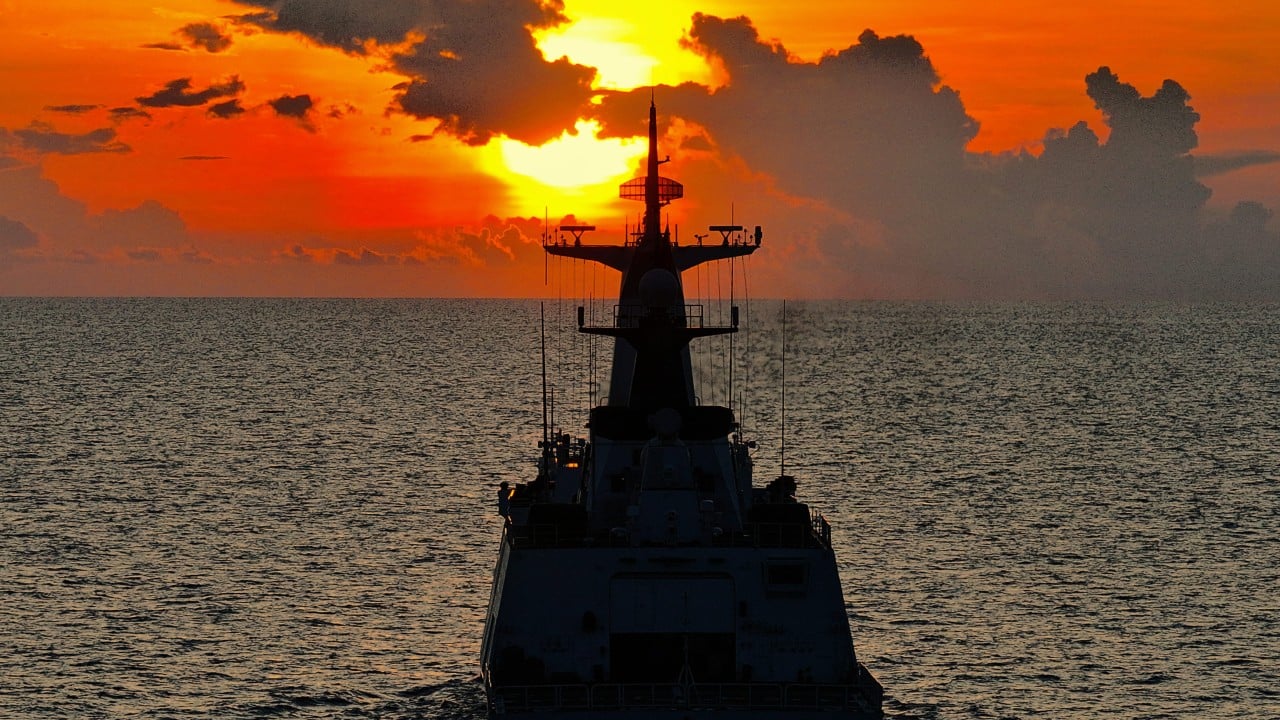
Beijing just swapped its naval warships for white-hulled coast guard vessels on the eastern side of Taiwan. On the surface, pulling back gray hull military ships might look like a de-escalation. It isn't. It is a calculated pivot to lawfare, and it presents a much thornier problem for Taipei and its Western allies.
The China Coast Guard announced that its Xiushan ship formation has officially taken over from the Daishan formation. They are running what Beijing terms routine law enforcement patrols in the waters east of Taiwan. Taiwan's Coast Guard Administration immediately pushed back, deploying monitoring vessels and promising all necessary measures to forcefully expel the intruders.
This isn't a minor border dispute. It is a structural shift in how Beijing intends to choke Taiwan's sovereignty without firing a single shot.
The Lawfare Strategy Behind the White Hulls
For years, the world watched the Taiwan Strait on the west. The deep waters on the east coast, however, were considered Taiwan's safe backyard and a crucial pathway for foreign reinforcement. By establishing a permanent coast guard presence there, Beijing is rewriting the rules of engagement.
When a navy warship enters disputed waters, it is a military provocation. It triggers military responses. But when a coast guard vessel arrives claiming it is just doing routine fishery protection, maritime rescue, and law enforcement, the dynamic changes. Beijing is trying to treat the waters around Taiwan as domestic territory. If you accept their premise that Taiwan is a province of China, then the China Coast Guard has every right to police those waters.
That is the trap. If Taiwan uses military force against a coast guard ship, Taipei looks like the aggressor. If Taiwan does nothing, Beijing establishes de facto administrative control.
This is the exact playbook China used to dominate the South China Sea. First come the fishing fleets, then the coast guard, then the permanent administrative control.
The Triggers You Aren't Hearing About
This latest escalation did not happen in a vacuum. It is a direct retaliation against shifting alliances in the Pacific.
Specifically, Japan and the Philippines recently agreed to formal talks to delimit their maritime boundaries. Beijing lost its mind over this announcement because the overlapping maritime zones sit right in that crucial pocket east of Taiwan. China claims those waters as its own exclusive economic zone.
We saw the prelude to this deployment. Chinese state-owned oceanographic survey ships, escorted by armed coast guard hulls like the Haijing 2304—which packs a 76-millimeter rapid-fire gun—spent days operating inside Japan's exclusive economic zone east of Taiwan. They were mapping the seabed. They were checking underwater terrain for future submarine operations and undersea cable mapping.
By replacing naval ships with a formalized coast guard rotation, Beijing is signaling that this isn't a temporary exercise. It is a permanent administrative blockade in the making.
The Impossible Choice for Merchant Shipping
The real danger here isn't an immediate missile strike. It is a slow economic strangulation.
Taiwan's government recently told its commercial and civilian ships to completely ignore any boarding or inspection demands from the China Coast Guard. Taipei promised its own coast guard vessels would step in to protect them.
Think about what that looks like in practice. A Taiwanese merchant vessel carrying critical electronic components or liquid natural gas is stopped by a massive, armed Chinese coast guard ship 50 miles east of Hualien. The Chinese captain demands to board and inspect the cargo under "domestic law." A smaller Taiwanese coast guard boat rushes to intervene.
One nervous sailor on either side taps a trigger, and you have a localized shooting war.
Even if nobody shoots, the mere threat of Chinese coast guard interceptions spikes maritime insurance rates. Shipping companies start rerouting. The global supply chain, which relies on the Taiwan Strait and surrounding waters for nearly half of the world's container traffic, takes a massive hit.
Western Capital Alarm is Not Enough
The United States, France, Germany, and Britain have all voiced serious concerns over these eastern patrols. European nations care because freedom of navigation in these waters is tied to their economic survival.
But statements don't stop ships. China knows the West is distracted by multiple global conflicts. Beijing is gambling that Western powers won't risk a military confrontation over a coast guard inspection dispute.
If you run a maritime shipping business, operate logistics in East Asia, or hold tech stocks dependent on Taiwanese semiconductors, you need to stop watching the skies for fighter jets. Watch the water for the white hulls.
Your immediate next step is to stress-test your supply chain for a grey-zone blockade scenario. Do not assume insurance policies will cover detentions by non-military state vessels in these waters. Review the specific wording of your maritime coverage regarding administrative or customs detentions in the Western Pacific, because the line between legal enforcement and geopolitical warfare just went completely gray.