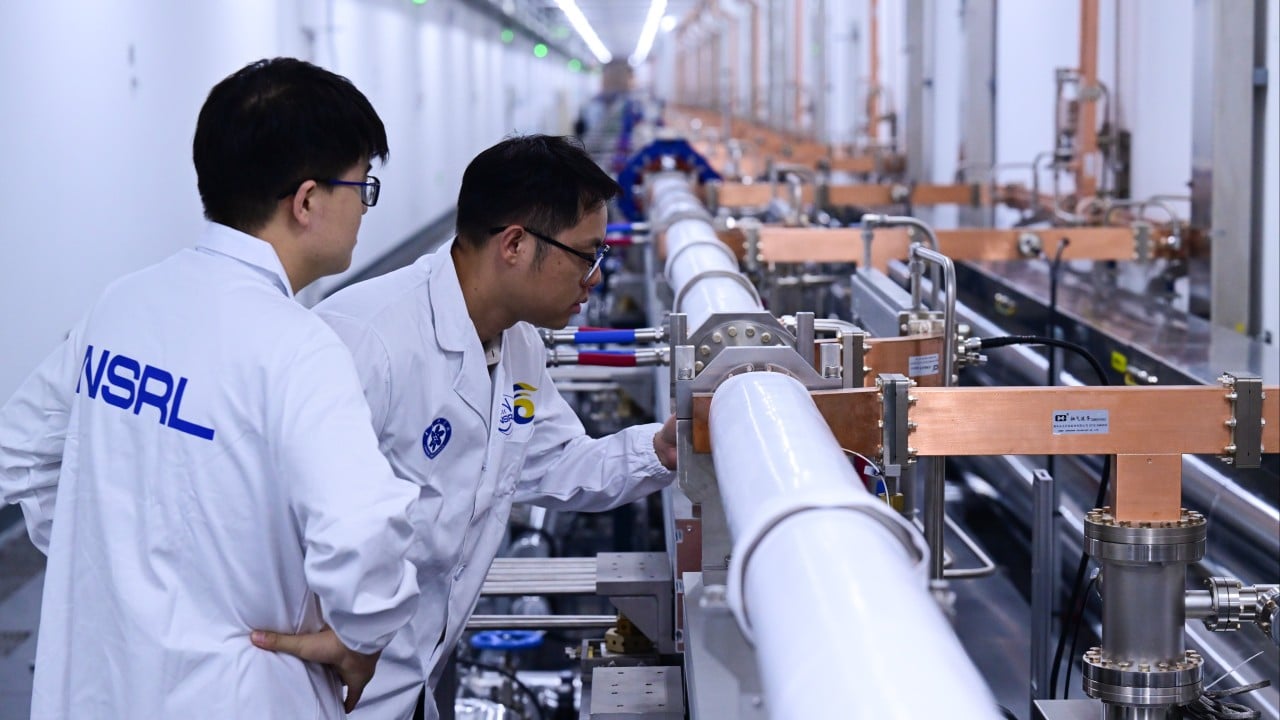
The headlines hit hard. China builds a world-leading electron gun beam, powers up a super microscope, and suddenly the tech press acts as if atomic resolution is a solved problem. We are told this breakthrough opens a golden door into materials science and structural biology.
It is a fairy tale for people who do not spend time in cleanrooms.
I have watched research institutions blow millions of dollars chasing high-brightness electron sources while ignoring the physical degradation happening five centimeters further down the column. Building a better electron emitter is like dropping a Ferrari engine into a chassis with square wooden wheels. You can triple the brightness of your gun, but if your specimen drifts by half a nanometer during an integration window, your atomic-resolution data is just expensive garbage.
Let us dismantle the lazy consensus. The bottleneck in modern microscopy is no longer the electron source. It is sample preservation, mechanical stability, and computational distortion correction.
The Brightness Trap
The core claim surrounding these advanced electron guns is simple. Higher brightness means shorter exposure times, reduced radiation damage, and sharper images. On paper, the math checks out. High coherence and high brightness reduce spatial and chromatic aberration effects at the emission point.
The reality in a real laboratory environment is brutal.
When you push high-current electron beams into biological macromolecules or fragile beam-sensitive crystals, you do not get a pristine image. You get a miniature demolition derby. The energy transfer from the beam destroys the specimen before the detector can register a coherent diffraction pattern. Cryo-electron microscopy made massive waves because it flash-freezes water into amorphous ice, protecting the sample structure. But vitrified ice is not a fortress. It moves. It charges. It bows under the beam.
A brighter gun just vaporizes your sample faster if your thermal and mechanical drift management cannot keep pace. Pouring more photons or electrons onto a collapsing target does not yield clarity. It yields noise.
Why the Specimen Holder is the Real Enemy
Ask any senior microscopist what keeps them awake at night. They will not talk about Schottky emitters or field emission guns. They will talk about thermal drift, acoustic vibration, and mechanical creep in the goniometer stage.
Sub-angstrom imaging requires stability measured in picometers. A building settling two blocks away, a truck rumbling down the street, or the HVAC system cycling on the third floor will distort an atomic lattice map.
[Brighter Electron Source]
       ↓
[Higher Beam Density]
       ↓
[Accelerated Specimen Damage & Charging]
       ↓
[Unusable Data Without Sub-Picometer Stage Stabilization]
When labs focus entirely on source metrics, they engage in vanity engineering. They optimize the part of the instrument that looks best on a grant application or a state media broadcast, ignoring the systemic chain of failure. If your sample holder fluctuates by two tenths of a nanometer over ten seconds, your 300-kilovolt electron gun is as useful as a flashlight in a hurricane.
The Computational Illusion
We have also entered an era where raw data quality matters less than computational salvation. Modern single-particle analysis relies heavily on algorithms that sort through millions of noisy, blurred particle projections to reconstruct a three-dimensional volume.
This creates a dangerous feedback loop. Researchers assume that if software can average out poor data, hardware specs do not need to be balanced. They accept massive radiation damage because neural networks and iterative refinement algorithms can reconstruct missing details.
That is not observation. That is interpolation.
When you rely on algorithms to guess what an atomic bridge looked like before the electron beam blew it apart, you are looking at mathematical smoothing, not physical reality. A superior electron gun does not fix bad reconstruction pipelines; it simply feeds them higher volumes of corrupted data at a faster rate.
What Real Progress Looks Like
If we want to push past the current limits of structural biology and quantum materials analysis, we need to stop worshipping the emitter tip.
We need enclosed, vibration-isolated environmental chambers that eliminate mechanical drift entirely. We need direct electron detectors with frame rates fast enough to capture movement before structural collapse occurs. We need advanced phase plates that do not introduce optical artifacts.
The obsession with raw beam metrics is a distraction. It sells hardware upgrades and generates press releases, but it leaves the fundamental limits of microscopy untouched. Until the engineering community fixes the entire mechanical and environmental chain, a brighter gun is just a more expensive way to ruin a sample.
Stop looking at the source. Start looking at the stage.