We love to treat closed-circuit television as a digital oracle. The lazy consensus across mainstream crime reporting is simple: if you splash enough high-definition footage across the internet, public crowdsourcing and facial recognition will eventually scoop up the culprit. Every viral video of a crime becomes an episode in a modern panopticon fairy tale where the camera always wins.
It is a comforting delusion. It makes us feel safe beneath the glass lenses dangling from every lamppost in London.
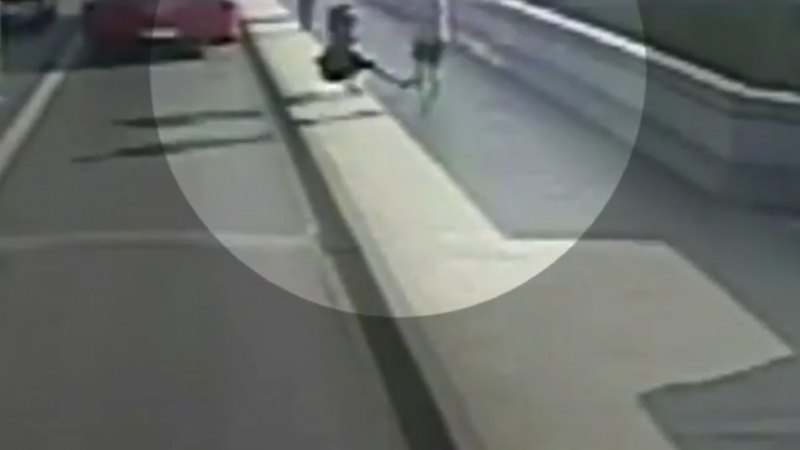
Then reality intervenes. Look no further than the infamous 2017 Putney Bridge incident. A jogger shoves a woman directly into the path of an oncoming double-decker bus, nearly crushing her skull, and calmly jogs away while the world watches in high definition. The CCTV footage went viral globally. Millions viewed it. Detectives appealed, newspapers printed stills, and the public screamed for justice.
And the Metropolitan Police hit a brick wall. The case stalled, files gathered dust, and by 2018, the investigation was officially closed with all leads exhausted. It took nearly a decade for an arrest to even happen, exposing a brutal truth about our reliance on surveillance technology: cameras do not solve crimes. Detectives do. And when surveillance acts as a substitute for actual policing, justice breaks down.
The Resolution Fallacy
Let us dismantle the technical illiteracy governing modern security debates. Every time a grainy video hits the news, armchair investigators online point to pixelated blobs and scream about resolution. They assume that if a camera can record a bridge, it can isolate a unique human identity out of a crowd of millions.
That is not how optical capture works in urban environments. Wide-angle lens coverage designed to monitor public infrastructure sacrifices pixel density for field of view. By the time you crop a digital frame to isolate a jogger's face running across a wet London bridge during morning rush hour, you are left with a low-resolution smear of light and shadow.
I have seen corporate security teams spend millions deploying top-tier camera grids, only to realize that their storage arrays are archiving terabytes of useless noise. Resolution without context is just expensive static. The Putney footage showed a man in a grey t-shirt and dark shorts—a uniform shared by roughly forty thousand men in West London on any given Tuesday morning. The camera captured the act, but it completely failed to capture the individual.
The Bystander Effect of the Lens
There is an even darker psychological cost to our total dependence on digital eyes. When a society believes that every square inch is monitored, individual vigilance collapses.
Witnesses assume someone else—or some automated system—is handling the problem. If a camera is watching, why intervene? If a camera is recording, why memorize details, license plates, or distinct gaits? We have outsourced our civic responsibility to inanimate chunks of plastic and glass.
When the victim tried to confront the jogger fifteen minutes later as he looped back across the bridge, she was acting on human instinct, not algorithmic tracking. Yet the cultural response remained passive. People waited for the police to run facial recognition software over a viral clip, as if algorithms possess some magical jurisdiction over human malice. They do not. Facial recognition tools struggle immensely with motion blur, poor lighting angles, and dynamic physical exertion like running.
Dismantling the Panopticon
We need to stop pretending that expanding the surveillance state equals public safety. The obsession with capturing every public square on camera creates a false sense of security while degrading civil liberties. It encourages lazy investigative habits where police forces wait for a video to go viral instead of pounding the pavement.
When a society relies on cameras to do the work of investigators, high-profile cases turn into cold cases because everybody assumes someone else holds the key. The cameras were rolling, the internet was watching, and the system still stalled for nearly ten years.
Stop waiting for the lens to save you.