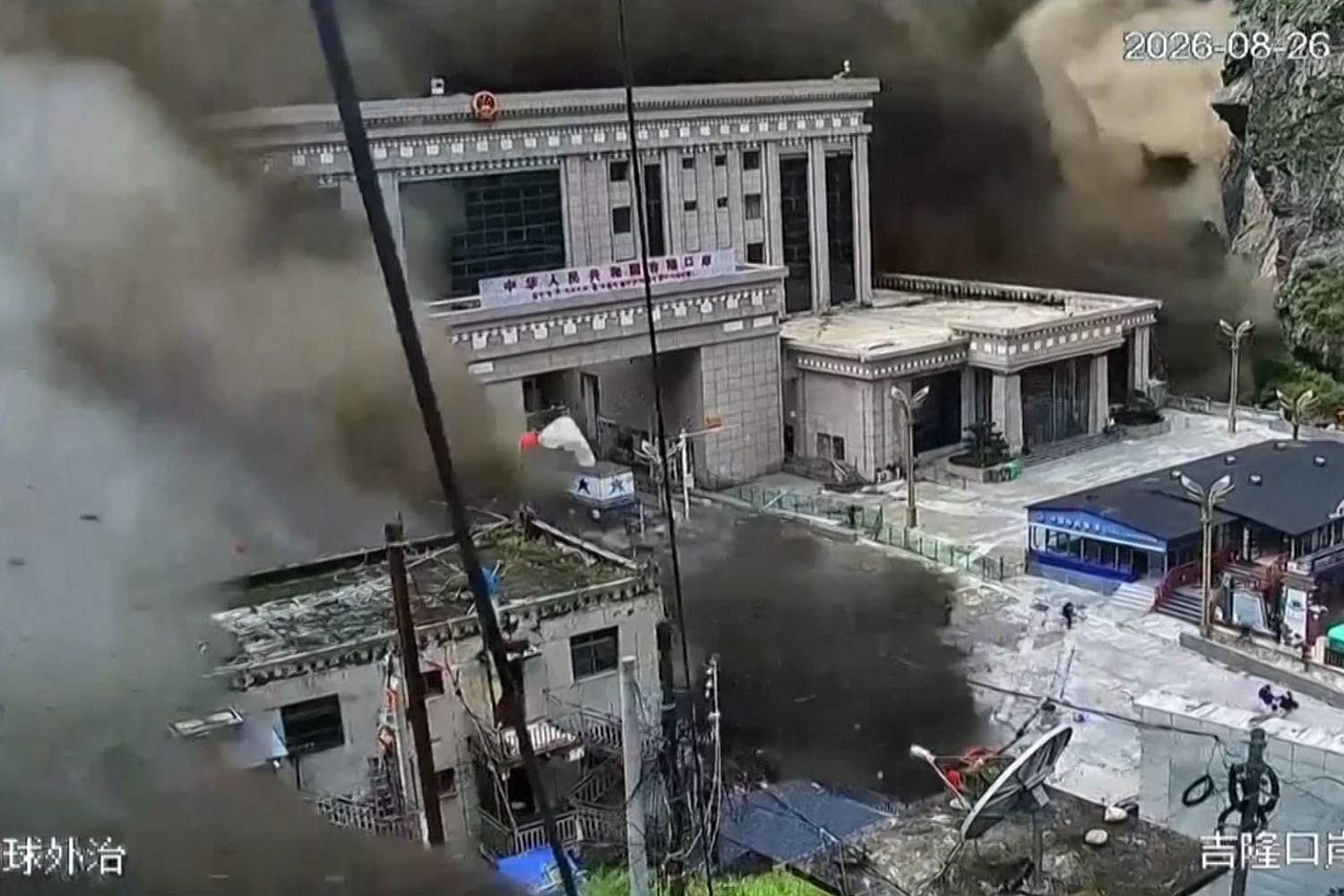
The water level on the Trishuli River jumped nine meters in just thirty minutes. There was no heavy rainfall. No prolonged monsoon downpour preceded the disaster. Instead, a wall of water, ice, and pulverized rock blasted down the Himalayas with terrifying speed, catching entire villages and hundreds of travelers completely off guard.
When a massive section of high-altitude ice snaps off cleanly, physics takes over in the worst way possible. Scientists analyzing satellite data are piecing together why the recent flash flood in Nepal's northern Rasuwa district turned so deadly so fast. Here is what actually happened on the ground and why the mountains are becoming dangerously unpredictable.
The Anatomy of a High Altitude Ice Avalanche
Satellite imagery tells a shocking story. Geologists studying the region point to a section of glacier roughly two thousand feet wide that broke away from an altitude of about 17,000 feet. That massive block of ice dropped nearly a vertical kilometer straight down to the valley floor.
When millions of tons of ice fall from that height, the impact resembles an explosion. Glaciologists note that the sheer potential energy turns solid ice into a fluid mix of pulverized slush, rock debris, and water instantly.
This slurry slammed directly into the Lhende Khola, a narrow tributary of the Bhote Koshi River. By blocking the river channel temporarily, the avalanche created a natural, highly unstable dam. Water pooled behind the debris until the pressure became too great. When the improvised dam burst, it sent a devastating hyper-concentrated flood wave tearing down toward settlements, bridges, and hydropower projects.
Sorting Fact From Fiction With the Earthquake Link
Shortly before the disaster struck, the US Geological Survey recorded a magnitude 4.4 earthquake roughly 47 kilometers north of Gosainkunda on the Tibetan side. Naturally, initial government reports jumped on the tremor as the primary trigger.
Experts urge caution before connecting the two events too neatly. While a minor earthquake can shake loose destabilized rock and ice, researchers note that high-altitude glaciers in the Himalayas are already increasingly vulnerable due to rising global temperatures.
A similar catastrophe hit the exact same corridor. Last July, a sudden flood on the Lhende River stemmed from a glacial lake outburst. This time, however, experts from organizations like the International Centre for Integrated Mountain Development point primarily to an ice-rock avalanche rather than just an overflowing lake. Whether the minor earthquake acted as the final straw or the glacier simply collapsed under its own degraded structural integrity remains a point of active study among geologists.
The Real Danger Facing Downstream Communities
Flash floods driven by cryosphere hazards share one terrifying trait: you cannot outrun them if you rely on traditional weather forecasts. Because these events originate from sudden structural failures miles high in remote mountain passes, standard rainfall metrics are useless.
The human cost has been severe, with dozens of confirmed fatalities and hundreds of individuals reported missing, including international pilgrims and tourists traveling near the border. Search and rescue teams face monumental hurdles trying to access remote gorges choked with boulders and heavy sediment.
Worse yet, disaster management authorities warn that the threat hasn't completely passed. Remnants of the avalanche debris continue to obstruct natural water flows upstream, meaning secondary surges remain a constant possibility if new impoundments form and break.
If you live, work, or travel near high-mountain river systems in the Hindu Kush Himalayan region, standard safety assumptions no longer apply. Local authorities and international bodies must fast-track automated sensor networks that detect rapid changes in river volume rather than waiting for visual confirmation or weather alerts. Monitoring high-altitude glacial stability is no longer just an academic exercise for scientists in labs; it is an urgent survival requirement for millions living downstream.