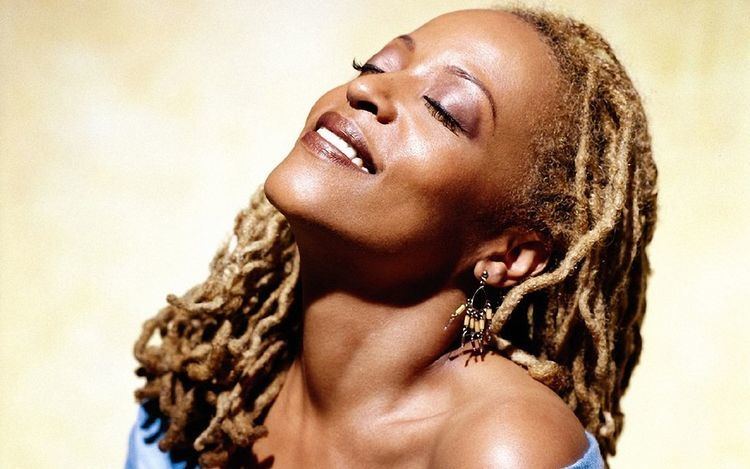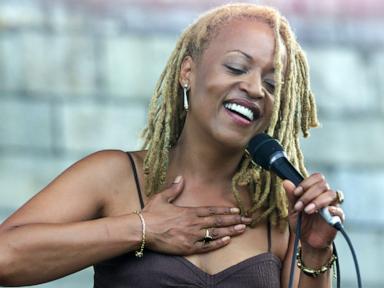
Music lost one of its absolute titans when Cassandra Wilson passed away at her home in Jackson, Mississippi at the age of seventy. She didn't just sing jazz. She tore up the rulebook, rebuilt it using blues, folk, and country, and dared everyone else to keep up.
If you grew up listening to standard vocal albums that felt safe or predictable, Cassandra’s smoky, commanding contralto voice hit you like a physical force. She wasn't interested in mimicking the classic mid-century greats. She wanted to carve her own distinct path. That rare artistic courage is why critics called her America's best singer and why her influence echoes across modern music today.
Breaking the Mold in New York and Beyond
Born into a musical household in Jackson, Wilson picked up the piano early and later mastered the guitar, an instrument that would become her signature weapon on stage. After cutting her teeth in New Orleans, she landed in New York City in 1982.
That move put her right in the middle of the underground jazz scene. She quickly aligned with saxophonist Steve Coleman and the experimental M-Base collective. M-Base wasn't about playing comfortable, smoky-room standards for tourists. It was a rigorous, highly cerebral approach to rhythm and improvisation.
Working with that crew hardened her technical chops. But Cassandra had a broader vision burning in her chest. She understood that jazz didn't live in a museum. It lived in the Delta mud, in front-porch blues, and in contemporary pop songs waiting to be rewired.
The Masterpiece That Rewrote the Rules
Her debut album Blue Skies arrived in 1988 and proved she could handle traditional standards with absolute grace. But the real earthquake happened in 1993 with the release of Blue Light 'Til Dawn.
Produced with legendary grit, that record shattered genre barriers. She took songs by Robert Johnson, Van Morrison, and Joni Mitchell and dragged them straight into a nocturnal, roots-drenched jazz atmosphere. Her acoustic guitar led the charge alongside eerie, sparse instrumentation. It wasn't fusion in the slick, 1980s corporate sense. It was raw, organic storytelling.
That album changed expectations for every jazz label on the planet. Blue Note Records found a massive commercial and critical anchor in her. When New Moon Daughter dropped in 1995, it earned her the first of two Grammy Awards, cementing her status as an absolute powerhouse.
A Peerless Legacy in Modern Music
Success never softened her artistic edge. She collaborated across stylistic lines, singing on Wynton Marsalis's historic Blood on the Fields, which marked the first jazz composition to win a Pulitzer Prize. She later claimed her second Grammy for her 2008 album Loverly, proving her voice had only deepened and matured with time.
T Bone Burnett once remarked that she might honestly stand as one of the greatest singers of all time. He wasn't exaggerating. Listen to how she bends a note or lets silence do the heavy lifting in a track. She taught generations of musicians that phrasing matters more than volume, and soul matters more than technical gymnastics.
Her hometown mayor, John Horhn, noted that she carried the sound and history of Mississippi wherever her voice reached. She stayed rooted in Jackson even after conquering global stages, maintaining a deep connection to the soil that birthed the blues.
Take some time today to put on Blue Light 'Til Dawn or her cover of Neil Young's "Harvest Moon". Turn off the distractions, crank up the speakers, and listen to an artist who refused to sound like anyone other than herself.