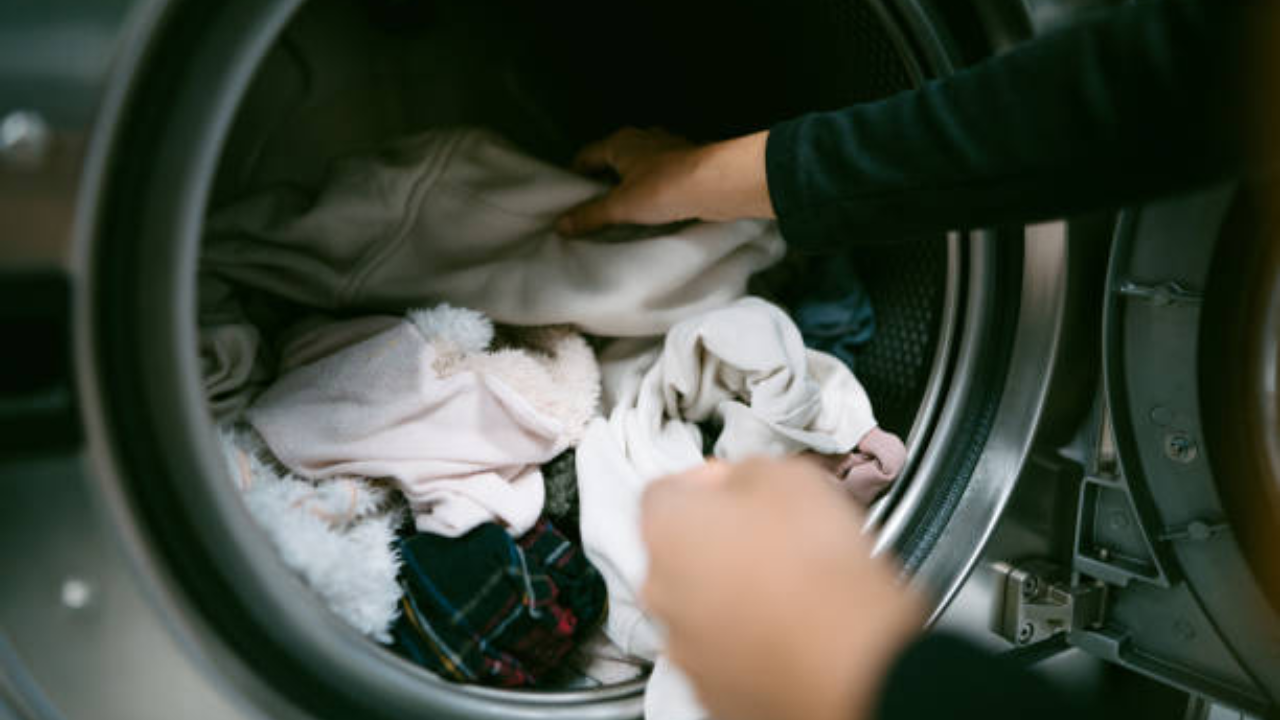
A Canadian condominium owner who claimed the smell of her neighbors' scented laundry products prevented her from using her own balcony since 2018 has officially lost her legal battle. A residential tribunal dismissed the complaint, ruling that ordinary household odors venting through standard building infrastructure do not constitute an actionable legal nuisance. The decision exposes the harsh reality of high-density living, where personal sensitivities collide with the architectural compromises of modern multi-family housing.
For nearly a decade, the complainant argued that exhaust from neighboring dryer vents carried chemical fragrances directly onto her private outdoor space, triggering physical discomfort and rendering the balcony unusable. She demanded that the condominium corporation intervene, restrict the use of scented detergents and fabric softeners among adjacent units, or re-engineer the building's ventilation pathways. Yet when the tribunal examined the physical evidence, building bylaws, and established property law, the case collapsed under the weight of a single legal principle. Living in a shared structure requires tolerating the ordinary byproducts of domestic life. Read more on a connected subject: this related article.
The Architecture of Shared Air
Modern condominiums are marvels of spatial efficiency, not acoustic or atmospheric isolation. When developers pack hundreds of residential units into a vertical concrete frame, utility exhausts must go somewhere. Dryer vents, bathroom fans, and kitchen range hoods typically terminate along exterior walls, often mere feet from neighboring windows and balconies.
Air currents do not respect property lines. On a calm afternoon, warm exhaust air rises and disperses harmlessly into the atmosphere. When wind patterns shift or thermal inversions trap air against the facade of a building, those exhaust plumes linger. A resident sitting on a third-floor balcony suddenly inhales the concentrated vapor of a neighbor's fabric softener two floors below. Additional analysis by Al Jazeera delves into related views on the subject.
To understand why tribunals refuse to police these emissions, one must look at how building codes treat residential ventilation. Municipal construction standards dictate minimum distances between exhaust terminations and operable windows or air intakes. Provided a building meets the code that was active at the time of its construction, the physical layout is legally sound. Retrofitting an existing concrete high-rise to reroute dozens of individual dryer ducts is not merely expensive. In most cases, it is structurally impossible without gutting interior ceilings and breaching fire-rated assemblies.
The Legal Threshold of Nuisance
In Canadian property and condominium law, private nuisance requires proving an interference with the use or enjoyment of land that is both substantial and unreasonable. Courts and specialized bodies like British Columbia's Civil Resolution Tribunal or Ontario's Condominium Authority Tribunal apply an objective standard. They do not ask whether the specific complainant is distressed. They ask whether an ordinary, average person would find the interference intolerable.
This distinction kills most scent-related litigation before it reaches a hearing.
- Objective vs. Subjective Harm: If a resident suffers from severe chemical sensitivities, migraines, or asthma triggered by synthetic fragrances, their physical suffering is entirely real. However, the law separates medical vulnerability from unreasonable neighborly conduct. Doing laundry with commercially available detergent is an ordinary, expected domestic activity.
- The Frequency Factor: A nuisance must generally be continuous or relentlessly frequent to warrant legal intervention. Unless a neighbor is running a commercial laundromat out of a two-bedroom unit, residential laundry occurs a few times a week for roughly forty-five minutes per cycle.
- Proof of Causation: Proving that a specific odor originated from a specific unit, rather than drifting from an adjacent building or street-level exhaust, requires objective measurement. Odors vanish before inspectors arrive. A resident's handwritten log of smells rarely outweighs a lack of empirical air quality data.
Boards and tribunals consistently draw a hard line between toxic hazards and sensory annoyances. Second-hand tobacco smoke and cannabis vapor have increasingly been restricted in multi-unit buildings because public health consensus classifies them as carcinogens and clear health hazards. Laundry detergent, despite containing volatile organic compounds that irritate sensitive individuals, remains classified as a standard household necessity.
When Bylaws Collide with Personal Habits
Condominium corporations operate as miniature democracies governed by declarations, bylaws, and rules. When a resident complains about a neighbor's behavior, the property manager and volunteer board of directors are legally obligated to investigate. They must determine whether the behavior violates the governing documents or provincial condominium legislation.
Most condo bylaws contain a generic nuisance clause. It usually states that no owner shall create noise, odor, or vibration that unreasonably disturbs other residents. The word "unreasonably" does all the heavy lifting.
Consider a hypothetical scenario that plays out in property management offices every week. Unit 402 complains that Unit 404 cooks pungent meals every evening, filling the shared hallway with grease and spice odors. The board investigates. They check the hallway pressurization system—the mechanical setup designed to push fresh air into corridors so apartment smells stay inside individual units. If the building's makeup air unit is broken, the board must fix the mechanical failure. If the mechanical system works properly and Unit 404 is simply cooking dinner at 6:00 PM, the board cannot ban them from using their stove.
The laundry dispute follows this exact logic. Unless a condominium corporation passes a specific, enforceable bylaw banning scented products throughout the entire building—a measure that would require a supermajority vote of all owners—the board has no authority to dictate what brand of soap someone buys at the grocery store. Even if such a rule were passed, enforcement would be a nightmare. Property managers cannot inspect residents' laundry rooms or confiscate dryer sheets.
The Hidden Mechanics of Scented Products
The frustration felt by individuals sensitive to fragrances is rooted in genuine chemical reality. Modern laundry products are engineered for longevity. Manufacturers use micro-encapsulation technology—tiny polymer shells filled with fragrance oils that adhere to fabric fibers and rupture through friction over days or weeks.
When these chemicals hit the high heat of a residential clothes dryer, they volatilize rapidly. The exhaust stream carries a concentrated cocktail of synthetic musks, phthalates, and other volatile organic compounds (VOCs) directly out the vent pipe. Unlike cooking smells, which dissipate relatively quickly once the stove is turned off, modern fabric softeners are designed to cling to surfaces and linger in the air.
For the roughly ten to thirty percent of the population that reports some degree of fragrance sensitivity, this exhaust is not a pleasant floral breeze. It triggers immediate physiological reactions:
- Neurological symptoms: Throbbing headaches, brain fog, and dizziness within minutes of exposure.
- Respiratory irritation: Tightness in the chest, coughing, and constriction of the airways.
- Sensory overwhelm: Nausea and burning sensations in the eyes and nasal passages.
Yet regulatory agencies continue to approve these formulations for mass consumer use. Because the products are legal to sell and use as directed, courts refuse to penalize consumers for using them in their own homes. The burden of adaptation falls entirely on the sensitive individual, who must close their windows, run indoor HEPA and activated-carbon air purifiers, or abandon their outdoor balcony space during peak laundry hours.
Why Boards Refuse to Re-Engineer Vents
When complainants realize they cannot ban their neighbors from using fabric softener, they pivot to demanding structural remedies from the condo corporation. They ask the board to install vent deflectors, extend exhaust pipes upward toward the roof, or add inline filtration systems to the dryer ducts.
On paper, these look like reasonable compromises. In practice, they violate fire codes and create catastrophic maintenance liabilities.
Dryer exhaust contains lint—a highly flammable byproduct of tumbling textiles. Building codes strictly limit the total length of a dryer duct and the number of bends allowed in the pipe. Every ninety-degree elbow or exterior deflector increases static pressure, slowing down airflow and causing lint to accumulate inside the wall cavity. A clogged dryer vent is one of the leading causes of residential structure fires.
Furthermore, attaching filters or screens to the exterior termination of a dryer vent is strictly prohibited by safety standards. A screen traps wet lint, rapidly freezing shut in Canadian winters or forming a solid plug that causes the dryer's heating element to overheat. No responsible condominium board will assume the fire liability of modifying a code-compliant exhaust system just to redirect an odor.
The High Cost of Mediation and Litigation
Seven years is an eternity in residential dispute resolution. Pushing a complaint from initial emails to a property manager, through formal board hearings, mandatory mediation, and finally a tribunal adjudication drains thousands of dollars in legal fees from both sides.
In many Canadian jurisdictions, condominium corporations are entitled to recover their legal costs if they successfully defend against a unit owner's unfounded or unreasonable claim. Even when a tribunal declines to award full indemnity costs, the unit owner still pays their own legal bills while indirectly funding the corporation's defense through their monthly maintenance fees.
Tribunal adjudicators look closely at whether the parties acted reasonably during the conflict. A resident who refuses to compromise, rejects offers to test mechanical ventilation, or demands impossible structural changes loses credibility rapidly. Conversely, a condo board that ignores complaints entirely, fails to inspect the vents for blockages, or treats a distressed owner with hostility risks having damages awarded against the corporation for failing in its statutory duty to investigate.
Navigating the Gray Zone of High-Density Living
The legal system excels at resolving clear violations of safety, structural integrity, and financial misconduct. It is notoriously clumsy at mediating quality-of-life friction where neither party is acting maliciously.
The neighbor drying their bedsheets on a Sunday afternoon is not trying to poison the person upstairs. The resident retreating indoors from their balcony is not fabricating their physical discomfort. Both parties paid hundreds of thousands of dollars for the right to enjoy their respective homes.
Real estate marketing sells condominiums as serene sanctuaries in the sky, complete with panoramic views and private outdoor terraces. The glossy brochures never mention that your balcony sits directly above a neighbor's exhaust louver, or that concrete slabs transmit the low-frequency hum of a spin cycle through three floors.
Buyers rarely inspect exterior elevation drawings to trace where mechanical vents terminate relative to the unit they are purchasing. They walk through the staging, admire the kitchen countertops, and sign the offer. Only after moving in do they discover the invisible atmospheric boundaries that govern their daily routine.
When a tribunal rules that a neighbor's laundry is not a legal nuisance, it is not dismissing the complainant's discomfort. It is enforcing the foundational compromise of urban density. You surrender absolute control over your immediate environment in exchange for location, convenience, and shared maintenance costs. If you require absolute command over the air moving across your porch, a concrete tower with three hundred neighbors will never provide it.