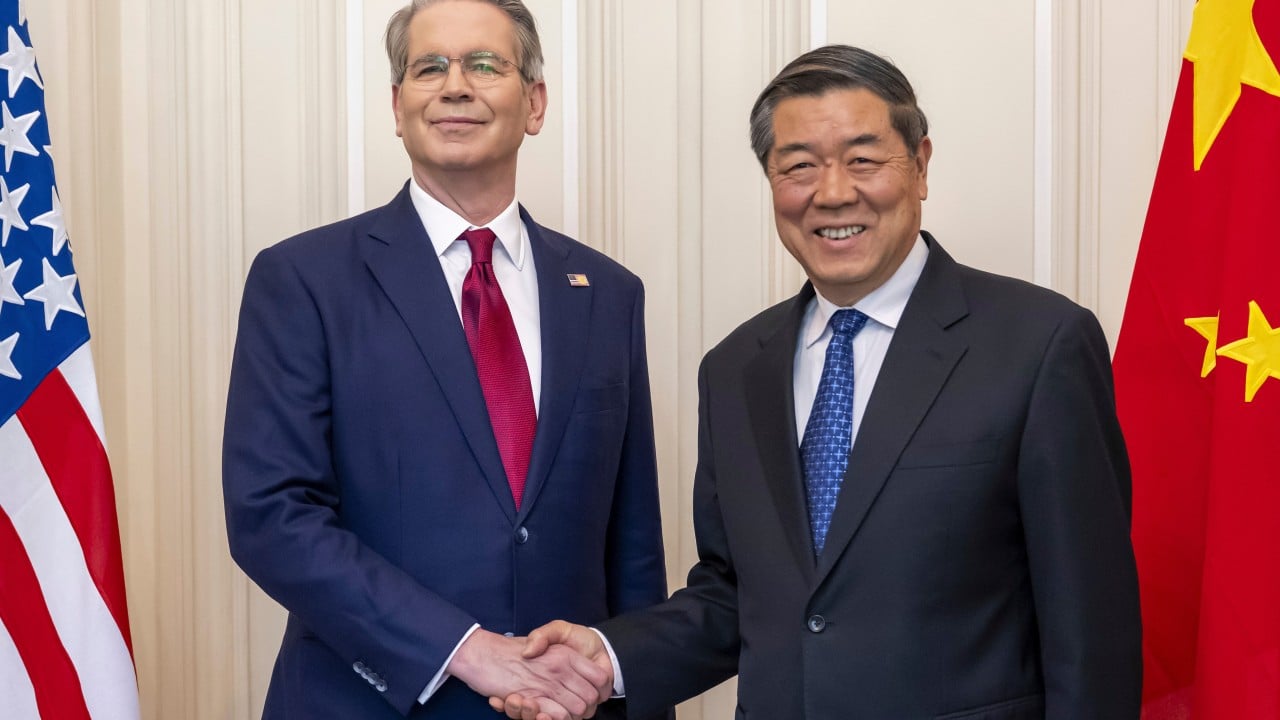
Every mainstream business desk in Toronto and Ottawa is pushing the same lazy bedtime story right now. It goes like this: Donald Trump threatens universal tariffs, Ottawa panics, and Canadian businesses brilliantly pivot toward Beijing to save their margins.
They call it diversification. I call it walking into a buzzsaw to avoid a slap.
If you are a Canadian executive, investor, or supply chain operator reading the breathless coverage about "Canada's China trade boom" and thinking about rerouting your Q3 and Q4 capital expenditure toward Shanghai or Shenzhen, stop. Put the checkbook down. You are being sold a statistical illusion dressed up as geopolitical genius.
The financial press loves a neat narrative. A bully in Washington pushes Canada away, and a hungry market in Asia welcomes Canadian goods with open arms. It makes for clean headlines. It also ignores basic geography, supply chain physics, and the brutal reality of state-directed mercantilism.
The Math Behind the "Boom" Is Completely Broken
Let us look at what is actually happening when analysts claim trade with China is surging. They are staring at short-term percentage spikes while ignoring absolute dollar reality and the structural composition of those flows.
First, baseline math. Over 75 percent of Canadian goods exports go to the United States. Roughly 4 percent go to China. When your exposure to Beijing is a rounding error compared to your exposure to Michigan, Ohio, and Texas, a 15 or 20 percent jump in shipments to Chinese ports looks dramatic on a quarterly chart. In the real world, it does not even cover the rounding error of a 10 percent US tariff shock. You cannot replace a $600 billion customer base with a $30 billion customer base by wishful thinking and a few trade missions.
Second, look at what is moving across the Pacific. This is not a renaissance for Canadian manufacturing, software, or high-margin consumer brands. It is raw dirt, dead trees, and unrefined calories. Canola, potash, lumber, metallurgical coal, iron ore, and crude oil via the Trans Mountain expansion.
Calling a spike in raw commodity shipments a "trade boom" is like bragging that your pawn shop is thriving because you sold off your grandmother's silverware to pay the rent. Canada is acting as an extraction quarry for Chinese industrial processing, and the margins are dictated entirely by state-backed buyers who manipulate inventory cycles to crush spot prices whenever they feel like it.
I have sat in boardrooms in Vancouver and Calgary watching mid-market executives blow millions trying to build direct-to-consumer or value-added B2B distribution channels in mainland China, convinced that rising bilateral trade numbers meant open doors. Every single one of them learned the hard way that aggregate export stats do not protect you when a provincial regulator suddenly discovers a "phytosanitary issue" with your cargo the exact week Ottawa irritates Beijing.
Why Asking "How Do We Pivot to China?" Is the Wrong Question
When executives ask me how to capture this supposed Asian windfall, I tell them they are asking a suicidal question. The real question is: How do you survive a North American trade war without becoming a backdoor laundering hub that gets permanently blacklisted by Washington?
Think about the mechanics of US trade enforcement. The United States Trade Representative and Customs and Border Protection are not run by fools. They know every trick in the book regarding transshipment, minor processing, and rules-of-origin arbitrage.
Right now, Beijing is dealing with massive domestic industrial overcapacity. From electric vehicles and solar panels to steel and aluminum, Chinese factories are producing far more than their shrinking domestic consumer base can absorb. They need dumping grounds. And even better, they need compliant neighboring countries to act as assembly or transshipment staging areas to sneak subsidized components into the American market under the cover of the USMCA (or CUSMA, as Ottawa insists on calling it).
If Canadian firms lean into deeper industrial integration with Chinese suppliers to offset US tariff pain, Washington will drop the hammer. You will not just face a universal baseline tariff; you will face targeted Section 301-style penalties, strict country-of-origin audits, and the effective death of preferential North American market access.
The Geopolitical Trap: Trying to use China as a hedge against Washington is like trying to put out a kitchen fire with gasoline because the water bill is too high. Washington holds the kill switch to the Canadian economy. Beijing holds a shopping list for raw rocks and grain.
Dismantling the Top Myths Driving Bad Capital Allocation
If you talk to trade consultants or read the comments sections on financial news sites, three specific arguments always pop up to defend the "pivot to China" thesis. Every single one collapses under scrutiny.
Myth 1: "China is a massive, growing consumer market eager for Canadian quality."
Stop living in 2014. China is trapped in a severe, multi-year balance-sheet recession driven by a collapsing property sector—which historically accounted for roughly 70 percent of household wealth. Domestic consumption is weak, youth unemployment remains a structural drag, and deflationary pressures are squeezing corporate margins across the mainland. Furthermore, the Chinese Communist Party's "Dual Circulation" strategy explicitly aims to reduce reliance on foreign finished goods and replace imports with domestic champions. They do not want your finished Canadian products. They want your raw inputs so their state-owned enterprises can manufacture the finished goods and sell them back to the rest of the world.
Myth 2: "Free trade principles mean markets will naturally route around US tariffs."
There is no free trade with a mercantilist command economy. Let us define our terms precisely: mercantilism is an economic system where trade is treated as a zero-sum instrument of state power, using subsidies, currency management, and non-tariff barriers to maximize exports and hoard industrial capacity. When you do business with China, you are not competing against a private company in Shenzhen; you are competing against the balance sheet of the People's Bank of China and provincial industrial guidance funds. You cannot out-subsidize a sovereign state that prints its own capital to keep factories running at a loss.
Myth 3: "Ottawa can play Washington and Beijing off each other for better deals."
This is pure fantasy. Canada is a middle power with an integrated continental infrastructure. Our power grids, pipelines, rail networks, and auto assembly lines run north-south, not east-west. Look at what happened when Ottawa followed Washington's lead on 100 percent tariffs on Chinese EVs and 25 percent tariffs on steel and aluminum. Beijing immediately retaliated with anti-dumping probes into Canadian canola and pork. Canada cannot play both sides because both sides demand total alignment on strategic supply chains. When forced to choose between a $28 trillion economy sharing a 5,500-mile undefended border and an authoritarian regime an ocean away, the choice is already made. Pretending otherwise just wastes executive bandwidth.
The Hard Numbers: Why the Gravity Model Always Wins
Economists have used the Gravity Model of Trade for decades, and unlike most macroeconomic theories, it actually works in the real world. The principle is simple: bilateral trade volume is proportional to the economic size of the two countries and inversely proportional to the distance between them.
Look at the brutal friction of distance and infrastructure between Canada and China versus Canada and the United States:
| Metric | United States | China |
|---|---|---|
| Share of Canadian Goods Exports | ~76% | ~4% |
| Transit Time (Major Hub to Hub) | 1 to 4 days (Truck/Rail) | 18 to 30 days (Ocean Freight) |
| Supply Chain Integration | Deep (Cross-border inputs) | Shallow (Spot commodity sales) |
| Regulatory & IP Risk | Low / Predictable Rule of Law | High / Arbitrary Retaliation |
| Currency Settlement Risk | Minimal (USD/CAD liquidity) | High (Capital controls & FX risk) |
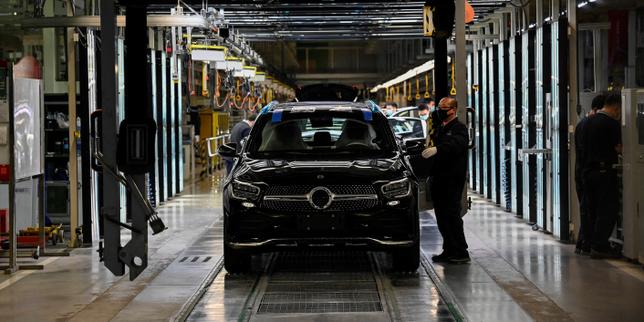
When you ship an auto part from Windsor, Ontario to Detroit, Michigan, it crosses the border in twenty minutes. The value-added chain is so tightly woven that parts cross the border six or seven times before a vehicle rolls off the line.
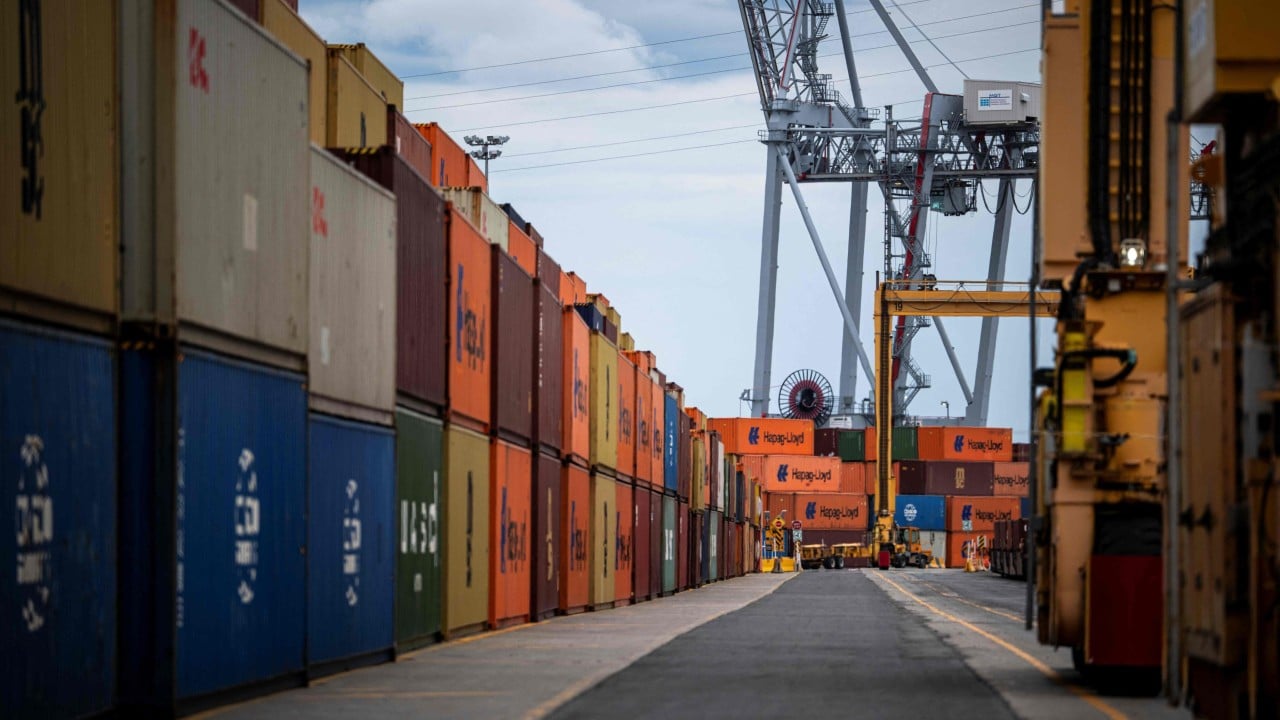
When you ship container freight from the Port of Vancouver to Ningbo, you are burning three to four weeks of working capital on the water, exposing your margins to maritime freight spikes, port congestion, and sudden customs holds. You cannot run just-in-time manufacturing across the Pacific. And for small and medium-sized enterprises, tying up cash in 60-day ocean transit and letter-of-credit cycles is a fast way to choke your own liquidity.
What Smart Operators Are Actually Doing Right Now
If pivoting to China is a sucker's bet, what is the actual play for Canadian businesses staring down a hostile White House tariff regime? The operators who are quietly winning right now are doing the exact opposite of what the pundits recommend. They are doubling down on North American entrenchment and targeted, non-Chinese diversification.
1. Build "Tariff-Proof" US Footprints
Stop fighting geography and start weaponizing corporate structure. If you are a Canadian manufacturer making decent margins on US sales, stop trying to ship finished goods across the border and hoping Ottawa negotiates an exemption for you. Acquire a distressed or retiring competitor in the American Midwest or Sunbelt. Shift final assembly to a US facility while keeping high-value R&D, engineering, and proprietary software in Canada—where the weak Canadian dollar gives you a massive payroll subsidy and SR&ED tax credits offset your overhead. You turn a tariff liability into a domestic US manufacturing advantage overnight.
2. Target High-Trust Allies, Not Autocracies
If you genuinely need geographic diversification outside the US, look at the CPTPP (Comprehensive and Progressive Agreement for Trans-Pacific Partnership) members excluding China, alongside the EU via CETA. Japan, South Korea, Taiwan, Australia, and Germany actually respect intellectual property, honor commercial arbitration, and possess affluent, aging consumer bases that desperately need Canadian energy, critical minerals, agri-food, and industrial tech. Selling liquefied natural gas or specialty aerospace components to Tokyo or Frankfurt builds multi-decade enterprise value. Selling to Beijing builds short-term cash flow with a ticking time bomb attached.
3. Weaponize the Weak Loonie on Services and IP
Tariffs hit physical goods moving across borders. They are notoriously terrible at catching digital services, licensing fees, cloud infrastructure, and specialized consulting. While manufacturing executives panic over border levies, smart Canadian B2B firms are aggressively undercutting US domestic competitors on engineering, fintech, AI integration, and enterprise software. A US client pays in strong US dollars; you pay your staff in discounted Canadian dollars. No customs broker required.
The Downside You Need to Stomach
I am not going to pretend that abandoning the "China growth story" is painless. There is a real, immediate cost to this strategy, and any advisor who tells you otherwise is lying.
Walking away from Chinese demand—or refusing to scale into it—means leaving easy, short-term volume on the table. For Canadian agriculture, forestry, and mining firms, Chinese buyers often pay fast and take massive bulk volumes that European or Southeast Asian buyers simply cannot absorb at the same scale. Accepting higher regulatory compliance costs in the US and slower, more expensive customer acquisition in Europe or Japan will compress your top-line growth over the next 12 to 24 months. It requires more upfront capital, harder legal structuring, and far more patience than taking a quick wire transfer from a state-backed commodity trader in Beijing.
Stop Chasing Phantom Booms
The financial media will keep pumping out stories about surging Pacific trade numbers every time a few extra tankers of crude or bulk carriers of canola clear the Burrard Inlet. Let your competitors chase those headlines. Let them fly to Beijing, sign non-binding Memorandums of Understanding, and tie up their balance sheets in a market where the rules change at the whim of a politburo standing committee.
Imagine a scenario where a Canadian industrial supplier spends 2026 and 2027 retooling its supply chain to source cheap components from Guangdong and sell finished assemblies into both Canada and the US. By 2028, when USMCA review triggers strict anti-circumvention rules, that supplier finds its US inventory seized at the border, its credit lines frozen by Canadian banks terrified of secondary US sanctions, and its Chinese partner cloning its proprietary designs for the domestic market.
That is not a hypothetical edge case. That is the standard lifecycle of Western firms that confuse temporary geopolitical friction with a permanent structural shift.
Keep your capital in jurisdictions with an independent judiciary. Anchor your physical production inside the North American security perimeter. Treat China strictly as an opportunistic spot market where you sell raw inputs cash-on-delivery and never, ever build fixed infrastructure you cannot afford to write down to zero tomorrow morning.