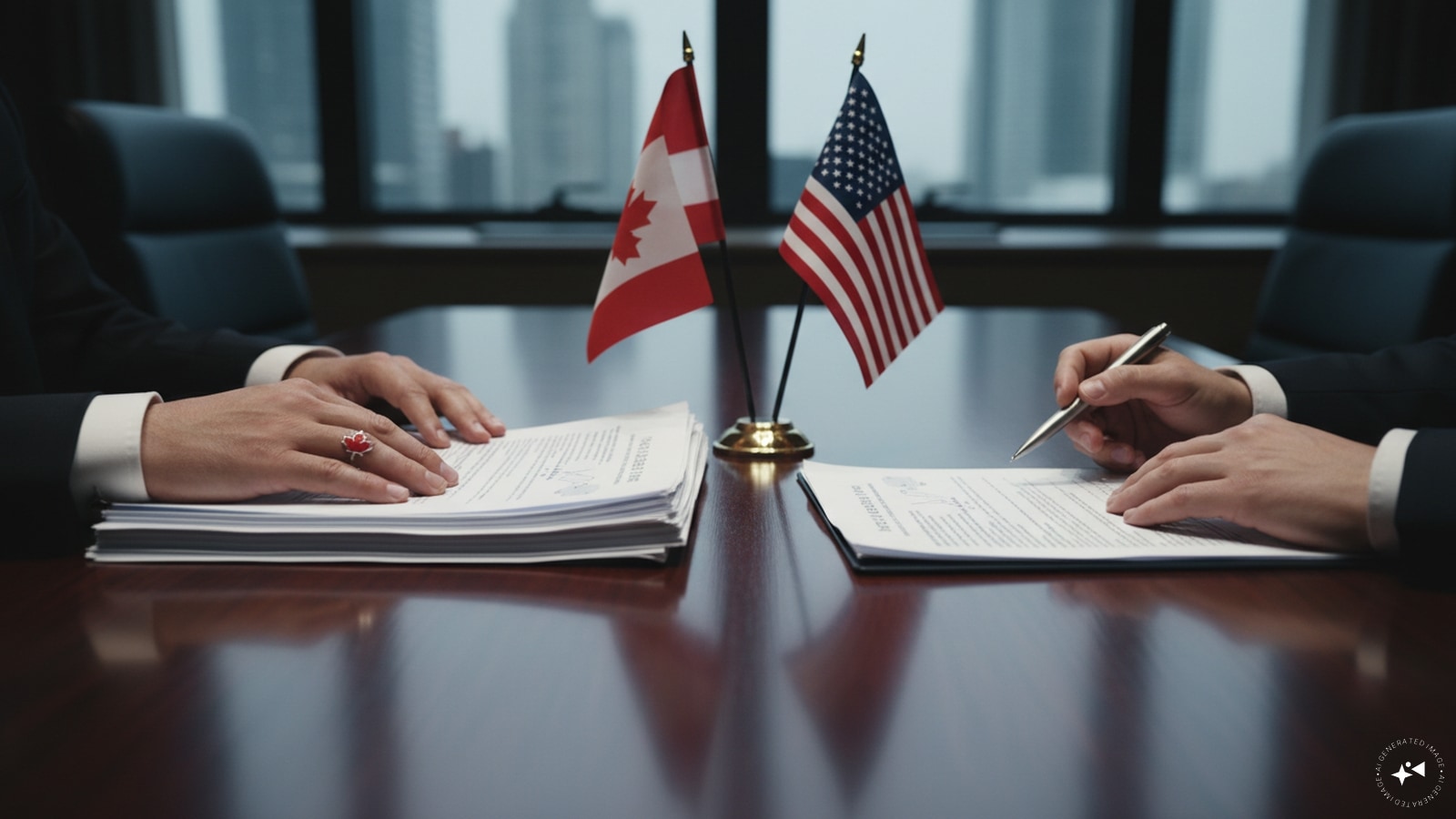
Every time Ottawa and Washington sit down at a mahogany table to hash out a bilateral trade deal, the commentariat treats it like a marriage counseling session. If voices rise, the pundits panic. If a deadline slips, they declare the relationship terminal. When talks recently hit a brick wall, the lazy consensus in the press was predictable: negotiation is futile, the partnership is broken, and diplomacy has failed.
That perspective is not just unimaginative. It is dangerously backwards.
I have spent the better part of two decades watching corporate boards and sovereign states mistake motion for progress. I have seen executives blow millions on endless renegotiations of dead-end contracts simply because walking away felt too messy. Trade talks between neighbors are rarely broken by failure; they are broken by the illusion that harmony is the primary objective of commerce.
Canada does not need a breakthrough with the United States. We need the theater of smooth trade talks to burn down entirely so we can finally deal with reality.
The Myth of the Cooperative Win-Win
Economic textbooks love to preach about mutual gains through comparative advantage. David Ricardo wrote the rulebook two centuries ago, and bureaucrats have been using it as a security blanket ever since. The core assumption is that trade negotiations are a cooperative puzzle where both sides assemble pieces until the picture is complete.
Realpolitik operates differently.
When a superpower shares a border with a smaller, deeply integrated economy, trade negotiations are exercises in asymmetrical gravity. The United States does not negotiate out of a desire for neighborly equity. Washington negotiates to export domestic political pressure. Every tariff threat, every origin-rule adjustment, and every supply management dispute is designed to appease a specific voting bloc in Ohio or Michigan, not to optimize North American supply chains.
Pretending that this dynamic can be fixed with another round of late-night ministerial dinners is a waste of taxpayer money. When Canada enters these rooms desperate for a signed communique, Washington smells the desperation. The moment you treat a stalled negotiation as a crisis, you hand the steering wheel to the other side.
A collapsed trade talk is not a catastrophe. It is a boundary. It tells you precisely where the mutual utility ends and domestic protectionism begins. Smart operators stop pushing against that wall and start building doors elsewhere.
What the Pundits Miss About Structural Divergence
The panic over failed diplomacy relies on a nostalgic premise: that the North American economy is still marching toward deeper integration. That narrative died years ago.
We are living through a massive structural fragmentation. Supply chains are regionalizing. National security concerns now dictate industrial policy, effectively killing the post-Cold War consensus on globalization. When the United States implements aggressive domestic subsidies like the Inflation Reduction Act, it is signaling a permanent shift toward industrial nationalism.
Expecting traditional trade pacts to bridge this gap is like trying to fix a severed cable with duct tape.
Ottawa’s obsession with keeping Washington happy traps Canadian capital in a defensive crouch. Instead of innovating, businesses spend years lobbying trade committees, trying to carve out exemptions from rules that shouldn't apply to them in the first place. This creates a parasitic dependency. Companies become expert at navigating bureaucracy rather than building products the rest of the world actually wants to buy.
Imagine a scenario where Canadian firms stopped waiting for Uncle Sam to grant tariff relief and instead treated the US border as a friction-heavy foreign market—just like any exporter treats the European Union or Asia. The initial shock would hurt. Plenty of inefficient businesses living off the geographic accident of proximity would fold. But the survivors would emerge lean, globally competitive, and immune to the whims of whatever administration happens to be occupying the White House.
The Cost of Perpetual Appeasement
Let us look at the sacred cows of these negotiations. On the Canadian side, supply management in dairy and poultry is defended like a medieval fortress. On the American side, protectionist steel tariffs and Buy American provisions are trotted out like reliable cudgels.
Both sides use these domestic exemptions as permanent friction points. They are not bugs in the system; they are features designed to satisfy domestic interest groups while politicians pretend to negotiate in good faith.
When talks collapse, these contradictions are forced into the open. That exposure is uncomfortable, but it is entirely necessary. As economist Herbert Stein famously noted, if something cannot go on forever, it will stop. The endless cycle of renegotiating, tweaking, and re-stitching stale trade deals is unsustainable. It masks structural decay behind press releases about renewed cooperation.
Let us be honest about the downsides of this contrarian stance. Walking away from the table means accepting short-term market volatility. It means supply chains will scramble. It means investors who prefer predictability over profit will hyperventilate on cable news.
Stability has a price, and right now, Canada is paying that price in lost productivity and stagnant innovation. We have traded long-term economic resilience for the quiet comfort of a signed piece of paper that gets rewritten the moment a new president takes office.
Breaking the Cycle
If you want to understand why trade talks feel futile, stop looking at diplomacy and start looking at market incentives.
As long as Canadian political leaders measure success by the number of joint statements issued in Washington, nothing will change. The real work happens when the table is empty. It happens when businesses realize that the cavalry isn't coming, that the border rules are what they are, and that growth must come from out-competing global rivals, not lobbying for carve-outs from an indifferent neighbor.
Stop mourning the breakdown of diplomatic theater. Celebrate the silence. It is the only sound loud enough to wake everyone up.