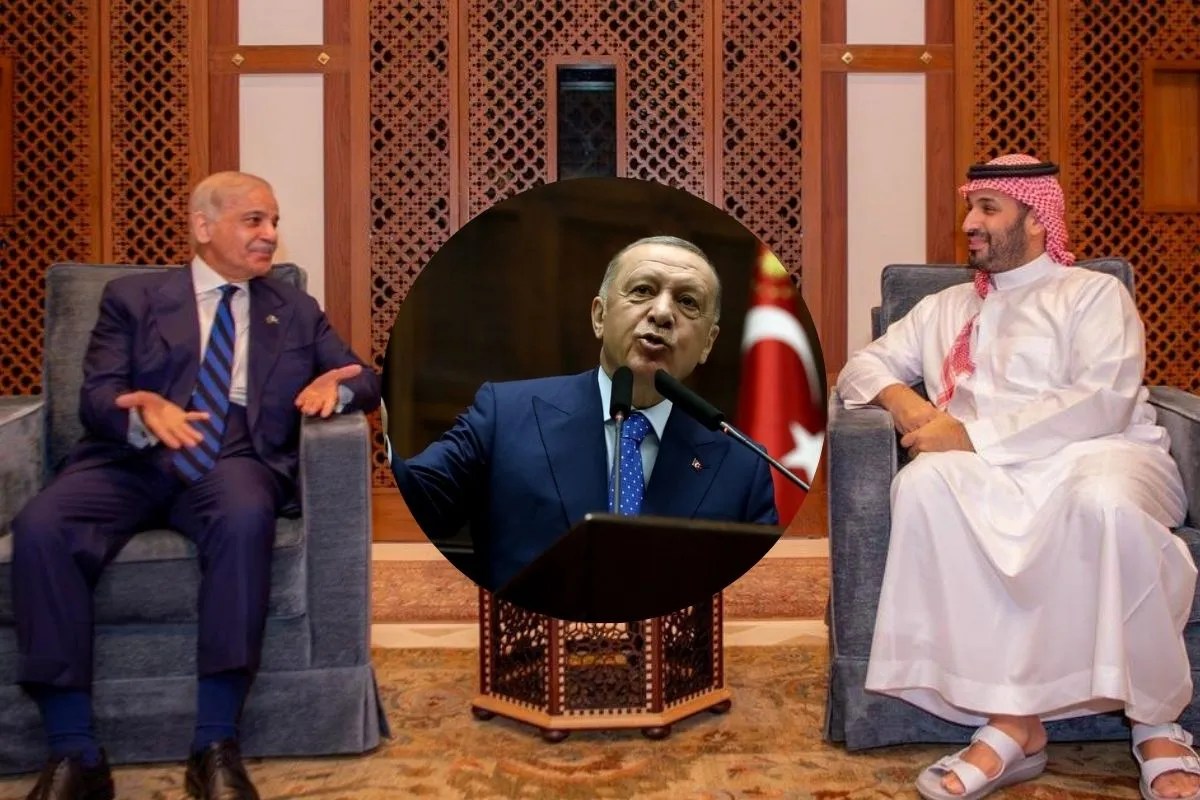
Every lazy headline writer across the globe is rushing to drop the exact same exhausted label on the new trilateral security pact signed in Mecca. They call it the Muslim NATO. They scribble lazy op-eds about a new Islamic superpower bloc rising from the ashes of Middle Eastern volatility, assuming that slapping a familiar Cold War acronym onto a completely different geopolitical reality explains anything.
It explains nothing. It reveals a profound misunderstanding of how power, capital, and military architecture actually operate today.
Let us dismantle the fiction immediately. Riyadh, Ankara, and Islamabad did not sign a treaty because they share an idyllic dream of pan-Islamic brotherhood. They signed it because the old security architecture backed by Washington is rotting from the inside out, and middle powers are frantically stitching together their own life rafts. Calling this alliance a Muslim NATO is not just lazy journalism; it is analytically bankrupt.
The Core Fallacy of the NATO Comparison
To understand why the comparison fails, look at what NATO actually is. NATO is an institutionalized, bureaucratized military monolith anchored by a single hyper-power, featuring unified command structures, standardized munitions, integrated early-warning radar grids, and a legally binding nuclear umbrella explicitly tied to Washington.
The Mecca Joint Defense Agreement features none of these things.
Turkey is already a full member of NATO, bound by treaty obligations that legally supersede bilateral adventures in West Asia. Pakistan sits outside every major non-proliferation framework, juggling chronic economic domestic pressures alongside a nuclear arsenal built for a specific South Asian deterrence dynamic. Saudi Arabia remains an energy titan entirely dependent on diversified foreign procurement and localized air defense networks that have spent years leaking against asymmetric drone and missile barrages.
You cannot graft a collective security clause—stipulating that an attack on one is an attack on all—onto three radically divergent national security strategies and pretend you have built an institutional equivalent to Brussels.
Follow the Hardware and the Money
Strip away the diplomatic communiques issued in Mecca and look at the transactional reality. This arrangement is driven by two hard industrial truths: Turkey and Pakistan build cheap, battle-tested hardware, and Saudi Arabia has the capital to fund its scaling.
Ankara has spent the last decade evolving into a drone and aerospace export machine. Islamabad maintains a massive, hardened military-industrial complex capable of producing everything from field artillery to nuclear-capable delivery systems, alongside decades of experience training Gulf military personnel. Meanwhile, Riyadh has watched its traditional security guarantees from the West turn into paper tigers amid escalating regional conflagrations involving Iran and proxy networks.
This is a procurement and survival cartel, not an ideological crusade. Saudi petrodollars meet Turkish drone technology and Pakistani military manpower. It is a pragmatic commercial and defensive marriage of convenience designed to plug immediate gaps in air defense and maritime security, not a crusade to redraw the global balance of power.
The Nuclear Elephant in the Room
Commentators love to whisper about the prospect of a Pakistani nuclear umbrella protecting Saudi soil. Let us apply some basic strategic logic to this fantasy.
Pakistan's nuclear deterrent exists for one primary purpose: managing its existential rivalry with India. Extending that deterrent to cover the oil fields of the Gulf introduces catastrophic strategic blowback for Islamabad. It invites immediate international proliferation penalties, triggers severe economic isolation from Western financial systems, and drags Pakistan into theaters of war far removed from its core borders.
Conversely, Riyadh knows that outsourcing its ultimate survival to a foreign capital introduces vulnerabilities it cannot control. What the agreement actually does is establish a political framework for defense industrial cooperation and mutual signaling, leaving the heavy lifting of actual nuclear or conventional intervention intentionally ambiguous. Strategic ambiguity is a feature here, not a bug. Real military planners do not write blank checks for distant allies; they write flexible agreements designed to be interpreted however national interest dictates when the shooting starts.
Why Regional Powers Are Going It Alone
The rush toward alternative security frameworks like this one stems from a simple realization: the unipolar moment is over, and relying entirely on external patrons is a fool's errand. When regional conflicts flare and critical energy infrastructure takes direct hits, distant superpowers issue statements of deep concern while local states absorb the blows.
Ankara, Riyadh, and Islamabad are hedging their bets. They are creating overlapping bilateral and trilateral layers of defense so that if one diplomatic pillar wobbles, another holds.
Stop looking for a caliphate with an army. Stop looking for a Middle Eastern Article 5 that functions like Western Europe during the Cold War. Watch the joint manufacturing plants, track the technology transfers, and pay attention to how these states manage their supply chains when the next regional crisis hits. The real story is not about an ideological bloc taking shape. It is about pragmatic, hard-nosed middle powers realizing that nobody is coming to save them, so they have to arm each other instead.