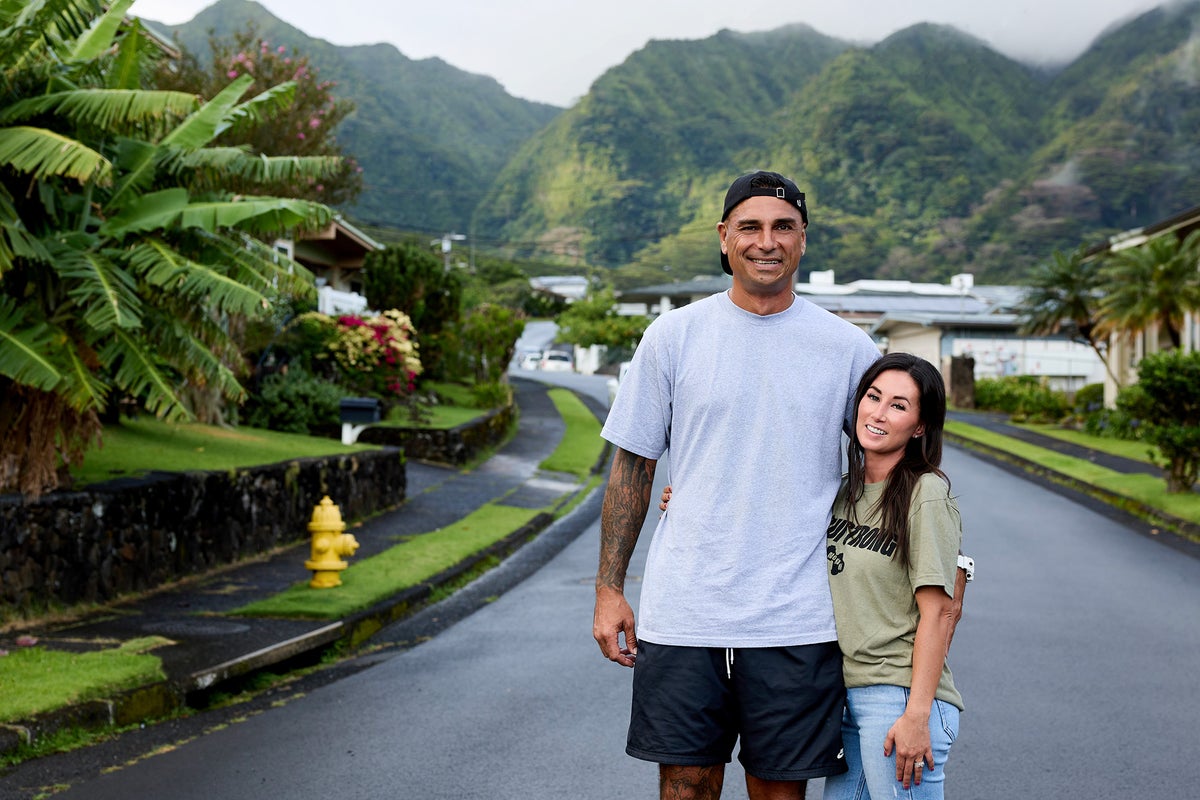
Tristyn and Kamohai Kalama, the faces of HGTV’s Renovation Aloha, find themselves at the center of a legal and cultural firestorm that threatens more than just their television careers. A lawsuit filed in Hawaii’s First Circuit Court alleges the couple—along with their production company and the network—knowingly broadcast footage of ancestral human remains for the sake of entertainment. It is a staggering accusation. The litigation claims that during the renovation of a property in Manoa, the "stars" disturbed and then filmed what are known as iwi kupuna (ancestral bones), violating both state law and the profound cultural sanctity of the islands.
This is not a simple case of a permit violation or a property line dispute. In Hawaii, the treatment of iwi is governed by strict protocols and deep-seated spiritual beliefs. When the cameras rolled and those remains were allegedly displayed to a national audience, it broke a social contract that has existed since long before reality television arrived in the Pacific.
The Profit of Desecration
The core of the complaint hinges on a fundamental conflict between the "flip and ship" pace of cable television and the deliberate, often slow-moving requirements of cultural preservation. According to the lawsuit, the discovery of the remains should have triggered an immediate cessation of work and notification of the State Historic Preservation Division (SHPD). Instead, the plaintiffs argue the production prioritized the "reveal."
Television thrives on tension. Producers look for obstacles that raise the stakes of a build. However, treating a potential burial site as a "plot twist" is a dangerous gamble in a state where the Department of Land and Natural Resources does not play favorites. The Kalamas, who have built their brand on their Hawaiian heritage and "aloha spirit," now face the grim irony of being accused of exploiting the very land they claim to protect.
The financial machinery of HGTV is built on high-volume production. To keep the content engine running, crews often move through homes in weeks, not months. When ancestral remains enter the equation, that timeline is supposed to grind to a halt. If the allegations hold true, the decision to keep filming wasn't just an oversight. It was a calculated choice to value b-roll over bones.
Hawaii’s Legal Minefield for Developers
You cannot understand this crisis without understanding Chapter 6E of the Hawaii Revised Statutes. This law governs the protection of historic properties and burial sites. It is uncompromising. When a developer or a homeowner uncovers remains, the law mandates a "stop work" order in the immediate area.
The Protocol Failure
- Discovery: Notification must be made to the SHPD and the appropriate Island Burial Council.
- Verification: Specialists must determine if the remains are "pre-contact" (indigenous) or more recent.
- Jurisdiction: If the remains are over 50 years old, they fall under the strict authority of the state.
The lawsuit alleges these steps were ignored or bypassed. For a "veteran" flipping crew like the Kalamas, claiming ignorance of these laws is a difficult defense to maintain. Any professional operating in the Hawaii real estate market knows that the islands are an archaeological hotbed. The ground is literally crowded with history. To strike bone is a known risk, and the failure to handle it by the book suggests a level of negligence that borders on the criminal.
The Myth of the Clean Flip
For years, home renovation shows have sold a sanitized version of real estate. They present a world where every problem can be solved with a sledgehammer and a trip to a big-box hardware store. This "Renovation Aloha" scandal rips the mask off that fantasy. It shows the messy, often painful intersection of modern commerce and indigenous rights.
The plaintiffs, who represent the interests of the descendants and the cultural practitioners of the area, aren't just looking for a settlement. They are demanding accountability for the normalization of "poverty porn" and cultural extraction. They argue that by showing the remains on screen, the production permanently despoiled the sanctity of the site. Once an image is broadcast to millions, the "secrecy" and "quiet" required for traditional reinterment are gone.
The Network Responsibility Gap
Warner Bros. Discovery, the parent company of HGTV, has long benefited from the "unscripted" nature of its programming. If a host messes up, the network often hides behind the fact that these are independent contractors or separate production entities. But that shield is thinning.
When a network greenlights a show based specifically on a "local" or "indigenous" hook, they inherit the ethical baggage of that location. You cannot market the "Aloha" without respecting the "Aina" (the land). The lawsuit targets the production’s "willful disregard" for the law, suggesting that the pressure to deliver a hit show created an environment where cutting corners became the standard operating procedure.
Investors and advertisers are watching. In an era where corporate social responsibility is a metric for success, being tied to the desecration of indigenous graves is a public relations nightmare that no amount of shiplap can fix.
A Pattern of Erasure
This isn't the first time Hawaii has seen its cultural landmarks bulldozed for the sake of luxury housing or entertainment. But it might be the most visible. The "Renovation Aloha" case serves as a lightning rod for a larger movement in the islands—one that is increasingly hostile toward outside media entities that treat the archipelago as a backdrop rather than a sovereign community.
The tension in the Manoa valley is a microcosm of the tension across the state. Locals are tired of seeing their history packaged and sold to audiences in the mainland who don't understand the gravity of what they are watching. When a show like Renovation Aloha features the "discovery" of an ancient site, the audience sees a fascinating historical footnote. The locals see a crime scene.
The Technical Reality of Burial Sites
Modern scanning technology, such as Ground Penetrating Radar (GPR), is often used by responsible developers to avoid this exact scenario.
- GPR Mapping: Non-invasive scans can identify soil disturbances.
- Cultural Surveys: Hiring a recognized cultural descendant to walk the land.
- Monitored Digs: Having an archaeologist on-site during the initial excavation.
If these tools were available and ignored, the "accident" narrative falls apart.
The Fallout for the Kalamas
For Tristyn and Kamohai, the damage to their personal brand is likely permanent. They marketed themselves as the bridge between the modern real estate market and Hawaiian tradition. By allegedly failing to protect the iwi, they have burned that bridge. In Hawaii, reputation is currency. Once you lose the trust of the community, you don't get it back with a high appraisal.
The legal discovery process will likely unearth raw footage, production emails, and internal memos. If these documents show that the team knew they were filming remains and decided to air it anyway, the "Renovation Aloha" brand will be radioactive. No network will touch a host who brings that kind of legal liability to the table.
The End of the Reality TV Free Pass
This lawsuit signals a shift in how production companies must operate in culturally sensitive zones. The days of "begging for forgiveness rather than asking for permission" are over. State regulators and local activists are no longer intimidated by the "prestige" of a national television crew.
The industry must now account for a new reality: the "talent" is legally responsible for the ground they stand on. If you are going to profit from the aesthetics of a culture, you are going to be held to the highest standard of that culture's laws.
Builders across the islands are already feeling the ripples. Permit offices are under increased pressure to scrutinize "TV projects" more closely. The "Renovation Aloha" scandal hasn't just hurt the Kalamas; it has made the job harder for every honest contractor in the state. It has created a climate of suspicion that will take years to dissipate.
The lesson is clear for any production moving into indigenous spaces. The "show" does not go on if the price of the "reveal" is the dignity of the dead. Respect the iwi or get out of the dirt.