The coffee in Elena’s mug had gone cold hours ago. Outside the high-rise window, the city lights flickered like distant stars indifferent to the storm brewing inside her office. On her monitor, lines of neural network weights cascaded down the screen in a silent, hypnotic waterfall. Her team had spent eighteen months training an artificial intelligence model designed to predict structural failures in municipal water grids before a single pipe burst. It was a triumph of engineering. It was a masterpiece of statistical inference.
It was also a ticking legal bomb.
Elena clicked through the simulation logs. Three days ago, the model recommended shutting down a main feeder line in the industrial district based on an anomaly it detected in pressure sensors. The shut-down prevented a catastrophic flood. But it also cut off water to a regional hospital during a critical surgical window. No one died. The backup generators kicked in. The surgeries finished. Yet, as Elena stared at the incident report, a cold dread settled in her stomach.
Who made that decision?
Was it the junior technician who clicked execute? Was it Elena, who tuned the hyperparameters? Was it the board of directors five states away? Or was it a cluster of silicon chips executing probabilistic math without a soul, a conscience, or a bank account to seize when the lawsuits arrived?
For decades, the gospel of Silicon Valley was absolute freedom. Move fast and break things was more than a marketing slogan; it was a religious doctrine promising that software could outrun gravity, regulation, and moral consequence. Code was pure thought, unburdened by mass or friction. You built a platform, you threw it into the wild, and you let the market sort out the wreckage.
That era is dead.
And its executioner is not a government regulator or a disgruntled competitor. Its executioner is liability.
When the chief executive of one of the world's most formidable data analytics firms stood before an audience and floated a proposition that sent shockwaves through boardrooms—suggesting that the companies building the most advanced machine intelligence should perhaps be nationalized, or at least brought under strict state protection and liability shields—it sounded like madness. Capitalists do not beg for handcuffs. Founders do not invite bureaucrats into their inner sanctums.
Unless they know something the rest of us are too mesmerized to see.
Consider what happens when code crosses the threshold from digital abstraction into physical reality. A recommendation engine suggesting a movie to watch on a Tuesday night carries negligible risk; a misclicked pixel merely wastes two hours of your life. But an autonomous agent directing traffic grids, diagnosing malignant tumors, guiding drone swarms, or managing high-frequency credit markets operates in a zone of existential consequence. When things go wrong—and in complex systems, things always go wrong—the financial and moral exposure is astronomical.
No venture capital fund is deep enough to absorb a trillion-dollar catastrophe. No insurance company will underwrite an anomaly whose root cause cannot be explained even by its own creators.
This is the great unspoken panic of the artificial intelligence revolution. We have constructed engines of staggering power, yet we have no legal vocabulary to contain them. We treat probabilistic mathematics like oracle bones, reading signs and portents from complex vector spaces while pretending that the output is infallible. When the oracle fails, the lawyers descend like vultures upon a carcass, looking for a throat to squeeze.
And there is no throat to squeeze. That is the terrifying truth. You cannot indict a matrix multiplication. You cannot sentence a transformer model to five years in federal prison.
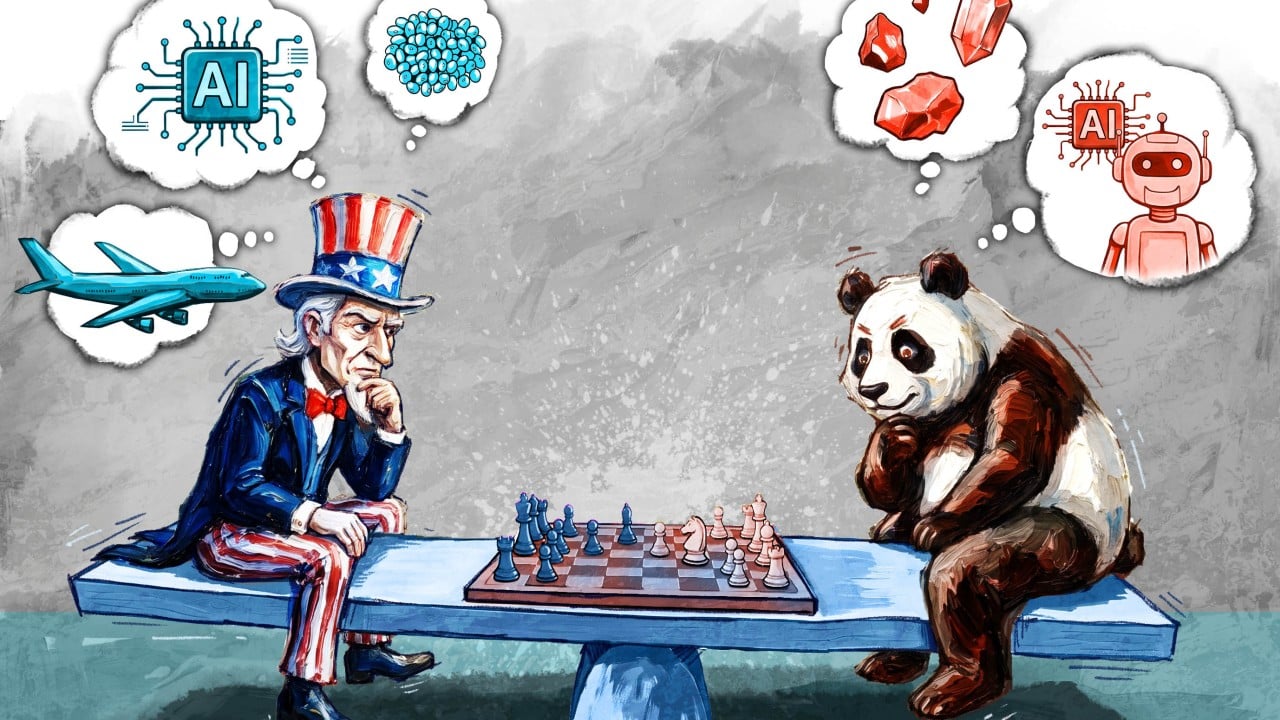
This vacuum of accountability forces a radical reassessment of how modern technology interfaces with civilization. For centuries, human progress has relied on a neat division of labor: the private sector innovates, takes risks, and reaps profits; the public sector establishes the guardrails, maintains infrastructure, and handles catastrophic externalities. But artificial intelligence blurs these boundaries until they vanish entirely. It is simultaneously a consumer product, a utility, a weapon, and an economic engine.
To understand why a titan of industry would look at the state and whisper, "Take us over, or at least share the blame," you have to look backward into history.
Think of commercial aviation in its infancy. In the early decades of flight, airplanes were deathtraps flown by daredevils testing the limits of physics and engineering. Crashes were frequent, spectacular, and tragic. Private aircraft manufacturers faced ruinous lawsuits with every broken wing and stalled engine. The industry could not mature because the liability risk threatened to crush it in its crib.
The salvation of aviation was not pure free-market capitalism. It was a profound marriage between state necessity and corporate enterprise. Governments stepped in with rigorous federal certification, standardized air traffic control, subsidized infrastructure, and liability frameworks that capped damages and shared the burden of catastrophic risk. The state did not merely regulate aviation; it co-authored it.
Nuclear power followed a similar path. The Price-Anderson Act of 1957 in the United States shielded the fledgling nuclear industry from catastrophic financial liability in the event of a meltdown. Without that state-backed insurance umbrella, private utility companies would never have built a single reactor. The financial exposure was simply too absolute.
Now, look at artificial intelligence. We are attempting to integrate a technology infinitely more complex and pervasive than nuclear fission into the fragile machinery of human society, and we are doing it under the raw laws of nineteenth-century tort liability.
It is an absurd mismatch of scales.
When a self-driving vehicle makes a split-second ethical calculation resulting in a collision, or when a medical diagnostic system hallucinates a diagnosis that leads to a fatal prescription error, the legal system scrambles for traction. Was it negligence? Was it a manufacturing defect? Was it an unforeseeable act of statistical God? The courts are unequipped. Juries are bewildered. Executives are exposed to criminal liability for algorithms whose inner workings resemble black boxes wrapped in riddles.
This creates a perverse incentive structure. The smartest people in the room realize that the safest business move is not to build better models, but to build better legal defenses. Innovation slows, not because the science has hit a wall, but because the lawyers have drawn a minefield.
Alternatively, companies push forward recklessly, hoping to scale so fast and accumulate so much economic gravity that they become too big to fail, forcing governments to bail them out when the inevitable reckoning arrives.
Both paths are toxic to human flourishing.
The proposal for state integration or heavy public partnership—the controversial notion of nationalizing the infrastructure of intelligence—is an admission of this impasse. It recognizes that certain technologies are too potent, too dangerous, and too socially foundational to be left entirely to the volatile whims of private equity and quarterly earnings reports.
Imagine, for a moment, a different framework. Not a clumsy, heavy-handed Soviet-style takeover of server farms and python scripts, but a sophisticated public-private pact. A model where foundational intelligence infrastructure is treated like the interstate highway system or the electrical grid. In this hypothetical architecture, the core models—the vast, expensive foundational engines—are developed under public oversight, subjected to rigorous transparency standards, and insulated by state-backed liability frameworks. Meanwhile, private entrepreneurs build specialized applications on top of that secure bedrock, competing on utility and creativity rather than gambling on whether their legal team can survive a class-action lawsuit.
Skeptics will recoil. They will warn of censorship, stagnation, and the creeping hand of bureaucracy stifling the mercurial genius of garage tinkerers. They will argue that the state is too sluggish, too politicized, and too incompetent to manage the beating heart of the digital age.
They are not entirely wrong. Government bureaucracy can be a crushing weight.
Yet the alternative—leaving the governance of hyper-intelligent systems to a handful of hyper-capitalized corporations whose primary fiduciary duty is shareholder return rather than human well-being—is a gamble of staggering recklessness. We are outsourcing the architecture of our future to entities that treat liability as a line item on a spreadsheet and public safety as a variable to be optimized.
Back in her office, Elena closed the simulation logs. The city outside was quiet now, the storm having passed into a steady, rhythmic rain. She looked down at her keyboard. Her fingers hovered over the keys. She knew that tomorrow morning, her team would deploy another patch, tweak another set of parameters, push another step closer to a horizon that kept receding.
She did not want to be a bureaucrat. She did not want to surrender her code to the slow-moving machinery of the state. She wanted to build, to discover, to push the boundaries of what was possible in the quiet glow of a monitor.
Yet she also knew the truth that kept her awake in the dark.
The tools they were forging were no longer mere software. They were forces of nature. And no single company, no matter how wealthy, no matter how brilliant, no matter how arrogant, was large enough to shoulder the lightning when it finally struck.
The builders are standing at the edge of the abyss, looking down at the immense machinery they have wrought. And for the first time in the history of Silicon Valley, the bravest thing they can do is look back at the state, raise their hands, and ask for the chains.