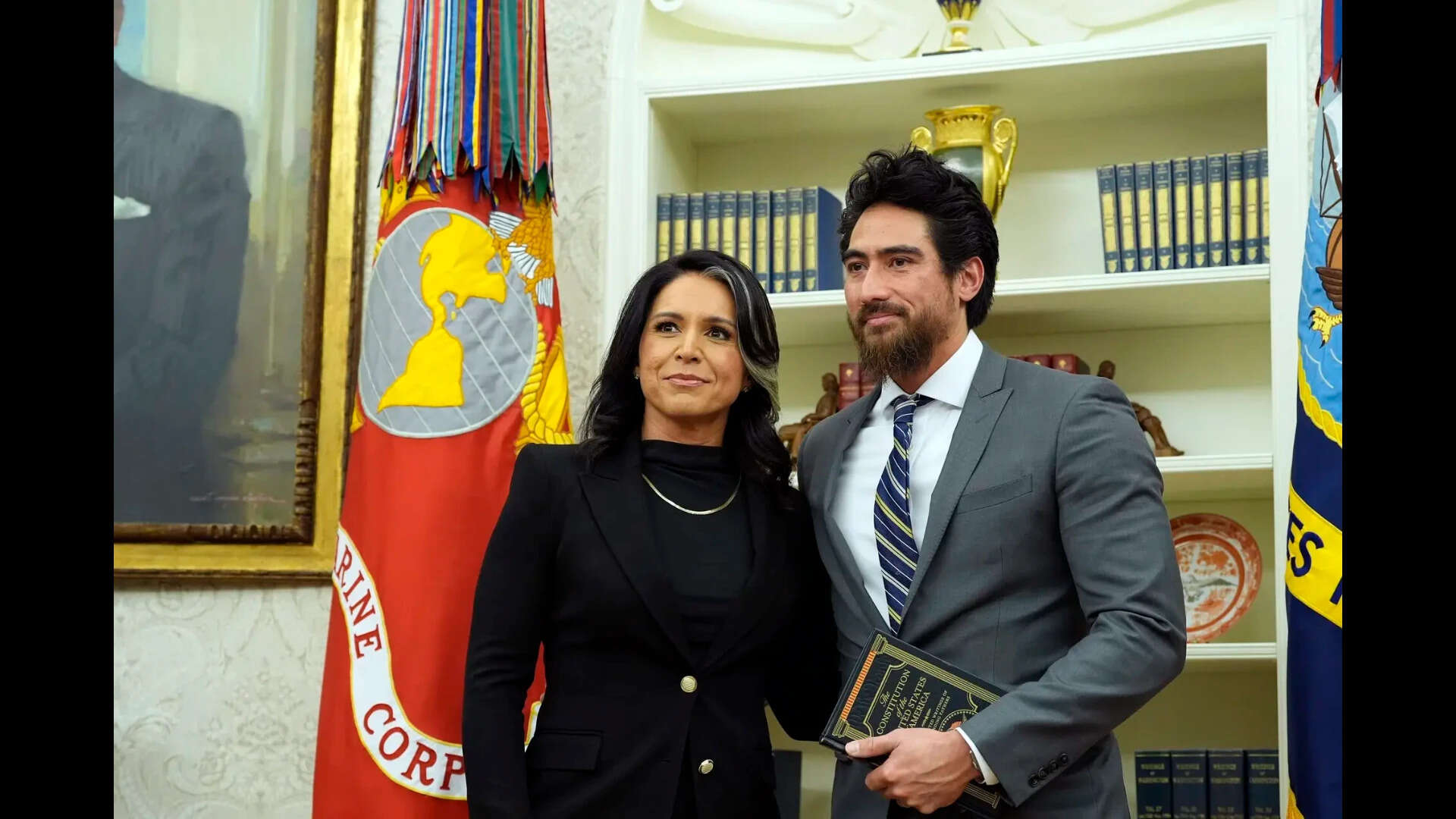
Director of National Intelligence Tulsi Gabbard has announced her resignation, effective June 30, 2026. The official reason provided in her letter to President Donald Trump is deeply personal: her husband, Abraham Williams, was recently diagnosed with an extremely rare form of bone cancer. While the health crisis facing her family is undeniably severe, her sudden departure from the apex of the American intelligence apparatus comes amid an escalating administrative war over U.S. military operations against Iran.
Gabbard is now the fourth high-profile female Cabinet official to depart during Trump’s second term. Her exit underscores a fracturing national security apparatus. To view her departure solely through a personal lens is to miss the severe geopolitical friction that has been building behind closed doors for months.
A Family Crisis Meets A Geopolitical Firestorm
Abraham Williams, a cinematographer and photographer who married Gabbard in 2015, has maintained a notoriously low profile throughout his wife's volatile political trajectory. The diagnosis of an aggressive bone cancer introduces an immediate, devastating reality for the family. In her resignation letter, Gabbard noted that Williams faces major challenges in the coming weeks and months, stating she must step away from public service to support him.
Yet the timing of this announcement aligns with an unsustainable professional dilemma. Gabbard has spent her entire political career branding herself as an anti-interventionist. The escalation of U.S. and Israeli joint military strikes against Iran, initiated on February 28, forced a profound ideological crisis at the top of the Office of the Director of National Intelligence (ODNI).
For a leader who built her brand opposing foreign interventions, directing an intelligence apparatus actively facilitating a major Middle Eastern conflict created an untenable contradiction.
The Breaking Point In The Iran Policy Rift
The ideological fault lines inside the administration became impossible to hide in March. Joe Kent, the director of the National Counterterrorism Center and a close ally of Gabbard, resigned in protest. He explicitly stated he could not back the administration's military campaign against Tehran.
When called to testify before the Senate Intelligence Committee shortly after Kent's departure, Gabbard’s posture was remarkably defensive. She pointedly refused to echo the White House's rhetoric regarding an imminent nuclear threat from Iran. Instead, she submitted written remarks stating that Iran had made no effort to rebuild its nuclear capabilities following initial U.S. strikes.
This public hedging infuriated West Wing loyalists. Reports began circulating that the president was actively questioning advisers about whether Gabbard should be replaced, particularly after she refused to publicly denounce Kent’s anti-war defection.
Weapons Of Mass Disruption Within The ODNI
Gabbard’s fifteen months as America’s top intelligence official were defined by institutional upheaval rather than traditional espionage management. Lacking a conventional intelligence background, her confirmation was met with deep skepticism from both sides of the aisle.
Once inside, Gabbard focused heavily on a political mandate: declassifying historical documents to expose what the administration characterized as deep state corruption. This internal crusade alienated career professionals within the CIA, NSA, and DIA.
| Key Crises During Gabbard's ODNI Tenure | Institutional Impact |
|---|---|
| Focus on historical declassifications | Diverted resources from active counterintelligence operations |
| March 2026 resignation of Joe Kent | Fractured leadership at the National Counterterrorism Center |
| Public dissent on Iran nuclear threat levels | Created a messaging chasm between the ODNI and the White House |
| Witness to domestic political operations | Damaged the agency's perception of non-partisan independence |
Morale plummeted as workforce cuts and restructuring efforts took hold. The final blow to her institutional standing came when reports surfaced of her presence during a highly controversial, unprecedented FBI seizure of 2020 election ballots in Fulton County, Georgia. For career intelligence officers, the sight of a sitting Director of National Intelligence entangled in domestic election litigation was a bridge too far. A whistleblower complaint quickly followed, cementing the reality that her standing within the intelligence community had become toxic.
The Succession Vacuum
Aaron Lukas, Gabbard's principal deputy, is set to take over as acting director following her departure. Lukas inherits a deeply fractured agency. The intelligence community must now navigate a multi-front conflict involving Iran and the broader Middle East with a leadership structure in total flux.
The immediate challenge for Lukas will be restoring a semblance of cohesion between the analytical arms of the intelligence agencies and a White House demands total alignment on its wartime objectives. Career analysts have grown increasingly wary of cooking intelligence to fit predefined policy outcomes regarding Tehran's military posture.
Gabbard's exit allows the administration to install a figure more compliant with its current aggressive foreign policy posture. It removes a vocal skeptic from the inner national security circle at a moment when dissenting voices are viewed by the West Wing as active liabilities.
The personal tragedy involving Abraham Williams provided a definitive exit ramp from a position that had become politically unviable. As Gabbard prepares to leave Washington to face a brutal medical battle at home, the national security apparatus she leaves behind faces an equally uncertain, perilous future.