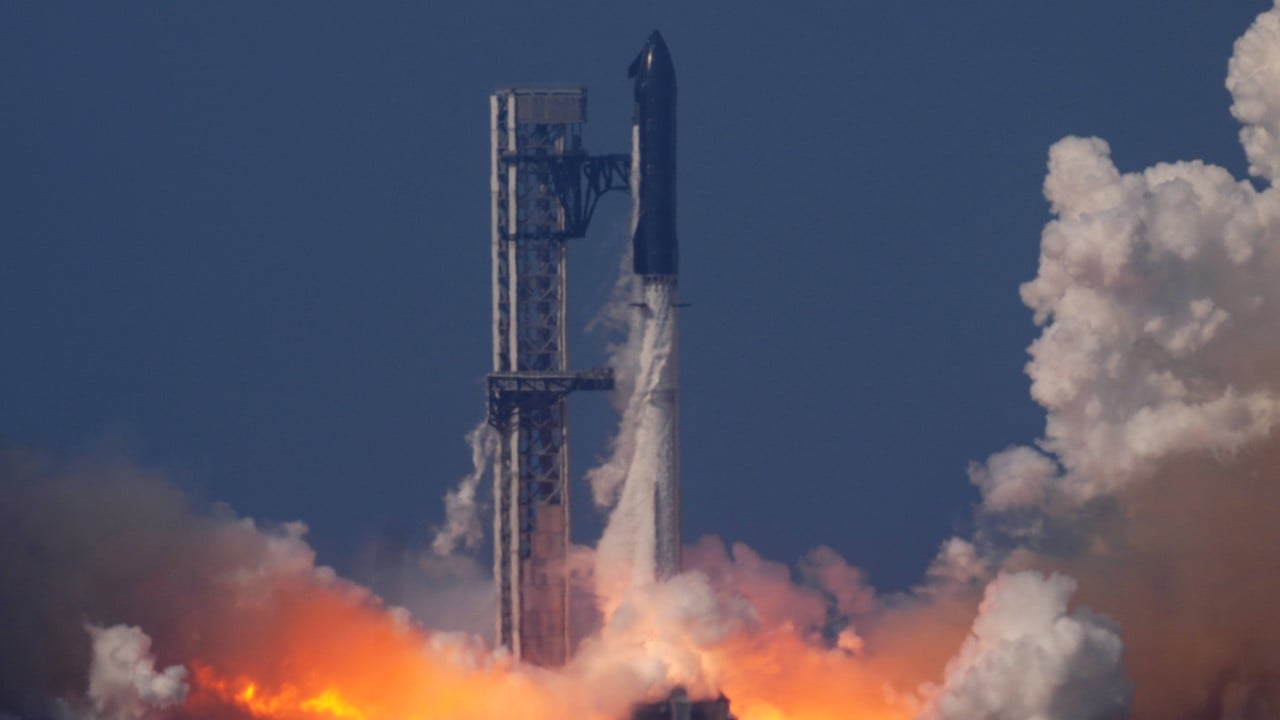
SpaceX successfully launched its first third-generation Starship megarocket from South Texas, achieving a fiery splashdown in the Indian Ocean. While the mainstream press treats Flight 12 as a simple victory lap for the most powerful rocket ever built, the debut of the souped-up V3 architecture reveals a far deeper corporate urgency. Elon Musk’s unexpected announcement days prior that he intends to take SpaceX public shifts this engineering milestone into a high-stakes financial play. The massive 124-meter vehicle is no longer just an experimental path to Mars; it is a live demonstration of industrial scalability designed to secure market dominance before an aggressive initial public offering.
The Engineering Realities Behind the Upgrades
Beneath the dramatic plume of methane exhaust lies a radically redesigned vehicle that differs significantly from its predecessors. The V3 iteration stretches several feet taller than the older Block 1 and Block 2 variants. This structural elongation serves a blunt purpose. It accommodates larger propellant tanks required to feed the next evolution of the Raptor engine.
SpaceX modified the internal fuel transfer tube within the giant Super Heavy booster to optimize propellant delivery to the 33 first-stage engines. The plumbing changes were tested immediately during ascent. One of the 33 Raptor engines suffered an early dropout during the primary burn. The flight computer automatically extended the burn time of the remaining 32 engines to compensate, keeping the vehicle on its intended suborbital trajectory.
Starship Evolution Metrics
+-------------------+-----------------+-----------------+
| Vehicle Version   | Typical Height  | Status          |
+-------------------+-----------------+-----------------+
| Block 1 (Early)   | 120 meters      | Retired         |
| Block 2           | 121 meters      | Phased Out      |
| Version 3 (V3)    | 124 meters      | Active (Flight) |
+-------------------+-----------------+-----------------+
The upper stage, Ship 39, encountered its own propulsion issues when one of its six engines cut out prematurely in space. Mission control chose to skip a planned in-space Raptor relight demonstration to mitigate risk. Despite these dual engine dropouts, the vehicle successfully deployed 20 dummy Starlink satellites before enduring peak atmospheric reentry heating and executing its final landing burn over the ocean.
The Looming Artemis Pressure
NASA is watching these propulsion anomalies with intense scrutiny. The federal government has committed billions of dollars to SpaceX to develop the Human Landing System for the Artemis program. The current timeline targets a crewed lunar docking test in mid-to-late 2027.
The space agency cannot afford hardware hesitation. Blue Origin is actively preparing a competing prototype of its Blue Moon lander for a test flight later this year. If SpaceX experiences persistent engine reliability issues, the political pressure to shift resources toward Jeff Bezos’s alternative architecture will intensify.
Every single suborbital flight must prove that the production pipeline can outpace engineering failures. Musk noted that the assembly line is positioned to finish roughly ten upper stages and five boosters this year. This aggressive production rate means a single lost vehicle is an acceptable data point rather than a program-halting catastrophe.
The IPO Pivot and Commercial Realities
The true subtext of Flight 12 is financial, not interplanetary. The timing of the launch, arriving just forty-eight hours after Musk announced intentions to take the company public, alters how the market evaluates these fiery tests.
An unlisted aerospace firm can absorb explosions under the banner of rapid prototyping. A publicly traded entity faces immediate shareholder accountability. The decision to carry 20 mock Starlink payloads on a risky debut flight of a new vehicle generation shows that SpaceX needs to prove Starship is an active commercial asset, not a money pit.
The current economic model of the company relies heavily on Falcon 9 launches to fund the capital-intensive Starship development. To justify a premium valuation for an upcoming public offering, SpaceX must transition its mega-rocket into a high-cadence commercial workhorse capable of deploying hundreds of satellites simultaneously.
The Super Heavy booster was deliberately expended in the Gulf of Mexico during this test run. The ultimate goal remains a full mechanical recovery using the giant pad-mounted infrastructure. True economic viability hinges entirely on this reuse loop. Until the company routinely catches both halves of the 124-meter stack, the stated cost reductions of the V3 architecture remain theoretical projections on an investor pitch deck.
SpaceX demonstrated that its new manufacturing framework can survive multiple hardware failures during a maiden flight and still reach its target destination. The margin for error is shrinking rapidly as the twin pressures of a fixed NASA timeline and an impending public market debut converge on the Texas coastline.