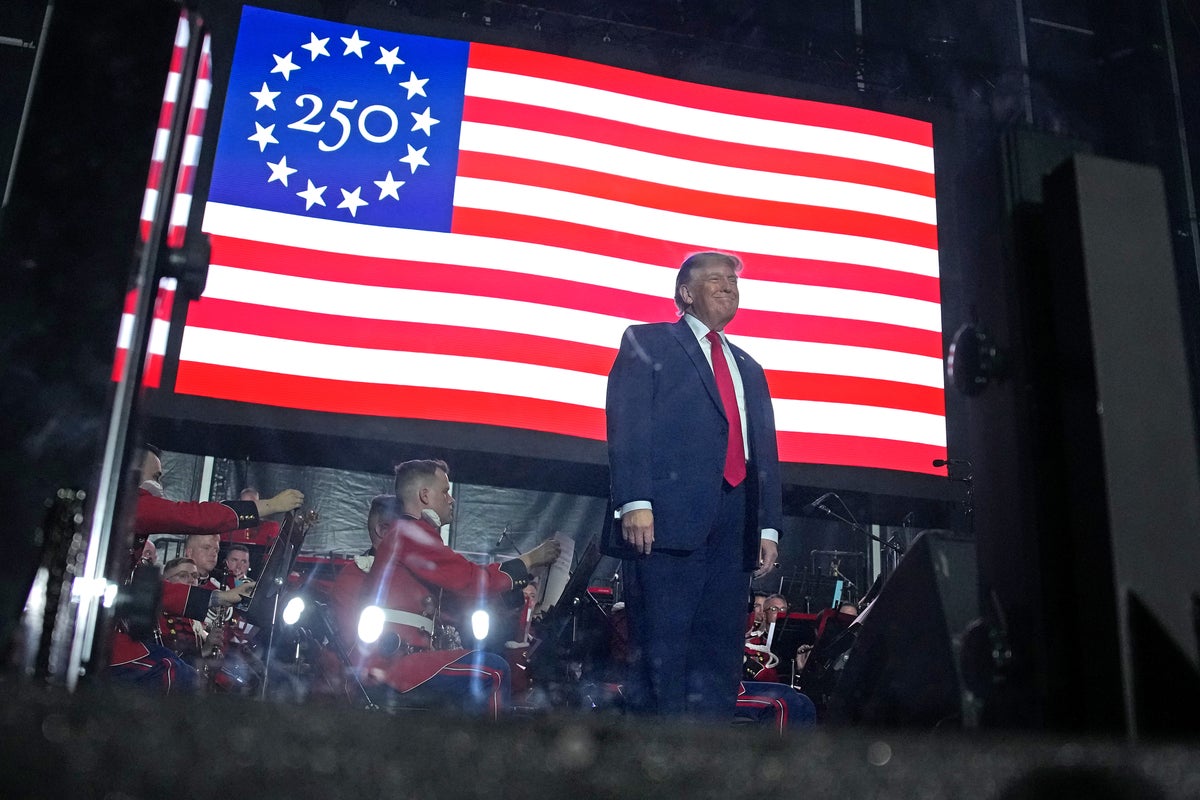
The United States reaches its 250th anniversary at a moment when the structural balance of American governance has fundamentally shifted toward the executive branch. While the semi-quincentennial was envisioned as a celebration of decentralised democratic endurance, the reality of 2026 reveals an presidency wielding unprecedented authority. This concentration of power is not a sudden aberration but the culmination of decades of legislative abdication, judicial realignment, and the expansion of administrative mandates. The anniversary serves less as a commemoration of original separation of powers and more as a marker of a highly centralised constitutional reality.
The Evolution of the Imperial Presidency
The modern executive branch operates with a level of independence that would astonish the framers of the Constitution. For the first century of the republic, Congress remained the dominant force in national policymaking. The shift began in earnest during the early 20th century, accelerating through wartime emergencies and the creation of the modern administrative state.
Today, the presidency commands a vast network of federal agencies capable of enacting sweeping economic and social changes without explicit legislative approval. By utilizing executive orders, emergency declarations, and novel interpretations of existing statutes, the White House frequently bypasses a gridlocked Capitol Hill.
This is not a partisan phenomenon. Successive administrations from both major parties have systematically expanded the boundaries of executive authority. When Congress fails to pass legislation on pressing issues like immigration, trade, or energy policy, the executive branch steps into the vacuum. The result is a system where major national policies are enacted by administrative decree rather than legislative consensus, leading to sharp policy swings whenever the Oval Office changes hands.
The Legislative Vacuum and Judicial Assent
Congress bears significant responsibility for the erosion of its own authority. Decades of deep political polarization have rendered the legislative branch incapable of passing comprehensive statutory updates. To avoid difficult votes on controversial issues, lawmakers have routinely written broad, ambiguous statutes, effectively delegating their lawmaking powers to unelected regulatory agencies overseen by the president.
The Breakdown of Oversight
Traditional mechanisms of congressional oversight have largely broken down. Committee hearings frequently devolve into partisan grandstanding rather than rigorous examination of executive spending or administrative overreach. The power of the purse, once the ultimate legislative lever, has been blunted by reliance on continuing resolutions and omnibus spending packages that fund the entire government at once, preventing targeted defunding of specific executive initiatives.
A New Judicial Framework
Simultaneously, the legal landscape has shifted to reinforce executive supremacy. While recent judicial rulings have altered how administrative agencies interpret laws, the core legal protections surrounding the presidency itself have hardened. The judiciary has increasingly recognized expansive doctrines of executive immunity and privilege, shielding the president's official actions from immediate legal accountability. This legal shield ensures that once executive action is taken, reversing it through the courts is a protracted, uncertain process that often concludes long after the policy has taken effect on the ground.
Economic Leverage and Global Trade Control
Nowhere is the concentration of executive power more visible than in the management of the national economy and global trade. Historically, the Constitution granted Congress the explicit power to regulate commerce with foreign nations and impose tariffs. Over the past several decades, however, lawmakers have passed successive trade acts that handed these exact responsibilities to the president under the guise of national security and economic emergency.
[Federal Trade Actions by Branch]
Historical: Congress -> Direct Tariff Legislation -> Market Implementation
Modern: Congress -> Broad Statutory Delegation -> President -> Unilateral Executive Tariffs
The executive branch now possesses the authority to unilaterally impose sweeping tariffs, renegotiate trade pacts, and sanction foreign entities. A single signature in the Oval Office can instantly disrupt global supply chains, alter commodity prices, and impact domestic manufacturing sectors. This immense economic leverage gives the administration unprecedented influence over private corporations, which must now constantly lobby the executive branch for exemptions, regulatory relief, or favorable trade designations. The traditional boundary between the state and the private market has blurred as a consequence.
The Permanent Security Apparatus
The growth of the national security state since the mid-20th century has created a permanent apparatus that answers directly to the commander-in-chief. The classification system, intelligence agencies, and specialized military commands operate largely beyond the day-to-day scrutiny of the public or ordinary lawmakers.
Decisions regarding drone strikes, cyber operations, and domestic surveillance programs are frequently made within the tight circle of the National Security Council. The War Powers Resolution of 1973, intended to rein in unilateral presidential military action, has been consistently circumvented by legal interpretations that define military interventions as falling short of full-scale war. Consequently, the executive branch retains the sole capability to involve the nation in complex international conflicts without prior legislative debate or declaration.
The Direct Communication Monopoly
The nature of modern communication has fundamentally altered the relationship between the president and the citizenry. In the 18th and 19th centuries, presidential communications filtered slowly through local newspapers and party networks. Today, the presidency commands an instantaneous, unmediated megaphone capable of shaping public discourse within seconds.
By utilizing direct digital platforms, the executive can rally public opinion, pressure reluctant lawmakers, and marginalize political opponents without relying on traditional media scrutiny. This direct line of communication creates a populist bond that elevates the occupant of the office above the collective institution of Congress. The president is no longer merely the head of one co-equal branch of government; they are the central focal point of national political identity, rendering the legislative branch secondary in the public consciousness.
The Cost of Institutional Decay
The long-term consequence of this power concentration is structural instability. When policy is driven primarily by executive action rather than legislative statute, the rules governing society become highly volatile. A business investing in long-term infrastructure cannot be certain that the regulatory framework governing its operations will survive the next election cycle.
Furthermore, the concentration of authority breeds deeper national division. Because the stakes of securing the presidency have become so immensely high, presidential elections are increasingly viewed by both sides as existential conflicts. The institutional checks and balances designed to force compromise and consensus have been replaced by a winner-take-all scramble for control of the executive lever. The American republic at 250 years old operates under a constitutional reality entirely distinct from its founding design, defined by an office that holds more centralized power than at any point in its history.