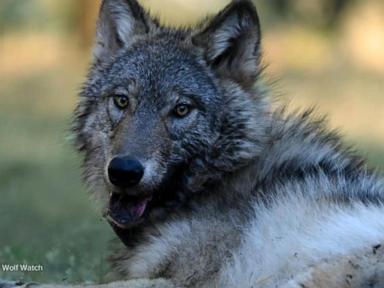
A lone gray wolf recently roamed into Sequoia National Park, marking the first time the species has been spotted in the High Sierra since 1924. While wildlife advocates celebrate this 100-year milestone as a triumph of natural reclamation, the reality on the ground is far more complex and volatile. This single predator represents a massive logistical headache for California officials. The wolf's arrival forces an immediate, messy collision between federal conservation mandates, state ranching realities, and an ecosystem that has fundamentally changed over the past century.
The animal, identified by wildlife biologists as a yearling female from the Lassen pack, traveled hundreds of miles southward to reach the park. Her journey is a testament to the species' remarkable capacity for dispersal. Yet, her presence in Sequoia is not just a heartwarming conservation vignette. It is a flashpoint.
Behind the public enthusiasm lies a fierce, quiet bureaucratic scramble. State agencies are now forced to accelerate management plans that were never truly prepared for a wolf to migrate this far south, this fast.
The Illusion of Wilderness in the Modern High Sierra
Monuments and national parks are often viewed as pristine, unchanging sanctuaries. They are not. The Sequoia National Park that the gray wolf walked into is vastly different from the habitat her ancestors fled a century ago.
Decades of aggressive fire suppression have altered the forest structure, changing the composition of the understory and affecting the behavior of large ungulates like mule deer, the wolf's primary prey. Furthermore, the park is bordered by active cattle ranching operations, private timberlands, and rapidly expanding foothill communities.
Sierra Nevada Grey Wolf Dispersal Range
[Lassen Pack Territory] ---> 300+ Miles South ---> [Sequoia National Park Boundary]
                                                          |
                                           +--------------+--------------+
                                           |                             |
                                   [Protected Public Land]      [Private Grazing Allotments]
When a predator enters this patchwork of public and private land, it does not recognize administrative boundaries. Wildlife managers face the daunting task of tracking an animal across a landscape fragmented by human development.
The immediate challenge is monitoring. GPS collars provide data points, but they do not prevent a hungry predator from wandering off federal land and onto a private ranch. The Sierra Nevada terrain is rugged, making physical tracking exceptionally difficult and expensive.
The Myth of Natural Equilibrium
A common misconception is that reintroducing or welcoming a apex predator immediately restores balance to an ecosystem. The trophic cascade hypothesis suggests that wolves keep deer and elk moving, which prevents overgrazing along riverbanks, allowing willows to grow and beavers to return.
That model worked in Yellowstone. The High Sierra, however, presents a different ecological equation.
- Prey Density: Mule deer populations in the southern Sierra are already fluctuating due to habitat loss and severe winter weather cycles. Introducing a new apex predator adds pressure to a system that is already stressed.
- Competition: The wolf is not entering an empty niche. Mountain lions and black bears are firmly established in Sequoia. How these species interact with a new canine competitor will determine the success of the wolf's residency.
- Habitat Fragmentation: Unlike the vast, unbroken wilderness of the Northern Rockies, the Sierra Nevada is choked by highways and infrastructure, limiting safe migration corridors.
The Economic Flashpoint Outside the Park Gates
While tourists look through binoculars hoping for a glimpse of gray fur, ranchers in Tulare and Fresno counties are looking at their ledgers. The livestock industry in the Central Valley foothills operates on razor-thin margins. A single wolf attack can wipe out a rancher's profit for the season, not just through direct cattle mortality, but through the stress-induced weight loss of the herd.
California law technically protects the gray wolf under the state's Endangered Species Act. This means killing a wolf, even in defense of property or livestock, carries severe criminal penalties.
+------------------------------------+-----------------------------------+
| Rancher Challenges                 | State Mitigation Tools            |
+------------------------------------+-----------------------------------+
| Increased herd stress and abortion | Financial compensation for losses |
| Expense of non-lethal deterrents  | Cost-sharing for range riders     |
| Regulatory restrictions on defense | Deployment of fladry and alarms   |
+------------------------------------+-----------------------------------+
State compensation programs exist to pay ranchers for livestock confirmed to be killed by wolves. However, proving a wolf was the culprit is notoriously difficult.
Carcasses in the high country are quickly picked clean by scavengers like coyotes and vultures, leaving little forensic evidence for state biologists to verify. If a kill cannot be definitively attributed to a wolf, the rancher receives nothing.
The Limits of Non-Lethal Deterrents
The state promotes non-lethal mitigation strategies, such as fladry (brightly colored flags hung from fences), guard dogs, and turbo-fladry equipped with strobe lights. Range riders are hired to actively patrol herds on horseback.
These measures are costly and labor-intensive. For a family-run operation managing hundreds of acres of rugged brushland, maintaining miles of fladry is a logistical nightmare.
Furthermore, wolves are highly intelligent. They adapt quickly. A visual or auditory deterrent that frightens a wolf in June may be completely ignored by October once the animal realizes the flashing light poses no actual threat.
Bureaucracy and the Battle Over Wildlife Management
The arrival of the wolf in Sequoia exposes the deep ideological rift between urban conservationists and rural communities. This conflict is amplified by the overlapping jurisdictions of the National Park Service, the U.S. Fish and Wildlife Service, and the California Department of Fish and Wildlife.
Each agency operates under a distinct mandate. The National Park Service focuses on preserving natural processes within its borders. The California Department of Fish and Wildlife must balance species preservation with the economic interests of the state's agricultural sectors.
When a wolf crosses the park boundary, the governing philosophy shifts instantly from absolute protection to active conflict management.
The Political Geography of Conservation
The funding and political willpower driving wolf protection come largely from affluent, urban coastal centers. The communities that must actually live alongside the predator, however, are rural and politically disenfranchised. This dynamic creates deep-seated resentment.
Urban Voter Support (High Funding/Low Risk)
       │
       ▼
Statewide Protection Policies
       │
       ▼
Rural Communities (Low Funding/High Risk)
Ranchers feel that their livelihoods are being sacrificed to satisfy an romanticized vision of wilderness held by people who will never have to worry about a predator killing their animals in the night. This resentment often leads to underground, illegal retaliation.
The phrase "shoot, shovel, and shut up" is a grim reality in western wildlife management. The state's inability to foster genuine trust with rural landowners remains the greatest threat to long-term wolf recovery.
Can the High Sierra Truly Support a Wolf Population?
The presence of one wolf does not equal a population. For the gray wolf to truly return to the southern Sierra, this lone female must find a mate. The nearest established pack is hundreds of miles to the north.
The probability of a male wolf making the same perilous journey through highways, ranches, and hostile territory to find her in the vastness of Sequoia is statistically low.
Northern California Packs ───(Highways, Cities, Ranches)───► Sequoia Single Female
                                                                   ▲
                                                                   │
                                                       [Low Probability of Match]
If she remains solitary, her impact on the ecosystem will be negligible. She will hunt deer, avoid humans, and eventually die without leaving a genetic legacy in the region.
If a male does arrive, and a pack forms, the situation changes dramatically. A resident pack requires a massive territory, far larger than the boundaries of Sequoia National Park. They will inevitably expand into the surrounding national forests and private lands, escalating the human-wildlife conflict exponentially.
The DNA Tracker Factor
Biologists are currently relying on environmental DNA (eDNA) collected from water sources and scat to track the female's movements without capturing her. This non-invasive technology allows scientists to confirm her presence and monitor her health without causing the stress of a physical capture and collaring operation.
While eDNA provides invaluable scientific insights, it does not offer real-time tracking. By the time a laboratory confirms a wolf's DNA was present in a creek sample, the animal is already miles away, potentially near a herd of cattle.
The Hard Realities Ahead
The return of the gray wolf to Sequoia is not a simple story of nature healing. It is a complex, high-stakes management crisis that will test the limits of California's conservation policies. The state cannot rely on optimism or romantic notions of wilderness to manage a large, intelligent apex predator in a human-dominated landscape.
Success will not be measured by the mere presence of a wolf inside a national park. It will be determined by whether the state can develop a functional, well-funded compensation and mitigation system that prevents the economic ruin of the rural communities living on the park's edge. Without that balance, the wolf's return will be short-lived, ended not by starvation or disease, but by a quiet bullet in the dark.