The Incident Over Western Australia
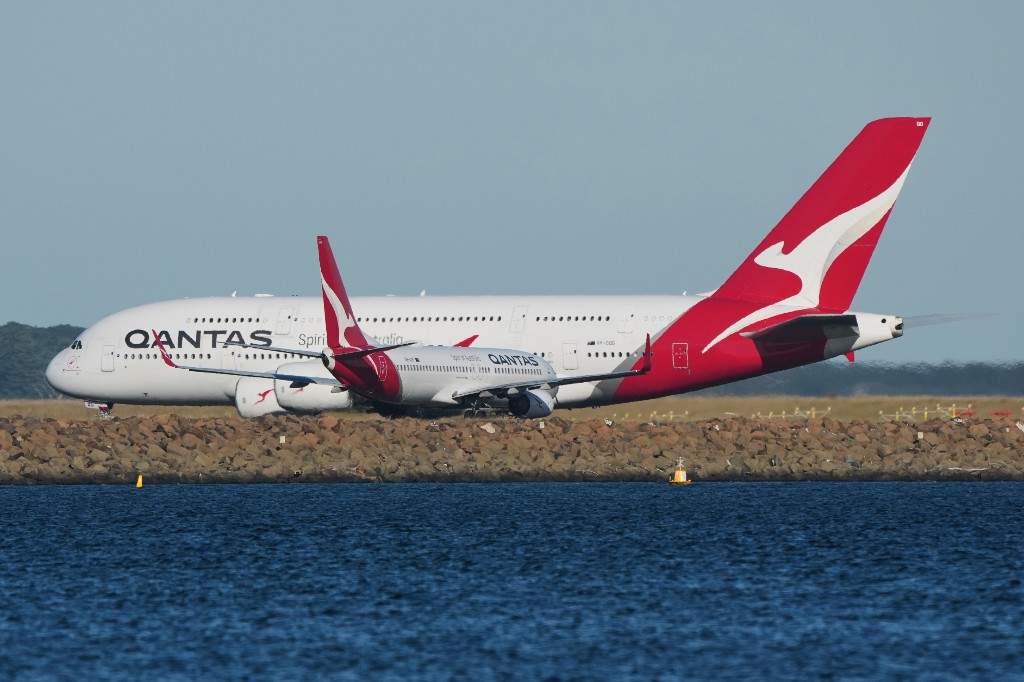
When Thomas Raymond Forster allegedly tried to wrench open a Qantas passenger door on a routine domestic flight from Karratha to Perth, he did more than trigger a localized security crisis. He exposed the fragile social contract holding modern commercial aviation together. Flight QF1733 should have been an unremarkable commute across the red dust of Western Australia. Instead, it deteriorated into a high-altitude confrontation that left passengers shaken and federal law enforcement waiting on the tarmac.
Police later charged the 41-year-old with multiple offenses, including endangering the safety of an aircraft and unruly behavior. The court documents describe a rapid escalation. Verbal abuse directed at a fellow traveler turned into physical aggression, with seats kicked and cabin crew members targeted when they attempted to intervene. As the aircraft prepared to land, the situation worsened into an outright security breach.
The incident is far from an isolated anomaly. Across international skies, commercial airlines report an escalating frequency of disruptive passengers. Cabin crew members, once viewed primarily as hospitality professionals and safety guides, find themselves functioning as frontline security officers managing volatile individuals thousands of feet in the air.
The Physics of Door Operations
Popular culture loves the trope of a panicked or deranged passenger popping an aircraft exit door mid-flight to cause instant catastrophe. Reality operates on entirely different mechanical principles. Modern commercial jetliners rely on plug-type doors. These doors are physically larger than the frame opening itself. They must be pulled inward slightly before swinging outward.
At cruising altitude, the cabin is pressurized to simulate an environment roughly six to eight thousand feet above sea level. The air pressure inside the fuselage significantly exceeds the atmospheric pressure outside. This creates a massive differential force. On a standard narrow-body or wide-body aircraft, several tons of outward pressure press against every square foot of the door.
No human possesses the physical strength to overcome that differential. A single person pulling on a handle at thirty thousand feet is fighting against thousands of pounds of atmospheric resistance. The physics make a successful mid-air opening impossible during high-altitude cruise phases.
However, danger remains very real during different flight phases. As an aircraft descends, cabin pressure adjusts to match ground levels. The pressure differential drops significantly. During final approach or taxi, when pressure equalization occurs, the mechanical lock is the primary barrier preventing an opening. An attempt to manipulate a door during these critical phases can compromise flight safety, startle flight crews, and cause physical harm during landing preparations.
The Socioeconomic Pressure Cooker of Resource Towns
To understand why a routine domestic hop from a mining hub turned violent, one must examine the geography and economy driving these routes. Karratha stands as an industrial powerhouse in the Pilbara region. It is a territory built on heavy industry, mining camps, intense heat, FIFO (fly-in, fly-out) labor cycles, and substantial disposable incomes mixed with chronic isolation.
FIFO workers endure grueling rosters. Weeks spent working long shifts in remote desert conditions create high levels of psychological strain. When these workers transition back to urban centers, the psychological decompression often manifests poorly. Substance use, fatigue, and pent-up stress frequently collide in cramped airport lounges and confined aircraft cabins.
Airlines serving these remote industrial corridors carry a distinct demographic profile. Flights frequently feature passengers accustomed to high-stress environments, physical labor, and, occasionally, heavy alcohol consumption prior to boarding. While airlines enforce strict limits on service, pre-flight consumption and smuggled alcohol bypass these barriers regularly.
The social fabric inside the cabin reflects broader societal fractures. Post-pandemic travel brought a notable coarsening of public discourse. Entitlement, short tempers, and a diminished tolerance for institutional rules pervade modern travel. When an individual accustomed to high-pressure environments faces minor inconveniences or perceived slights at thirty thousand feet, the threshold for explosive behavior drops drastically.
Historical Precedents and Global Trends
The Karratha-Perth incident fits into a disturbing global pattern of erratic behavior at altitude. Similar events have played out across international carriers with alarming regularity. In recent years, flights from various global hubs to major urban centers have seen passengers manipulate emergency exits during final descent, citing panic attacks or severe claustrophobia.
Each event forces aviation authorities to re-evaluate the physical security of cabin interiors. Historically, aircraft cabins were designed with trust as a foundational element. Emergency exits were engineered to be operated quickly by ordinary passengers during an evacuation, prioritizing rapid egress in a post-crash scenario over restriction against intentional sabotage.
This design philosophy creates an inherent vulnerability. An exit mechanism designed to be thrown open in seconds by a terrified or injured passenger during an emergency can also be manipulated by an irrational individual during flight. Modifying these systems to prevent in-flight tampering without compromising emergency evacuation compliance presents an engineering nightmare. Aircraft manufacturers and safety regulators constantly weigh the remote risk of a rogue passenger against the absolute necessity of fast evacuation during a catastrophic fire or crash landing.
Furthermore, international jurisdiction complicates legal remedies. When an incident occurs over international waters or foreign airspace, determining which country holds prosecutorial jurisdiction can delay justice or create legal loopholes. Domestic flights like the Qantas Karratha-Perth leg fall under clear national aviation laws, allowing federal police to meet the aircraft immediately upon landing. However, cross-border inconsistencies leave gaps that unruly passengers occasionally exploit.
The Legal and Financial Consequences
The judicial system treats interference with aircraft safety with uncompromising severity. Australian federal law imposes strict penalties for disrupting commercial flights. Charges of endangering the safety of an aircraft carry maximum prison sentences of up to ten years. Assaulting a Commonwealth public official, which includes airline crew executing their safety duties during flight, carries even heavier maximum sentences.
In addition to criminal prosecution, offenders face substantial financial liabilities. Civil penalties, massive restitution claims for diverted flights, and permanent travel bans from carriers like Qantas form an aggressive defensive perimeter. Regulatory bodies increasingly coordinate across international borders to share blacklists, ensuring that a violent outburst in Australian airspace results in global commercial isolation.
Yet, legal deterrence operates on rational calculation. Individuals experiencing acute mental health episodes, severe intoxication, or blind rage rarely consult the criminal code before acting out. For them, the threat of a decade in prison evaporates in the heat of an adrenaline surge. The legal framework punishes the crime effectively after the fact, but it proves remarkably ineffective at stopping the initial impulse.
The Burden on Frontline Flight Crews
Flight attendants undergo rigorous training covering emergency evacuations, fire suppression, medical emergencies, and cabin security. Managing a violent individual attempting to compromise an aircraft door requires physical restraint, psychological de-escalation, and absolute coordination among team members.
Training protocols have evolved significantly over the past decade. Airlines now instruct crews in physical restraint techniques, situational awareness, and threat grading. However, cabin crew members lack tactical gear, defensive weapons, or specialized law enforcement backgrounds. They rely on zip ties, seatbelts, physical strength, and the willingness of cooperative passengers to subdue unruly travelers.
This dynamic places an unfair and dangerous burden on aviation staff. A flight attendant welcoming passengers aboard is performing a safety-critical role. When that same attendant must physically wrestle a hostile passenger away from an emergency exit while the aircraft descends, the margin for error narrows dangerously.
Airline unions and safety advocacy groups continue pushing for stronger preventative measures. Proposals range from mandatory blacklists shared universally across global carriers to enhanced pre-flight screening for intoxication at regional airports. Implementing these measures requires balancing commercial efficiency with absolute safety margins.
The Broader Implications for Commercial Aviation
Commercial flight relies on a baseline assumption of mutual cooperation. Millions of passengers board aircraft daily trusting that strangers sharing their enclosed tube of aluminum will adhere to basic social norms and federal regulations. When that trust shatters, the psychological cost affects every traveler on board.
Incidents involving compromised doors or violent outbursts generate immediate media attention, but they represent only the visible tip of an iceberg. Countless minor altercations occur daily—disputes over recline space, verbal abuse of staff over delayed baggage, and non-compliance with basic seatbelt instructions. Each minor infraction chips away at the operational resilience of the system.
Aviation security historically focused on external threats—hijackers, explosives, and geopolitical actors. Today, the industry faces an internal threat vector driven by passenger volatility, mental distress, and substance abuse. Securing the modern cabin requires addressing these human factors long before passengers ever reach the boarding gate.
The legal proceedings for the Karratha-Perth incident will eventually conclude in a Perth courtroom. Headlines will fade, and aviation regulators will move on to the next crisis. But the underlying pressures inside the cabin remain unaddressed. As long as commercial aviation operates as a high-density, high-stress transit network moving millions of stressed individuals through confined spaces, the system remains vulnerable to the unpredictable actions of a single volatile mind