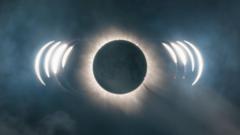
On August 12, 2026, the Moon's shadow will carve a dark path across the Earth, delivering the first total solar eclipse to mainland Europe since August 11, 1999. Millions are preparing to crane their necks toward the sky. Most will fundamentally miscalculate the logistics, ending up stuck in gridlock on rural Spanish motorways or staring blindly at an overcast horizon.
The upcoming celestial alignment is not merely a pretty photo opportunity for social media feeds. It represents a massive logistical pressure test for municipal infrastructure across Greenland, Iceland, and northern Spain. The total solar eclipse of 1999 drew collective awe across a continent that had grown complacent. This 2026 recurrence brings heightened stakes, modern crowd-density challenges, and a very narrow window of totality that leaves zero room for error. For a deeper dive into this area, we recommend: this related article.
Understanding the mechanics of the shadow path requires looking past glossy travel brochures. The geometry of orbital mechanics dictates that the Moon's umbra moves at supersonic speeds across the globe. When it makes landfall over western Iceland and sweeps down toward the Iberian Peninsula, it hits late in the evening local time. Low solar elevation changes everything. Traditional eclipse viewing relies on the Sun being high overhead. In August 2026, observers in places like northern Spain or major European urban peripheries tracking partial phases will watch the spectacle unfold just degrees above the western horizon.
Low-angle viewing introduces severe topographical vulnerabilities. A single ridge, a line of unmanaged commercial warehouses, or coastal fog banks can completely obliterate the view. Experienced astronomy veterans know that mobility is the ultimate insurance policy. Relying on a fixed hotel reservation in Madrid or Barcelona guarantees missing the true core of the shadow, as those metropolitan zones sit outside the path of totality. True totality demands positioning oneself squarely within a narrow corridor spanning northern regions like Cantabria, Asturias, and parts of Valencia. For additional details on this development, in-depth analysis can be read on AFAR.
Municipalities along the narrow track are bracing for unprecedented vehicular influxes. Local governments in rural Spanish provinces have quietly expressed concern over single-lane access routes choked by rented camper vans. Fuel stations in remote districts face genuine supply chain strains as thousands of amateur astronomers descend simultaneously. Anyone treating this event like a casual weekend getaway will likely spend the moment of maximum eclipse trapped inside a stationary vehicle on a two-lane agricultural road.
Safety protocols also demand rigorous adherence, stripped of internet mythology. Standard sunglasses, blackened photographic film, or makeshift filters offer zero protection against retinal burns. Certified solar viewing cards bearing strict international safety ratings are mandatory. Yet counterfeit products flood online marketplaces ahead of every major celestial event. Testing a filter against indoor lighting proves nothing; cheap films often let infrared radiation pass straight through to fry human tissue while dimming visible light enough to prevent immediate discomfort.
Beyond the shadow itself, August 12 delivers a rare triple-feature convergence. The peak of the annual Perseid meteor shower coincides with a moonless night sky, while a planetary alignment clusters visible bodies near the horizon. Astrophotographers attempting to capture both the dying crescent sun and early meteors face severe equipment calibration nightmares. Rapidly changing ambient light temperatures require manual adjustments to camera sensors that automated systems routinely misinterpret.
The financial gouging accompanying the event mirrors major global sporting spectacles. Coastal resorts in Iceland and Spain have inflated lodging rates by astronomical margins, turning a shared natural phenomenon into an exclusive playground for those willing to absorb exorbitant markups. Savvy travelers have bypassed traditional hotels entirely, opting for self-contained camping setups far outside municipal water grids, bringing every drop of hydration and power generation equipment with them.
Do not expect a polite, orderly viewing environment. Weather patterns over the Atlantic and northern Spain during mid-August are notoriously fickle. Microclimates frequently spawn localized cloud cover right as atmospheric pressure drops during the sudden cooling of totality. Those anchored to a single spot will gamble entirely on meteorological luck. The professionals will track radar loops down to the final hour, renting all-terrain vehicles to punch through coastal cloud decks into the dry interior plateaus.
The 1999 eclipse taught a generation of scientists how ordinary citizens react when daytime turns abruptly to twilight. Streetlights flicker on, wildlife freezes in confusion, and cellular networks collapse under the sudden surge of data uploads. In 2026, the reliance on mobile infrastructure makes network failure an absolute certainty in rural valleys. Offline maps, physical compasses, and hard cash remain mandatory gear for anyone venturing past the urban fringe.
The countdown has already triggered massive rushes on specialized optical gear across European distribution centers. Millions of spectators will crowd public plazas in places like Brussels and Paris to catch deep partial phases where the Moon takes a massive chunk out of the solar disc. Yet a partial eclipse, no matter how deep, remains fundamentally different from totality. Witnessing ninety percent coverage leaves ten percent of the sun shining—enough to wash out the corona and deny viewers the surreal experience of standing inside the literal shadow of the Moon.
Preparation requires ruthlessly cutting through the romanticized noise. Check your safety filters. Map out three separate escape routes from your primary viewing coordinates. Assume every highway within fifty miles of the shadow centerline will lock solid hours before first contact.
The shadow moves fast, indifferent to traffic jams, overpriced hotel rooms, or cloudy skies.
A Historic Total Solar Eclipse Is Coming. You Won't Want To Miss It
This video provides an excellent breakdown of the upcoming alignment, detailing the exact path of totality and what viewers can expect to see across different regions.
http://googleusercontent.com/youtube_content/1