When investigators first arrived at the overgrown lot behind an abandoned home in Jackson, Mississippi, on August 3, 2026, the visual horror froze everyone in place. Tasia Fortune, a twenty-nine-year-old mother of four, was hanging from a tree. For a state carrying the heavy, blood-soaked historical weight of racial terror and lynchings, the immediate wave of shock rippling through the community was profound. But as weeks of courtroom testimony and forensic examinations unfolded, Mississippi authorities systematically dismantled the initial surface appearance of the scene. Court documents and police disclosures revealed a chilling operational reality. Tasia Fortune was not killed by hanging. Medical examiners and police detectives established that she was dead before her body was ever hoisted into the branches, her murder stemming from a violent drug dispute where she fought ferociously for her life against her attackers. Multiple suspects, including Jarques Ratliff, Earnest Lloyd Jr., and Eric Clark, faced murder charges as investigators exposed a calculated attempt to mask a homicide behind the grotesque theater of a staged execution.
Anatomy of a Staged Scene
Crime scene staging remains one of the most cynical maneuvers in criminal enterprise. Perpetrators manipulate physical evidence to misdirect investigators, manufacturing false narratives designed to waste precious hours during the initial window of a homicide inquiry. In the case of Tasia Fortune, the deployment of a ligature and an elevated suspension point was calculated to deceive. Jackson Police Detective Samuel Dukes laid out the medical examiner's findings during judicial proceedings, confirming that the physical trauma observed on Fortune's body was inconsistent with a primary hanging. Instead, the forensic indicators pointed directly toward a fierce physical altercation that occurred prior to the body being moved.
Staging a death scene requires physical labor, psychological calculation, and a cold disregard for human dignity. When an offender attempts to simulate suicide or alternative causes of death, forensic pathologists look for distinct discrepancies between the position of the body, livor mortis, petechial hemorrhaging, and the mechanics of the ligature marks. In Fortune's case, the physical contest she put up against her assailants left unmistakable markers. Forensic experts testified that she fought hard, leaving microscopic and macroscopic evidence of a brutal struggle before she succumbed to her injuries. The subsequent decision to hoist her body into a tree behind an abandoned structure was an act of profound misdirection. It was an effort to obscure the true mechanics of the homicide and throw investigators off the scent by invoking terrifying imagery that would immediately capture public panic and skew early investigative priorities.
The Intersection of Vulnerability and Violence
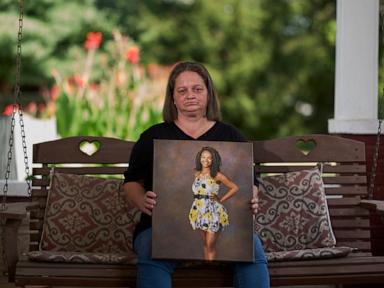
Behind every homicide headline lies a complex human ecosystem that standard police reports struggle to capture. Tasia Fortune had spent recent years navigating the harrowing currents of housing instability and homelessness in Jackson. Her mother, Christy Spivey, candidly addressed her daughter's struggles with housing and life instability, noting that Fortune had recently spoken about building a cleaning business and trying to anchor her life.
Vulnerability acts as a magnet for danger in marginalized urban spaces. Individuals experiencing housing insecurity often find themselves operating on the fringes, where formal protections break down and illicit economies fill the vacuum. The police department's disclosure that Fortune's death stemmed from a drug dispute highlights the dangerous intersections where survival intersects with unregulated trades. When disputes erupt in these shadows, recourse to the formal legal system is nonexistent. Disputes are settled through raw physical power, intimidation, and violence. Fortune's determination to fight back during her final moments underscores a fierce survival instinct, even when caught in an environment where her baseline safety was continuously compromised. The tragedy of her death is amplified by the fact that she was actively attempting to claw her way toward stability, talking about legitimate enterprise and seeking a path forward for her family.
Unraveling the Courtroom Revelations
The legal proceedings in Hinds County laid bare the gradual accumulation of evidence that transformed a shocking discovery into a multi-defendant murder prosecution. Jarques Ratliff, fifty-one, was the first to be arrested, entering a plea of not guilty and sitting in jail without bond as the judicial machinery ground forward. During court hearings, Ratliff blurted out an unprompted statement claiming friendship with Fortune, a remark that hung heavily in the courtroom air.
As the investigation widened, police moved swiftly. Earnest Lloyd Jr., twenty-five, was taken into custody following local reporting that detailed an alleged physical altercation between Lloyd and Fortune immediately preceding her death. Prosecutors and investigators accused Lloyd of utilizing a black cable cord during the fatal encounter. The net tightened further when a forty-five-year-old man named Eric Clark turned himself in on an active murder warrant, pushing the number of charged defendants to three.
Each arrest brought new layers of testimony into the public record, forcing observers to separate emotional reactions from forensic truths. For Christy Spivey, sitting through the hearings demanded an extraordinary toll. She acknowledged publicly that while she knew her daughter had died prior to the hanging, the public spectacle of the staged scene forced the tragedy into the national spotlight, ensuring it could not be quietly swept away. The court battles continue to test the strength of the state's evidence as cases are prepared for grand jury indictments, with defense attorneys testing the reliability of witness testimony and physical forensic linkages.
The Weight of History in Mississippi
To understand why the discovery of Tasia Fortune's body provoked such visceral national anguish, one must examine the deep historical wounds of Mississippi. The imagery of an African American individual hanging from a tree carries a specific, terrifying resonance across the American South. Decades of unpunished racial terror and documented lynchings have left an indelible psychological scar on communities. When such a scene is discovered, the immediate instinct of the public is to recall historical atrocities.
This context makes the crime of staging a hanging particularly insidious. The perpetrators chose a method that weaponized historical trauma. Whether the motivation was purely to conceal a drug-related homicide or to evoke an atmosphere of intimidation that might paralyze local reporting, the act exploited the cultural sensitivity surrounding racial violence in the state. Jackson police officials and community leaders faced an immense challenge: reassuring a traumatized public while relentlessly pursuing forensic facts that pointed away from a racially motivated public lynching and toward a targeted homicide driven by localized conflict.
The distinction between a hate-motivated public execution and a staged homicide does not diminish the brutality of Fortune's murder, but it reorients the nature of the criminal conspiracy. It reveals cold-blooded pragmatism among the killers, who believed that dressing the crime scene in historical symbolism would confuse investigators or deflect attention toward broader societal tensions rather than their specific personal actions.
Seeking Justice in the Shadows
As the judicial process moves toward grand jury presentations and eventual trials, the case of Tasia Fortune remains a stark reminder of the violent realities hidden beneath systemic urban neglect. The arrests of Ratliff, Lloyd, and Clark represent procedural milestones, but they do not erase the systemic vulnerabilities that allowed the tragedy to occur in the first place.
The community advocates, family members like Christy Spivey, and investigators who refused to let the initial visual presentation of the crime scene dictate the conclusion of the case have demonstrated the necessity of rigorous forensic pathology. Staging a crime scene is an admission of guilt; it is the ultimate acknowledgment by the perpetrators that their actions cannot stand on their own merits and require elaborate deception to survive scrutiny. As the court dates approach and prosecutors lay out the full breadth of the evidence, defense teams prepare to challenge the state's narrative while prosecutors rely on the silent testimony of physical evidence left behind in the dirt and trees of Jackson.