The International Monetary Fund recently issued a stark warning that a full-scale conflict involving Iran would trigger a humanitarian and economic catastrophe far exceeding the borders of the Middle East. While the human cost is the most immediate tragedy, the systemic risk to the global financial order is what keeps central bankers awake at night. We are not just looking at a localized skirmish, but a potential shockwave that could derail the fragile post-inflationary recovery of the Western world.
The core of the problem lies in the "fragility of the middle." While the world has focused on the resilience of the US consumer, the global energy supply chain remains tethered to a handful of maritime chokepoints. If these are severed, the resulting price spikes act as a regressive tax on every living human, hitting the poorest nations with a force that leads to civil unrest and mass migration.
The Chokepoint Trap
Global trade relies on the illusion of open seas. The Strait of Hormuz is the world's most sensitive artery, with roughly 20% of the world’s total oil consumption passing through its narrow waters daily. Unlike other transit points, there is no viable, high-capacity bypass. If Iran follows through on long-standing threats to obstruct this passage, the immediate loss of three to five million barrels of oil per day would send Brent crude prices into a vertical climb.
Energy markets operate on razor-thin margins of spare capacity. When supply drops, prices do not rise linearly; they explode. We saw this in 1973 and 1979. In the current environment, where interest rates are already high and government debt is at record levels, a sustained oil price above $120 a barrel would likely tip the Eurozone and several emerging markets into a deep recession. This isn't just about the price at the pump. It’s about the cost of fertilizer, the cost of shipping grain, and the cost of keeping the lights on in industrial hubs like Germany and South Korea.
Beyond the Barrel
Financial analysts often make the mistake of viewing an Iran conflict solely through the lens of oil. That is a dangerous oversimplification. Iran’s role in the regional "Resistance Axis" means a hot war would likely involve coordinated strikes against desalination plants and power grids across the Arabian Peninsula.
Consider the Gulf Cooperation Council (GCC) states. Their economies have become the world’s construction site and a primary source of global investment capital. If the security of these states is compromised, the flow of "petrodollars" into Western stocks, bonds, and real estate dries up instantly. The sudden withdrawal of this liquidity would cause a violent reprisal in global equity markets. We are talking about a margin call on the global economy.
The Logistics of Ruin
The modern "just-in-time" delivery model cannot survive a regional war in the Middle East. Insurance premiums for cargo ships would skyrocket, effectively blockading ports that aren't even near the kinetic zone of conflict. We saw a preview of this with the Houthi movements in the Red Sea. Multiply that disruption by ten.
When shipping routes are forced to circumnavigate the Cape of Good Hope, it adds weeks to delivery times and millions to fuel costs. This delay acts as a hidden inflationary pressure. Central banks, which have spent the last three years trying to cool down prices, would find themselves in a "stagflationary" nightmare: rising prices coupled with shrinking economic output.
The Migration Domino Effect
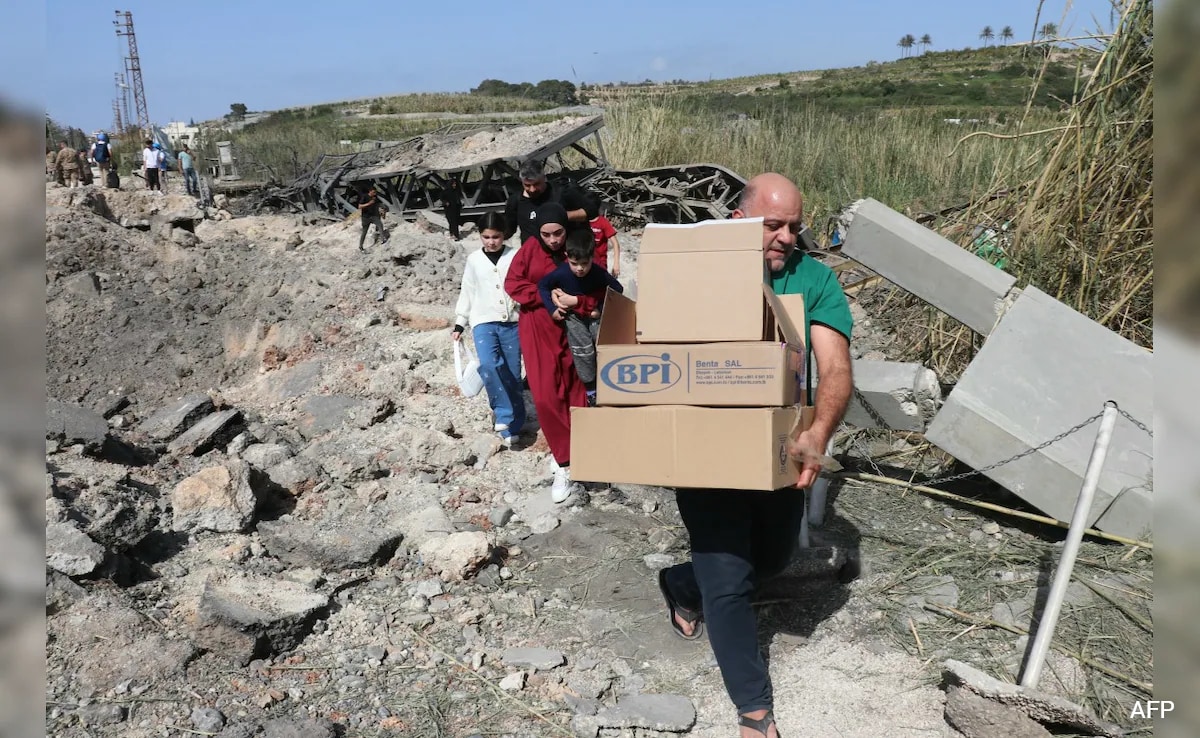
The IMF's mention of "human impact" is often sanitized language for the displacement of millions. A war in Iran, a country of 85 million people, would not resemble the Syrian or Ukrainian refugee crises. It would dwarf them.
The economic burden of managing such a massive influx of people would fall first on neighbors like Turkey and Pakistan, nations already struggling with currency devaluations and political instability. When these "buffer states" reach a breaking point, the pressure moves toward Europe. The political fallout from this movement of people historically leads to a rise in protectionism and the fracturing of trade blocs, further slowing global growth.
The Debt Ceiling of War
Governments in the West are in a much weaker position to handle a global shock than they were in 2008 or even 2020. Debt-to-GDP ratios are at historic highs. During the pandemic, states printed money to keep their economies afloat. They cannot do that again without risking a total collapse of their currencies.
If a war breaks out, the "flight to safety" usually means investors buy US Treasuries. However, if the US is perceived as being dragged into a long, expensive, and inconclusive regional conflict, even the dollar's status as a safe haven could be questioned. There is a point where the cost of maintaining global order exceeds the capacity of the hegemon to pay for it.
The Technology and Cyber Frontier
We must also account for the asymmetric nature of modern warfare. Iran has spent decades perfecting its cyber-offensive capabilities. A conflict would not stay in the Persian Gulf. It would manifest in the digital infrastructure of London, New York, and Riyadh.
- Financial Clearing Systems: Targeted attacks on SWIFT or banking back-ends.
- Energy Grids: Ransomware or destructive "wiper" malware hitting Western utilities.
- Satellite Communications: Disruption of the GPS signals that modern agriculture and logistics depend on.
This is the "invisible war" that destroys GDP without firing a single conventional missile. The loss of public trust in digital institutions during such a crisis would be a permanent scar on the global economy.
The Strategy of Attrition
Iran’s military doctrine is built for a war of attrition, not a decisive clash of fleets. They don't need to "win" in a traditional sense. They only need to make the cost of the status quo unbearable for the rest of the world. By using cheap drones and mines to threaten multi-billion dollar tankers and warships, they flip the economic script on the West.
Washington and its allies are then forced to spend millions of dollars in interceptor missiles to shoot down drones that cost a few thousand. It is a mathematical impossibility to sustain this indefinitely. The IMF's warning is essentially an admission that the global financial system has no "Plan B" for a sustained disruption of this magnitude.
The Emerging Market Death Spiral
While the US and Europe might weather a recession, the developing world faces an existential threat. Countries in Sub-Saharan Africa and parts of Southeast Asia are massive net importers of both food and energy. When the price of these two commodities spikes simultaneously, the result is literal starvation and state failure.
A war in the Middle East is, for many nations, a death sentence for their developmental goals. The "lost decade" of the 1980s was triggered by the energy shocks of the 70s. We are looking at a repeat, but in a world that is far more interconnected and far more volatile.
The true risk is not a line on a chart or a temporary dip in the S&P 500. It is the permanent dismantling of the era of cheap energy and globalized trade. If the fire starts in the Middle East, the smoke will choke every boardroom and household on the planet.
Investors and policymakers need to stop treating a potential Iran conflict as a "tail risk"—an unlikely, extreme event. It is a central reality of the current geopolitical climate. The window for a managed cooling of tensions is closing, and the cost of failure is a global depression that no amount of interest rate tweaking can fix.
Prepare for the era of the permanent shock.