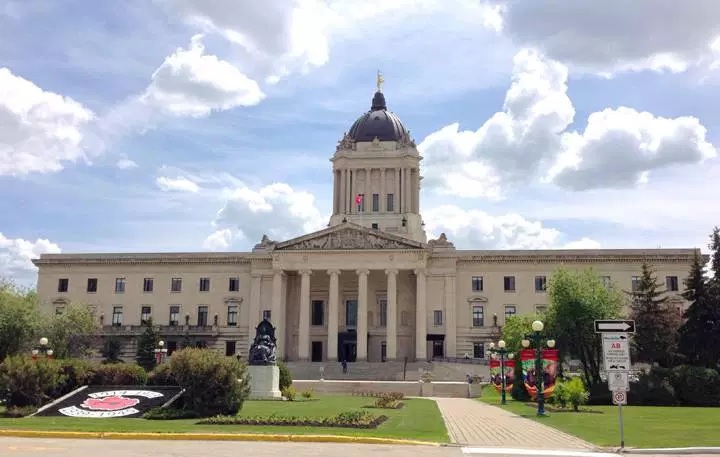
The recent breakdown of order within the Manitoba Legislative Building is not a fluke of personality or a temporary lapse in decorum. It is the natural result of a political system where the primary objective has shifted from governance to the manufacture of social media clips. While the headlines focus on the insults traded between the NDP and the Progressive Conservatives, the real story lies in the total collapse of the legislative process itself. When the chamber devolves into a shouting match, the scrutiny of billion-dollar budgets and critical policy changes stops. That is precisely why it happens.
The current friction in Winnipeg centers on a fundamental disagreement over what the legislature is actually for. For Premier Wab Kinew’s government, the chamber represents a stage to solidify a mandate and project a sense of historic progress. For the PC opposition, it has become a desperate battleground to regain relevancy after a stinging election loss. Neither side seems particularly interested in the dry, necessary work of committee oversight or the line-by-line analysis of provincial spending.
The Weaponization of the Speaker Chair
In a healthy parliamentary system, the Speaker acts as a neutral arbiter, a referee who ensures the minority has a voice and the majority cannot simply steamroll the house. That neutrality has vanished. We are witnessing a trend where the Speaker’s rulings are no longer viewed as procedural guidance but as political maneuvers.
When the opposition feels the referee is wearing the other team’s jersey, they stop playing by the rules. This leads to the "testy sessions" that local media reports on with a mix of shock and boredom. But the testiness is a tactic. By forcing the Speaker to intervene or by intentionally getting kicked out of the chamber, members of the Legislative Assembly (MLAs) create a spectacle. This spectacle serves as a smoke screen. While the public debates whether a specific word was "unparliamentary," the actual mechanics of lawmaking—the debate on healthcare funding or infrastructure priorities—are buried.
The Policy Void Behind the Personal Attacks
If you strip away the name-calling, what remains is a startling lack of depth in the current policy debate. The NDP has leaned heavily into the "everything is the previous government’s fault" narrative. It is a classic strategy, and to be fair, it often works for the first eighteen months of a mandate. However, it provides a convenient excuse to avoid answering hard questions about the current administration’s own fiscal targets.
The Progressive Conservatives, meanwhile, are struggling to find a coherent voice. Without a permanent leader and still reeling from the rejection of their previous platform, they have defaulted to a posture of pure obstruction. They aren't just opposing the NDP; they are opposing the very idea of an NDP government. This "total war" approach to provincial politics ensures that even the most mundane bills become a slog.
Consider the recent standoff over budgetary procedures. This wasn't a debate about how much to spend on schools or hospitals. It was a procedural knife fight over who gets to control the clock. The PCs used every trick in the book to delay the proceedings, while the NDP moved to change the rules of the house to limit debate. Both sides claimed they were protecting democracy. Both sides were actually trying to gain a tactical advantage for the next news cycle.
The Cost of Political Performance Art
The real casualty here is the Manitoba taxpayer. Every hour spent on procedural bickering is an hour not spent addressing the province's stagnant productivity or its struggling rural healthcare network. The legislature is supposed to be the "highest court in the land," but it currently feels more like a low-budget theater troupe.
The incentive structure is warped. An MLA who spends six hours in a committee room quietly suggesting amendments to a bill on environmental regulation gets zero attention. An MLA who yells a creative insult and gets reprimanded by the Speaker gets ten thousand views on X and a featured spot on the evening news. We are incentivizing the destruction of the institution for the sake of digital engagement.
This isn't just about "getting along." Bipartisanship is often a myth used to mask a lack of conviction. What is missing isn't friendship; it's professional standards. In any other workplace, the behavior seen in the Manitoba legislature would result in immediate disciplinary action. In politics, it's a fundraising tool.
A Path Toward Institutional Recovery
Fixing this requires more than just a plea for civility. It requires structural changes to how the house operates. First, the power of the Speaker must be decoupled from the governing party's influence. A Speaker should be elected by secret ballot with a requirement for cross-party support, ensuring they have the confidence of the entire house, not just the majority.
Second, the rules around "unparliamentary language" need to be modernized. Currently, the list of banned words is a bizarre collection of Victorian-era sensibilities. We care more if an MLA calls someone a "liar" than if an MLA actually lies about a policy’s impact. The focus should shift from the tone of the debate to the accuracy of the statements made on the record.
Third, the media needs to stop rewarding the theatrics. When the press focuses on the "clash" rather than the "content," they become complicit in the circus. Journalists should ignore the shouting and report on the empty chairs in committee meetings. They should highlight the bills that pass without any meaningful debate because the opposition was too busy planning their next walkout.
The tension in Winnipeg is not a sign of a robust democracy at work. It is the sound of a provincial government grinding its gears. Until the members of the assembly decide that the work of the province is more important than their personal brands, the legislature will remain a hollow shell of its intended purpose.
The next time a session is interrupted by heckling or a procedural stalemate, look past the anger. Look at the stack of unread bills on the desks. That is the real crisis.