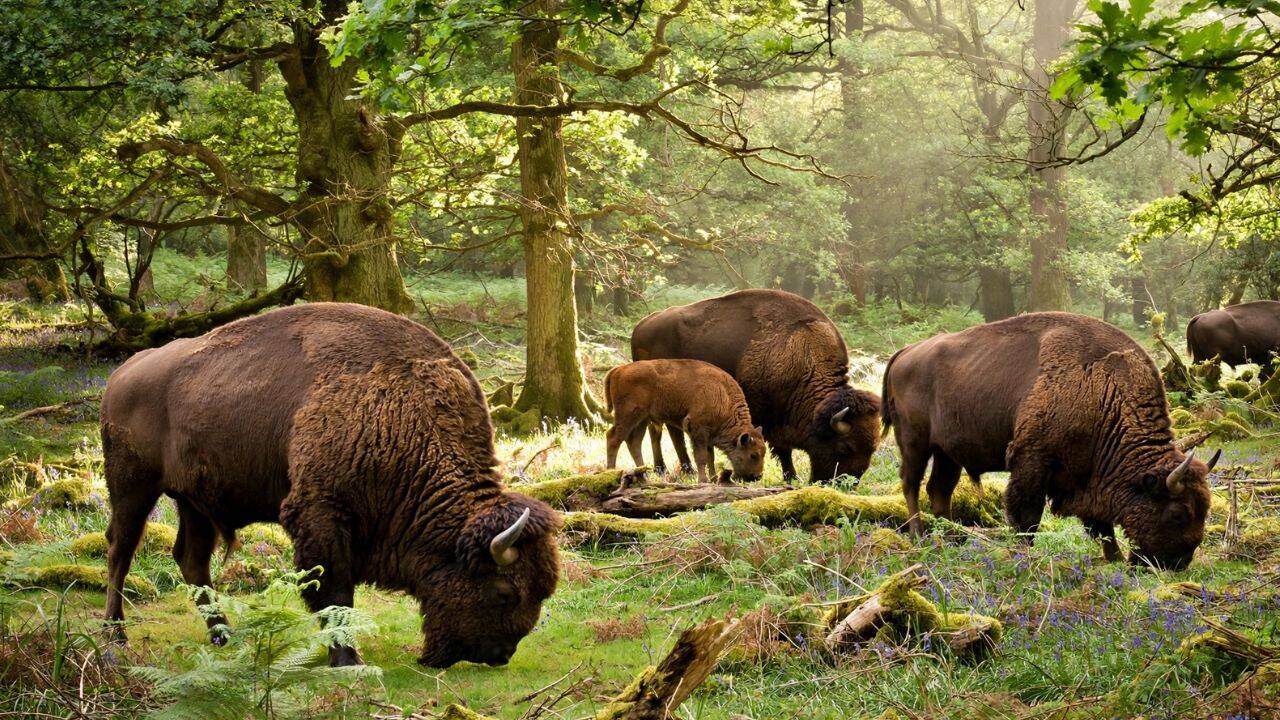
For six thousand years, British woodlands lacked their largest natural architect. Then European bison arrived in Kent, and conservation orthodoxy shifted overnight.
You see, modern conservation often relies on endless management. We build fences, plant trees by hand, and pay contractors to clear brush. Nature doesn't need our micromanagement. Nature needs its heavy equipment back. Bringing wild bison back to Britain isn't just a nostalgic science experiment for wealthy estates. It's a hard reset for broken ecosystems that forgot how to heal themselves.
If you think rewilding means locking up land and walking away, you're missing the entire point. It's about bringing back functional parts of a machine that we disassembled millennia ago.
The Myth of the Untouched British Woodland
People picture ancient British forests as dark, silent, unbroken canopies of ancient oaks where a squirrel could cross the country without touching the ground. That picture is completely wrong.
Before humans wiped out the heavy herbivores, British woods were messy, chaotic, dynamic mosaics. Large animals smashed through thickets, stripped bark from weak trees, rolled in the dirt to create sun-drenched wallows, and dropped tons of nutrient-rich fertilizer right where it mattered.
Without these creatures, forests grew stagnant. Shade took over the forest floor. Rare wildflowers vanished because they lacked open patches of soil to sprout in. Insects lost their habitats. Birds that depend on those insects quietly disappeared.
When the Wilder Blean project released three female European bison into a managed woodland near Canterbury, they didn't just wander around looking majestic for tourists. They went straight to work as ecological engineers.
What Bison Actually Do All Day
Bison behave like living bulldozers equipped with heavy coats and a persistent appetite. They don't graze neatly like sheep. They wreck things, and that destruction is precisely what saves the ecosystem.
- Tree rubbing: They scratch their massive bodies against sickly trees, snapping trunks or peeling bark. This lets sunlight flood the forest floor.
- Dung deposition: Each animal drops massive amounts of organic matter, feeding thousands of species of dung beetles, fungi, and specialized invertebrates.
- Soil disturbance: Their hooves churn up compacted dirt, creating micro-sites for buried seeds to finally germinate after decades of dormancy.
I've watched how traditional conservation areas turn into monocultures of dense brambles and bracken without heavy grazing pressure. It looks green, but it's an ecological desert. Bison break that cycle. They create structural diversity. They build edges, gaps, and wetlands where life explodes.
Why Traditional Conservation Fails Us
For decades, we treated nature like a museum exhibit. Put up a rope, write a sign, and keep people out. That strategy is failing. Climate chaos is accelerating, and static nature reserves cannot adapt fast enough.
You can't hand-weed a thousand acres of scrubland. You can't artificially mimic the precise kinetic energy of a one-ton mammal that chooses to rub against a diseased birch tree instead of a healthy one.
When the Kent Wildlife Trust and Wildwood Trust teamed up to launch this bison herd, critics brought up the obvious safety and logistical panics. How do you contain them? Will they escape? Are visitors in danger?
Those worries stem from an urban mindset that views large wildlife as a liability rather than a baseline. The bison live in a massive, securely fenced enclosure with heavy-duty smart collars tracking their movements. They aren't roaming free down the high street. They are doing a specific job in a controlled wilderness laboratory.
The Ripple Effect on Biodiversity
Look at what happened within months of the bison settling into their Kent home. Plant species that hadn't been recorded in that specific patch of woodland for decades started popping up in the soil churned by their hooves.
Insects arrived in droves. Bats started hunting those insects along the newly opened flight corridors carved through the dense brush.
This is the cascade effect. You introduce a keystone species, and the entire food web recalibrates itself without human intervention. You don't have to guess which butterfly needs which flower. The bison create the conditions, and the species figure out the rest.
Other landowners across Europe are watching this experiment closely. From the Scottish Highlands to the Spanish dehesas, people are realizing that reintroducing large herbivores is cheaper and vastly more effective than hiring crews of workers with chainsaws.
How to Support and Follow Rewilding Efforts
If you want to engage with this movement beyond reading news headlines, you need to understand where real conservation happens.
First, support local wildlife trusts that take bold risks. Safe conservation rarely achieves breakthrough results. Projects like Wilder Blean rely on public backing to push past bureaucratic hurdles and insurance red tape.
Second, rethink your own patch of green space. Whether you manage a large rural estate or a small suburban backyard, stop sanitizing every inch of dirt. Leave the dead wood. Let a patch of grass grow wild. Mimic the chaos that nature actually requires.
We spent thousands of years trying to tame every square foot of the planet. The smartest thing we can do now is step back, hand the keys over to the heavy machinery of the natural world, and let the bison show us how it's done.