Mr. Chan does not think about geopolitics when he turns the key in his ignition at 5:15 AM. He thinks about the specific, damp chill of early morning in New Territories, the lukewarm coffee in his thermos, and whether his seven-year-old daughter left her favorite blue pencil case in the backseat.
For decades, driving a car across the border from Hong Kong into mainland China was a luxury reserved exclusively for the ultra-wealthy, the politically connected, or corporations willing to shell out millions of dollars for coveted dual-license plates. The average Hong Kong resident viewed the mainland border not just as a physical checkpoint, but as a bureaucratic fortress. You didn't just drive over. You negotiated your way through.
Then came the Northbound Travel for Hong Kong Vehicles scheme.
Suddenly, the fortress lowered its drawbridge. The policy allowed ordinary Hong Kong private car owners to drive into Guangdong province without the agonizingly prohibitive dual-license requirement. It was a massive bureaucratic shift, wrapped in the dry language of regional integration. The initial policy was a trial, a tentative handshake across the water. But the landscape changed entirely when authorities quietly locked in a massive extension, cementing the program all the way until 2031.
Six more years of open asphalt.
To a policy analyst, this extension is a data point in the ongoing integration of the Greater Bay Area. To Chan, it means he can keep his promise to his aging parents in Zhongshan. It means he can load up a trunk with groceries, bypass the crowded high-speed rail terminals, and simply drive home.
The Weight of the Steering Wheel
Consider what happens when a border becomes permeable.
Historically, the relationship between Hong Kong and the mainland was defined by checkpoints, queues, and the rigid schedule of public transit. You scheduled your life around timetables. If you missed the last train from Shenzhen, you were stranded. The psychological barrier was arguably wider than the physical one.
Imagine a hypothetical driver named Sarah. She runs a boutique design firm in Kowloon. Before the northbound driving scheme, expanding her business into Shenzhen or Zhuhai meant navigating a logistical nightmare of cross-border buses, subways, and hired cars. It was exhausting. It felt foreign.
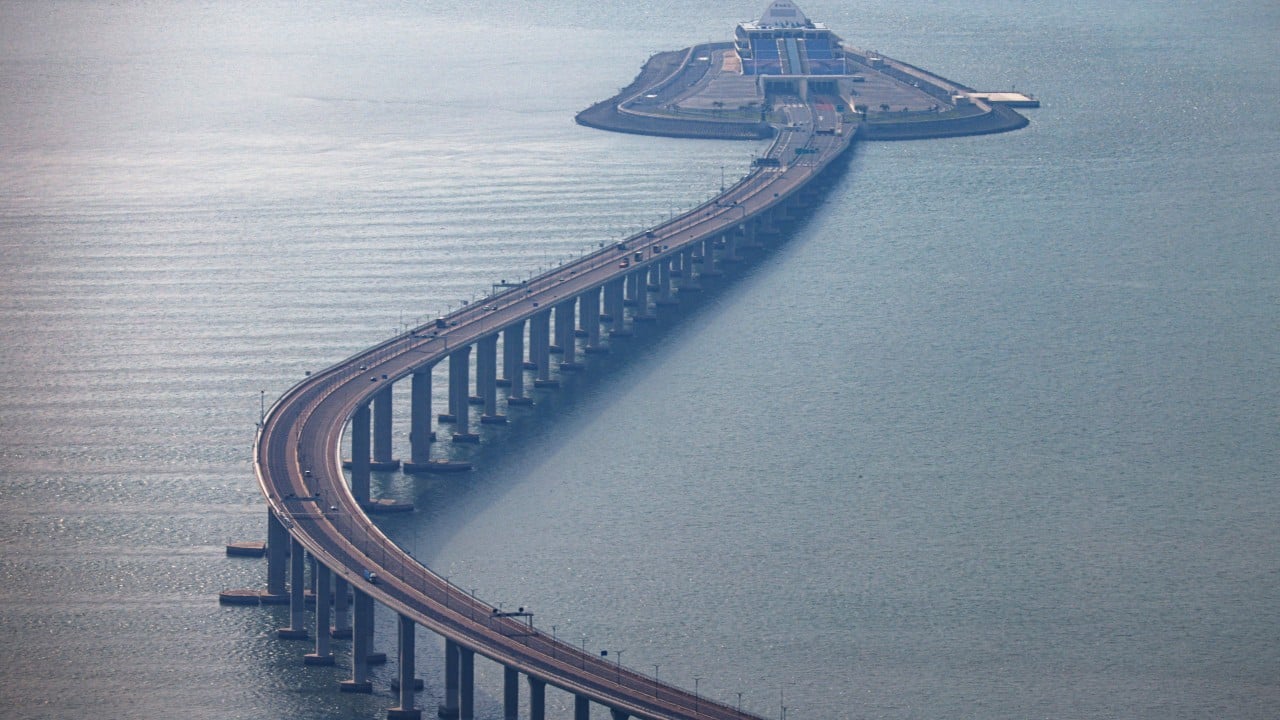
Now, she throws her sample fabrics into the back of her compact SUV and hits the Hong Kong-Zhuhai-Macao Bridge.
The bridge itself is a marvel of concrete and steel, stretching across the pearl-flecked waters of the Lingdingyang. But the true magic isn't the engineering; it is the mundane reality of the commute. Driving offers autonomy. When you control the steering wheel, you control your time. By removing the friction of travel, the extension to 2031 normalizes something that once felt radical. It turns an international trek into a Sunday drive.
But this freedom reveals an underlying tension.
Hong Kong drives on the left. Guangdong drives on the right.
This simple, physical reality serves as a perfect metaphor for the entire experiment. When a Hong Kong driver crosses the artificial island of the bridge, they must physically switch sides of the road. It requires a hyper-conscious recalibration of space, distance, and habit. It is confusing at first. It feels unnatural. Your hands grip the wheel a little tighter as oncoming traffic appears on the "wrong" side.
This is the vulnerability of the modern Hongkonger. They are learning to navigate a system that operates on a fundamentally different frequency. The extension to 2031 gives them the one thing they desperately need to adjust: time.
The Mathematics of the Open Road
The numbers behind this migration explain why the extension was inevitable. When the policy launched, it was met with a mix of curiosity and skepticism. Bureaucracy is a notorious engine of delays. Drivers had to navigate a complex lottery system just to secure a booking slot to cross. Insurance policies had to be harmonized across two different legal systems.
Yet, the demand exploded.
Tens of thousands of applications flooded the transport department. On long weekends and public holidays, the mega-bridge became a pulsing artery of brake lights and family road trips. The economic ripple effects are visible in the mega-malls of Sam’s Club and Costco in Shenzhen, where parking lots are now peppered with Hong Kong license plates. Hongkongers are driving north to buy everything from bulk tissue paper to sourdough bread, capitalizing on cheaper prices and vast spaces.
Conversely, the flow of capital and lifestyle choices is shifting the gravity of the region. Critics initially worried that the policy would be a one-way street, draining Hong Kong of its domestic retail spending. That worry is not entirely unfounded. Walk through Causeway Bay on a Saturday afternoon, and you will notice a quietness that didn't exist five years ago. The consumers are gone. They are currently navigating the highways of Dongguan or dining in the restaurants of Guangzhou.
But the real transformation lies elsewhere. It is found in the slow, irreversible blending of daily life.
Consider the logistical hurdles that still remain. A driver cannot simply turn on their GPS and expect a flawless journey. Mainland China relies on different mapping applications, different digital payment ecosystems, and radically different traffic enforcement cameras. Speeding in Guangdong doesn't result in a traditional ticket in your Hong Kong mailbox; it involves digital deductions and penalties tracked through mainland apps.
It is a steep learning curve. It requires a willingness to submerge oneself in a different digital reality.
The Sunset at 2031
Why 2031?
In policy terms, a multi-year extension provides stability. It signals to businesses, insurers, and ordinary citizens that this is not a passing whim of the administration. It allows a young professional to buy a car with the confidence that its utility will not be legally severed in twelve months. It allows insurance companies to develop more sophisticated, long-term cross-border policies.
Yet, there is a quiet melancholy beneath the convenience.
Every time Chan drives across the bridge, watching the skyline of Hong Kong recede in his rearview mirror, he is acutely aware of the shifting tides. The distinct identity of Hong Kong has always been defined by its borders, its separateness. The fences, the passport stamps, the different currency—these were the markers of home.
With every car that smoothly transitions from the left lane to the right lane, those markers grow fainter. The road ahead is wide, smooth, and remarkably efficient. It promises prosperity, easier family reunions, and the thrill of the open highway. But as the asphalt stretches out toward the horizon of 2031, the old boundaries are quietly washing away in the tire tracks.