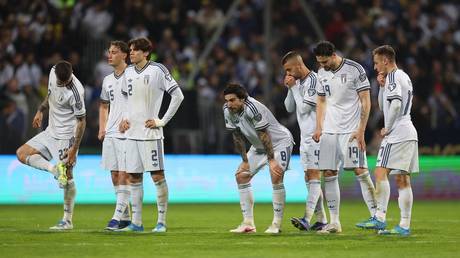
The calls to purge Iran from the FIFA World Cup are loud, righteous, and fundamentally naive. Politicians and activists are currently leaning on FIFA to pull the plug, citing Tehran’s human rights record and its role in regional conflicts. They argue that excluding the Team Melli squad sends a "clear message" to the regime.
They are wrong.
Banning a nation from the world’s most-watched sporting event is the easiest, least effective way to pretend you’re taking a stand. It is geopolitical theater performed on a grass stage. If you actually care about the Iranian people—or the integrity of global sport—kicking them out of the tournament is the worst move on the board.
The push to replace Iran with Ukraine or Italy is a move fueled by optics, not outcomes. It ignores how authoritarian regimes actually use sport, how domestic dissent functions, and how FIFA’s own charter is designed to prevent the sport from becoming a secondary wing of the UN Security Council.
The Myth of the Sport Boycott
Historical precedent tells us that sporting bans do not collapse regimes. From the Apartheid-era South Africa boycotts to the Cold War absences in 1980 and 1984, the result is rarely the "liberation" of the populace. Instead, it provides the ruling elite with a convenient "us vs. them" narrative.
When you ban a national team, you don't punish the generals or the morality police. You punish the players—many of whom have risked their lives to show solidarity with protesters—and you punish the citizens for whom the team is a rare vessel of national identity separate from the state.
The competitor's narrative suggests that FIFA is a moral arbiter. It isn't. FIFA is a massive, revenue-hungry machine that operates on the principle of universal participation. The moment FIFA starts making subjective moral judgments on which governments are "good enough" to play, the organization collapses under the weight of its own hypocrisy. If Iran is out for domestic crackdowns, who stays in? Where do we draw the line on military interventions, surveillance states, or labor rights?
The Internal Friction You’re Ignoring
Team Melli is currently one of the most potent symbols of internal tension in Iran. We saw players refuse to sing the national anthem. We saw them wear black jackets to cover their team crests. By remaining in the tournament, these athletes have a global platform to signal dissent that no "press release" from a Western NGO can match.
Removing them from the World Cup silences the very people you claim to support. It hands the regime a win by removing a group of high-profile, influential young men who are currently proving difficult to control.
Imagine a scenario where the Iranian team performs a gesture of solidarity on a broadcast watched by 1.5 billion people. That is a nightmare for a regime. A ban, conversely, allows the regime to tell its people that the West hates them, not their leaders. It’s a propaganda gift wrapped in a FIFA-branded box.
The "Replace with Ukraine" Fallacy
The suggestion to replace Iran with Ukraine is emotionally resonant but legally and competitively bankrupt. Football is governed by a strict qualification hierarchy. You don't get into the World Cup because you are the victim of a tragic invasion; you get in because you won your group or your playoff.
Substituting Iran with Ukraine—or the highest-ranked non-qualifier like Italy—shatters the meritocracy of the sport. It turns the World Cup into an invitational gala based on geopolitical sympathy. Once you break the qualification seal, the tournament loses its status as the "World" Cup and becomes the "Countries We Currently Like" Cup.
FIFA’s Neutrality is a Shield, Not a Weakness
Critics call FIFA "spineless" for not acting. In reality, FIFA’s strict adherence to Article 4 of its statutes—which prohibits discrimination of any kind against a country or group of people—is the only thing keeping the tournament from becoming a tool of Western foreign policy.
If the US pressures FIFA to remove Iran today, what happens when a bloc of nations pressures FIFA to remove the US tomorrow over its own foreign policy decisions or domestic civil rights issues? The "neutrality" of sport is a necessary fiction. Without it, the games cannot happen.
- Logic Check: If sport is a human right, as the Olympic Charter suggests, then collective punishment of a nation's athletes for the sins of their government is a violation of that right.
- Data Check: There is zero empirical evidence that sports bans lead to specific policy shifts in autocratic regimes. They lead to isolation, which usually hardens the regime’s resolve.
The Outsider’s Reality
I have seen how these "moral" campaigns work. They are often led by people who couldn't name three players on the Iranian roster. They see a flag and a headline, and they want a quick dopamine hit of "doing something."
But the reality on the ground is messier. The Iranian fans I talk to don't want a ban. They want their team to go to Qatar and embarrass the regime through their excellence and their defiance. They want the world to see the difference between the Iranian people and the Iranian state.
Stop Using Football as a Proxy for Real Diplomacy
The pressure on FIFA is a distraction. It’s a way for governments to look tough on Iran without having to engage in the difficult, grinding work of actual diplomacy or targeted sanctions that hit the leadership's pockets. It’s "sanction-lite."
If you want to help the Iranian people, support their communications infrastructure. Support their activists. Don't take away their football team.
The World Cup is one of the few places where the "global south" and the "West" meet on equal footing. To weaponize that space is to destroy one of the last remaining avenues for soft power and cultural exchange.
The status quo says: "Iran is bad, therefore Iran must be banned."
The nuanced truth says: "The Iranian regime is repressive, therefore the Iranian team must be allowed to speak through their presence."
When the whistle blows, the drama should be about 22 men and a ball. If you can't handle the sight of a flag you don't like on a football pitch, you aren't ready for a globalized world.
Keep Iran in the tournament. Let them play. Let them dissent. And stop pretending that a FIFA ban is a substitute for a backbone.
The ball is in the players' feet, where it belongs. Keep the politicians in the stands.