Lula is facing a reality check that hurts. The recent municipal elections in Brazil didn't just move the needle; they slammed it toward the right. If you thought the 2022 presidential win for Luiz Inácio Lula da Silva meant the end of "Bolsonarismo," you were wrong. It's more alive than ever.
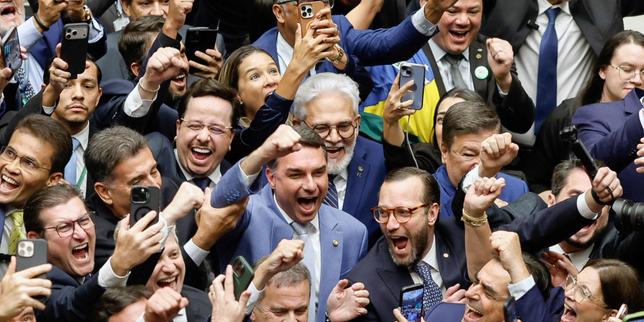
The results are a massive win for Jair Bolsonaro’s allies. It’s a slap in the face for the PT (Workers' Party). Voters aren't just shifting; they're digging in. They’ve handed the keys to the most important cities in the country to candidates who openly embrace the former president’s brand of conservative populism. This isn't a minor setback. It’s a systemic shift in how Brazilians want their local governments to run.
Why the Left is Losing the Streets
The PT hasn't recovered its ground in the suburbs and the interior. Honestly, they look out of touch. While Lula focuses on global diplomacy and high-level economic indicators, the center-right is talking about security and local infrastructure. People feel that. They feel it when they walk to the bus stop or open their small businesses.
Bolsonaro’s Liberal Party (PL) and its centrist allies in the "Centrão" now control a staggering number of municipalities. We’re talking about the places where political careers are built. If you don't own the city hall, you don't own the ground game for the next general election. It's that simple. Lula’s party failed to win a single state capital in the first round. That’s a historical low that should have every leftist strategist in Brasília sweating.
The disconnect is massive. The PT remains stuck in a 2003 mindset. They rely on the charisma of a leader who is nearly 80. Meanwhile, the right has built a digital machine that doesn't just spread news—it builds community. They’ve successfully framed the PT as the party of the "old elite" and themselves as the gritty underdogs, despite many of them being career politicians.
The Centrão is the Real Power Broker
You can't talk about Brazilian politics without talking about the Centrão. These are the mercenary parties. They don't have a fixed ideology; they have interests. In these elections, they moved decisively toward Bolsonaro’s orbit. They’ve realized the wind is blowing from the right.
Mayors from parties like the PSD and MDB cleaned up. They’re the ones who will manage the federal budgets at the local level. By aligning with the conservative base, they’ve created a firewall against Lula’s influence. Even in places where a "pure" Bolsonaro candidate didn't win, a "Bolsonaro-lite" candidate did. The result is the same: the federal government is isolated.
Lula tried to play the "moderator" role. It didn't work. By trying to please everyone, he’s energized no one at the local level. His candidates looked weak. They lacked the fire that the right-wing challengers brought to the debates. In São Paulo, the battle for the mayor’s office became a proxy war, and the results showed that the city’s heart is leaning away from the presidential palace.
Mismanaging the Security Narrative
Crime is the number one issue for the average Brazilian. If you ignore that, you lose. The right-wing candidates leaned heavily into "law and order" rhetoric. They promised more cameras, more armed guards, and tougher stances on petty crime. It resonates.
The left often responds with sociological explanations for crime. While those might be true, they don't help a mother worried about her kid getting mugged for a cell phone. Bolsonaro’s allies understand the visceral fear of the electorate. They’ve used it to paint the PT as "soft on crime." The election results show that the public agrees with that assessment.
The Evangelical Factor Still Matters
The religious vote is a juggernaut. It’s not just about abortion or traditional values anymore. It’s about a network of support that the state fails to provide. Evangelical churches are the social safety net in many favelas and periphery neighborhoods.
Lula has tried to bridge this gap, but the trust isn't there. Conservative candidates used religious rhetoric effectively to cast the PT as an existential threat to the family. It’s an old trick, but it’s still working because the PT hasn't offered a compelling counter-narrative that respects faith while promoting social progress.
The Economic Disconnect
GDP is growing. Inflation is relatively stable. On paper, Lula should be winning. But the "macro" doesn't always hit the "micro." Food prices are still high for the poorest. The "feeling" of the economy is one of stagnation for the middle class.
The right-wing candidates campaigned on cutting local taxes and reducing bureaucracy. They promised to make it easier to open a shop or drive for an app. They spoke the language of the "gig economy." The PT still speaks the language of formal unions and 20th-century labor laws. In a country where informal work is the norm for millions, the left’s message sounds like a relic.
What Happens Now
Lula is now a president without a base in the cities. He has to negotiate every single cent with a Congress that just saw its constituents vote for his rivals. He’s a lame duck with years left in his term if he can't figure out how to reconnect with the urban centers.
Bolsonaro, despite his legal troubles and being barred from running for office currently, is the kingmaker. He proved he can move votes from a distance. His influence hasn't faded; it’s become more decentralized and harder to kill.
For anyone watching Brazil, the takeaway is clear. The "Red Wave" is a myth. The "Blue and Yellow Wave" is the reality on the ground. The 2026 presidential race started the moment these municipal polls closed, and right now, the left is starting from a position of extreme weakness.
The PT needs to stop reminiscing about the early 2000s. They need to find new leaders who don't have "Lula" as their only talking point. If they don't, they'll find themselves completely sidelined in a country that is moving rightward at a terrifying speed for them.
Start looking at the names of the winning mayors in Minas Gerais, São Paulo, and Paraná. Those are the people who will decide the next president. They aren't Lula’s friends. They’re the ones who just handed him the biggest defeat of his current term. The map is turning blue, and the government in Brasília is looking increasingly lonely. You can't lead a country if you've lost the streets, and right now, the streets belong to the opposition. Forget the diplomatic tours and the photo ops. The real power in Brazil is local, and Lula just lost it.