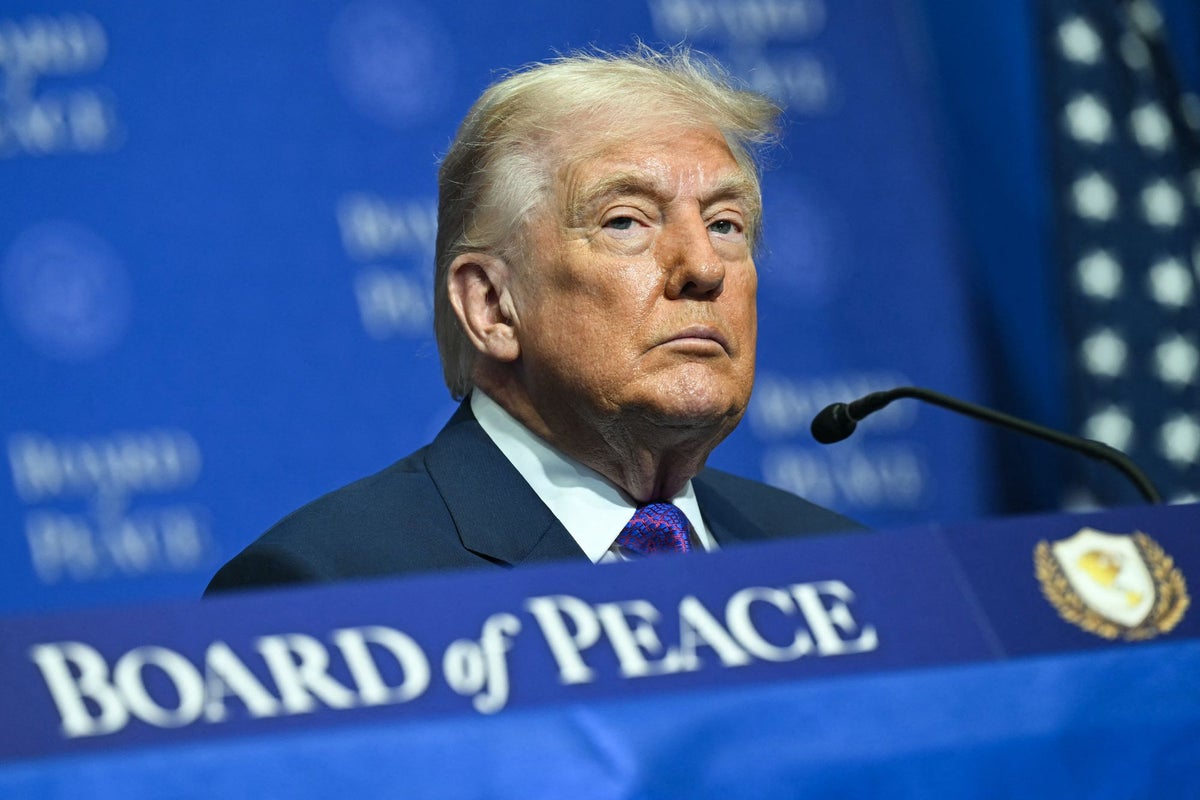
Donald Trump promised a new world order managed like a luxury country club. When he launched the Board of Peace at Davos, he told anyone who would listen that it was the most prestigious group of leaders ever assembled. He boasted it might completely replace the United Nations. Fast forward a few months, and the entire framework is staring into a massive financial black hole.
The initiative was supposed to be the definitive vehicle for rebuilding Gaza following last year's ceasefire. Instead, it has turned into a classic Trumpian branding exercise. It features grand announcements, high-priced entry fees, and almost zero actual execution. Recent disclosures reveal a project deeply disconnected from the brutal realities of international diplomacy.
The Billion Dollar Empty Promised Land
The core mechanism of the Board of Peace sounds like a high-end real estate pitch. If a country wants a permanent seat on the board, it has to pony up a cool $1 billion. Trump sits at the top as chairman for life. He holds absolute veto power over everything from policy decisions to the official logo.
While the administration initially claimed billions in pledges, the actual bank accounts tell a wildly different story.
- The World Bank Disconnect: The official fund meant to handle Gaza reconstruction is currently sitting at zero dollars. According to financial insiders, not a single cent of the promised donor money has been deposited into the accredited World Bank account.
- The JPMorgan Mystery: Board spokespeople claim that contributions are bypassing the World Bank and going straight into a private account at JPMorgan Chase. The massive catch? This account has no independent transparency requirements.
- The Funding Shortfall: Of the sixty-plus nations Trump invited, only a fraction signed the charter. Out of the ten countries that publicly promised immediate financial support, only three—the United States, the United Arab Emirates, and Morocco—have actually delivered anything. Total actual cash collected hovers under $1 billion, miles away from the $17 billion pledged.
This isn't just a ledger issue. It has immediate, destructive consequences on the ground. The National Committee for the Administration of Gaza, a US-backed group of Palestinian technocrats meant to take over governance from Hamas, cannot even enter the territory. Why? Because the board literally lacks the funds to deploy them.
A Club of the Willing and the Lonely
The roster of the Board of Peace says everything you need to know about its systemic weakness. Traditional Western allies saw the trap immediately. Major European democracies like Britain, France, Germany, and Italy flatly refused to sign the charter. They recognized that the broad, vague language was less about fixing Gaza and more about bypassing international law to create an unaccountable private alliance.
Instead, the board is populated by ideological allies like Hungary’s Viktor Orbán, right-wing populist leaders, and smaller nations desperate to buy direct access to Washington. Trump even extended invitations to authoritarian regimes outside the usual diplomatic circles. Vladimir Putin offered to pay Russia's $1 billion entry fee using frozen Kremlin assets. It was an audacious move that would essentially force the US to comp Moscow's membership.
When you alienate the very nations required to legitimize an international body, you don't have a global peace coalition. You have a political echo chamber.
The Mirage of the Gaza Riviera
The disconnect between the Board of Peace and reality was on full display during its initial meetings. While health officials report ongoing violence and an estimated $71 billion needed over the next decade just to make Gaza habitable, the board was treated to real estate presentations. Promoters showcased slick videos of a reimagined "Gaza Riviera" complete with luxury hotels, golf courses, and high-rise beachfront condos.
The strategy relies heavily on corporate logistics firms to privatize infrastructure under the guise of recovery. Free-trade zones are floated while the actual displaced residents of the territory have no seat at the table.
You can't run global diplomacy like a lifestyle brand. When you prioritize photo opportunities, gold gavels, and private banking channels over transparent multilateral cooperation, the system breaks down fast.
If you want to understand where international relations are heading, stop looking at the glittering press releases. Watch the cash flows. The next time an administration announces a sweeping alternative to global institutions, check the official ledgers first. If the money isn't moving through transparent, verified channels, the project is likely an exercise in vanity rather than statecraft. Watch whether member states start demanding independent audits of these private accounts, because that is where this experiment will either face accountability or completely evaporate.


