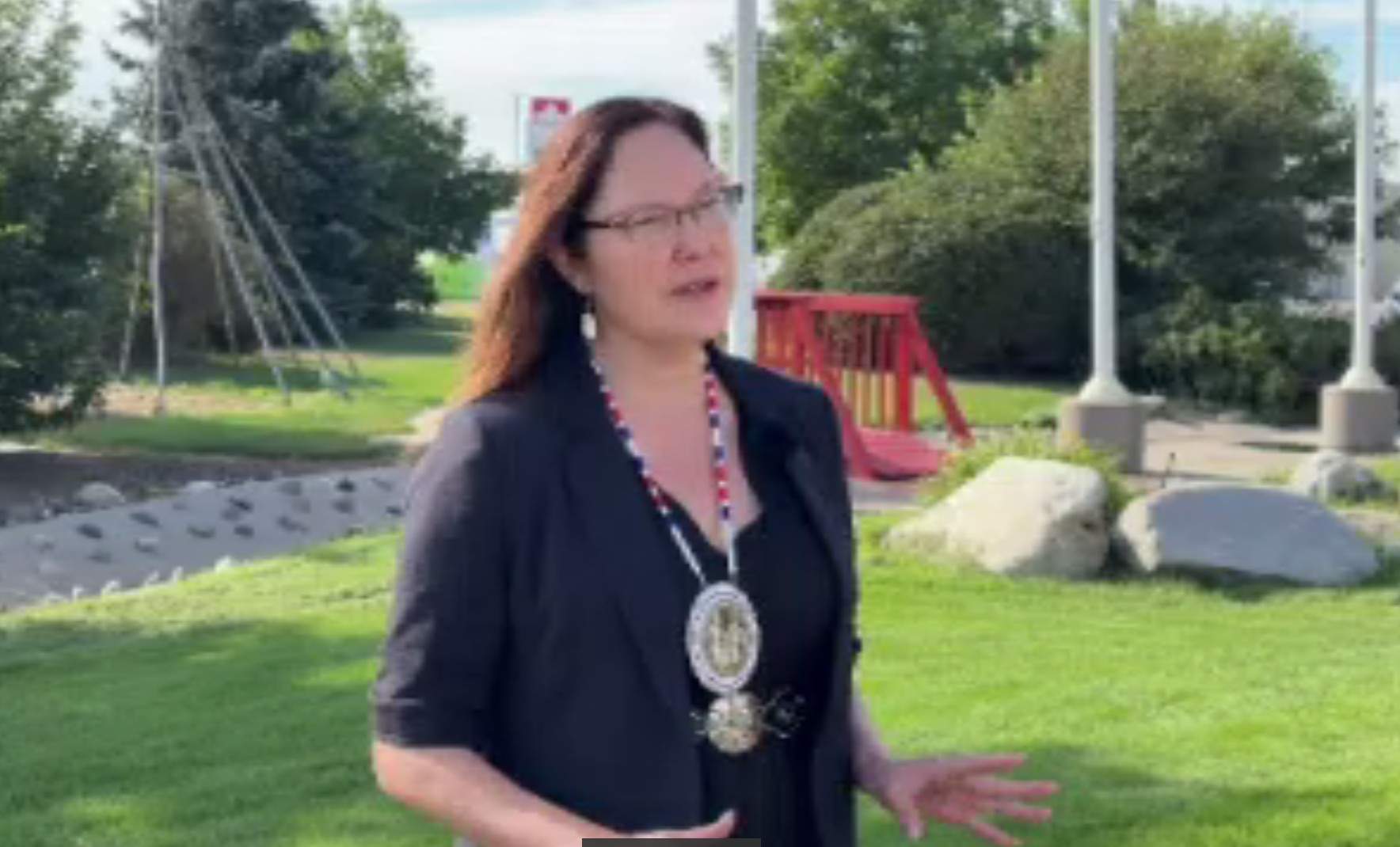
When Dr. Kathy Walker assumed the role of Treaty Commissioner for Saskatchewan on the National Day for Truth and Reconciliation, she did not inherit a ceremonial title or a symbolic office destined for quiet ribbon-cutting ceremonies. She stepped into a structural pressure cooker. As the sixth person and only the second woman to head the Office of the Treaty Commissioner (OTC), Walker brings an academic pedigree in political science, a background rooted in her home of Okanese First Nation, and a blunt realism that cuts through decades of bureaucratic obfuscation.
Public relations campaigns often frame reconciliation as an abstract exercise in mutual goodwill. Walker has consistently rejected that premise, pointing out that true equity requires operationalizing historical agreements that governments have spent over a century trying to minimize. The central challenge of her tenure is not teaching citizens that treaties exist. The challenge is forcing provincial and federal systems to honor what those pacts actually mean for resource allocation, jurisdiction, and land management.
To understand why her appointment matters, one must look closely at the architecture of the office she leads. Established in 1989 through joint efforts by First Nations leadership and the federal government, the OTC functions as a neutral facilitator. It operates without legislative enforcement powers. It cannot write binding laws, issue injunctions, or penalize non-compliant ministries. Instead, its power relies entirely on moral authority, empirical research, and the uncomfortable exposure of political inertia.
For years, critics have dismissed such bodies as toothless advisory panels designed to absorb public frustration while policy remains unchanged. Walker's strategy relies on shifting the conversation away from abstract reconciliation and toward institutional implementation. During her time as an assistant professor of political studies at the University of Saskatchewan, her scholarship focused on Indigenous governance structures and the mechanics of power sharing. She brings that analytical lens directly to the Commissioner's desk, treating treaty implementation not as a moral favor, but as a legal and economic prerequisite for the province's future stability.
Saskatchewan's economic landscape is built on industries that directly intersect with traditional territories. Agriculture, potash mining, uranium extraction, and oil and gas development all operate within the geographic boundaries of Treaty Four, Six, Eight, and Tenth territories. For decades, resource extraction projects have moved forward under a consultation framework that often treats First Nations consent as an administrative hurdle rather than a foundational requirement.
When resource revenues flow without equitable benefit-sharing or genuine jurisdictional co-management, the entire regional economy rests on unstable legal ground. Corporations face sudden injunctions, protracted court battles, and community blockades. These frictions are symptoms of a foundational disease: governments treating treaties as historical artifacts rather than active constitutional contracts. Walker’s mandate directly targets this friction point. By attempting to establish a common understanding between First Nations and non-First Nations citizens, she is trying to build a predictable, stable economic framework where legal certainty replaces perpetual litigation.
Yet, institutional resistance remains deeply entrenched. Provincial leaders frequently treat the OTC as an external body rather than an integral partner in governance. The provincial government participates primarily as an observer, maintaining a comfortable diplomatic distance from the difficult negotiations happening across the table. This structural hesitation starves transformative initiatives of the political willpower required to execute them.
Walker faces the difficult task of bridging this gap without compromising the integrity of First Nations sovereignty. Her leadership style emphasizes listening to Elders and community leadership, recognizing that top-down directives from urban centers have historically exacerbated mistrust. By grounding her approach in nêhiyawêwin and community-level realities, she builds an operational bridge that traditional bureaucrats struggle to navigate.
The stakes extend far beyond Saskatchewan's borders. Across Canada, resource-rich provinces are grappling with the reality of the United Nations Declaration on the Rights of Indigenous Peoples (UNDRIP) and mounting Supreme Court rulings affirming the duty to consult and accommodate. Saskatchewan risks economic stagnation if it remains tethered to a nineteenth-century colonial mindset while global markets increasingly demand ethical, legally secure supply chains. Institutional investors and international trading partners are paying closer attention to environmental, social, and governance metrics. Projects clouded by unresolved treaty disputes carry high financial risks.
If Walker succeeds in shifting the provincial dialogue from rhetorical reconciliation to structural implementation, she will provide a blueprint for how resource-dependent jurisdictions can modernize their legal frameworks. If she is stymied by bureaucratic foot-dragging and political cowardice, the office risks remaining a well-intentioned sounding board for grievances that never translate into structural change.
The measure of her tenure will not be found in reports published or conferences hosted. It will be found in whether provincial legislation begins to reflect the spirit and intent of the treaties signed generations ago, transforming promises written on paper into power shared on the land.