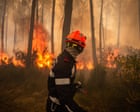
The lazy consensus arrives like clockwork. Every time smoke chokes the Mediterranean air and charred pine needles carpet the French countryside, the predictable chorus begins. Op-eds blast Paris. Pundits demand to know when leaders will finally take the climate crisis seriously. Activists march.
It is comfortable, lazy theater. It also ensures more forests will burn next summer.
For the past decade, I have watched policymakers scramble to throw capital at emergency response units while ignoring the structural architecture of the crisis itself. Treating seasonal blazes as a failure of political will or a direct indictment of national carbon targets is worse than useless. It is a dangerous distraction.
French leaders are not failing because they ignore climate change. They are failing because they are treating a land management crisis as a meteorological emergency.
The Paris Problem And The Bureaucratic Mirage
Ask the average pundit why European fire regimes are worsening, and they will point straight to rising temperatures. The thermometer is an easy scapegoat. It requires zero nuance, fits neatly into a twenty-second cable news hit, and provides a convenient villain.
Here is the inconvenient truth. Temperature is merely the spark; fuel is the arsonist.
For generations, rural depopulation across southern Europe has emptied the hinterlands. Small-scale agriculture, heavy grazing, and manual timber harvesting used to act as natural firebreaks. Farms fragmented the continuous sea of biomass. Animals ate the undergrowth. Humans cleared the deadwood.
When the state centralized forestry management and turned vast tracts into hands-off protected zones, it created an ecological powder keg.
The Preservation Trap
Modern environmentalism suffers from a romantic delusion: the belief that nature thrives best when humans completely vanish from the equation.
Ecologists call this hands-off preservation, and it is an unmitigated disaster for fire-prone ecosystems. When you ban clearing, prohibit controlled burns due to air quality complaints from urban tourists, and criminalize traditional land stewardship, you do not preserve a pristine wilderness. You build a bomb.
Every year of neglect adds another layer of tinder to the forest floor. By the time a heatwave rolls through Provence or the Gironde, the system is primed for catastrophic combustion. No amount of parliamentary debate or ambitious climate legislation will change the moisture content of an unmanaged thicket choked with decades of dead pine needles.
To understand why the political class stays trapped in this loop, you have to look at the incentive structures of modern governance.
Why Politicians Love Bad Solutions
Crisis management plays well on the evening news. Announcing a multi-million-euro fleet of water-dropping Canadair aircraft makes for a phenomenal photo opportunity. Voters see immediate action. The Prime Minister stands on an ash-covered ridge, looks grim, and promises more resources for the firefighters.
It is visible. It is heroic. It is entirely reactive.
Preventing a wildfire, conversely, is invisible.
Imagine a scenario where a regional forestry director spends three years quietly organizing controlled burns, thinning out dense canopies, and reinstating localized goat grazing. Nothing happens. The hillsides stay green. No dramatic rescues air on television. No emergency alerts flash on smartphones.
To the untrained public, it looks like nothing was done. To the budget office, it looks like a line item that can be slashed during the next austerity push.
Politicians respond to incentives. If the public rewards theatrical firefighting over boring, unsexy, labor-intensive land management, politicians will keep buying planes and ignoring the dirt.
The Expertise Gap
Let us look at how the establishment defines competence here. Agencies rely on climate models that project temperature anomalies decades into the future. They map drought indices with terrifying precision.
Yet, walk into a regional forestry office in the south of France, and you will find professionals hamstrung by red tape, urban-centric environmental regulations, and zero political backing to do the dirty work.
The heavy hitters in fire science have been screaming about this for years. Pyrologists do not talk primarily about carbon dioxide when they assess regional risk; they talk about continuity of fuel loads and surface fire behavior. They know that a forest with high canopy closure and heavy surface litter will generate fire intensities that defy suppression.
When temperatures hit forty degrees and relative humidity plummets into the teens, no firefighting force on earth can stop a crown fire. Water dropped from the sky simply evaporates before it hits the flames.
Physics does not care about your political platform.
The Uncomfortable Costs Of The Contrarian Cure
Any honest critique must admit the downsides of the alternative. If France wants to stop the annual ritual of burning acreage, the required shift is brutal, unpopular, and politically toxic.
First, we have to reintroduce fire on our own terms. That means smoke over tourist regions in the off-season. It means accepting blackened landscapes in March so we do not have apocalyptic infernos in August. Urbanites hate the smoke. Real estate developers hate the controlled burns near their peri-urban investments.
Second, we have to abandon the Disney-fied fantasy of the untouched forest. Managing a landscape means harvesting timber, clearing undergrowth, and turning ecosystems into working, managed assets again. It looks messy. It offends the sensibilities of people who only visit the countryside on weekends.
Third, we have to decentralize power away from Paris and give local communities the legal authority and funding to manage their own backyards. Bureaucrats in ministerial offices cannot possibly micro-manage the specific topography of a valley in the Cévennes.
The downside? It requires abandoning the comforting narrative that everything is happening to us because of distant, global forces beyond our control.
Blaming climate change is an abdication of responsibility. It tells the citizens that they are helpless victims of a planetary tragedy, waiting for global treaties to save them.
The reality is much closer to home, much more mundane, and entirely within our control. The forests are burning because we forgot how to live in them, manage them, and respect their mechanics.
Stop waiting for leaders to take the crisis seriously. Demand that they stop making it worse.