Every time a horrific allegation surfaces at a college party, the headline machine writes the exact same script.
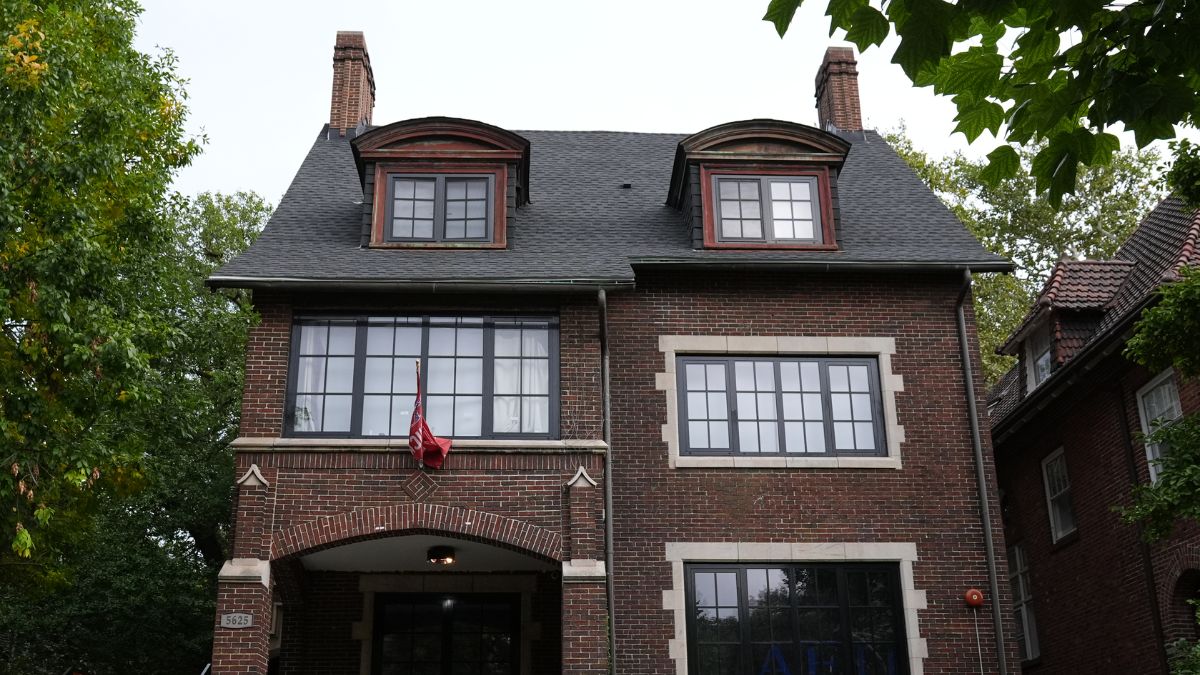
A 21-year-old woman reports a sexual assault at a fraternity house near the University of Chicago. Witnesses describe men outside a bathroom jeering and asking whose turn it is next. Instantly, commentators draw a straight line to Cornell, where a former student sued the university and seven former Chi Phi members over alleged gang rape, sparking reopened criminal scrutiny, protests, and a review led by former Deputy Attorney General Sally Yates.
Then comes the predictable reflex. Frat culture is broken. Greek life is a breeding ground for misogyny. Ban the houses, pass another workshop mandate, call it a day.
That reaction feels righteous. It trends well. And it misses the real mechanics of how these crimes happen—and why institutions keep failing to stop them.
When headlines treat "frat culture" as the root villain, they turn specific criminal acts and institutional breakdowns into a vague sociological fog. A fog is easy to hide in. If the blame belongs to a nebulous "culture," then individual perpetrators look like mere symptoms, bystanders look like passive scenery, and university administrators and prosecutors get to hide behind bureaucratic procedure.
I have spent years watching universities, compliance teams, and legal systems handle campus misconduct crises. I have seen institutions spend millions on glossy awareness campaigns, mandatory online modules, and public-relations damage control while leaving basic investigative competence and accountability in the gutter. Slapping a "zero tolerance" slogan on a website does not stop a crime in a basement bathroom or a locked bedroom.
To understand what actually goes wrong in cases like Chicago and Cornell, we have to separate three distinct failures that lazy commentary lumps into one: mob reinforcement, institutional and legal friction, and lazy causal storytelling.
The Myth of "Just Frat Culture"
Calling a crowd jeering outside a bathroom "just frat culture" is lazy analysis. It lets the crowd off easy and distorts what happens in group settings.
In criminology and social psychology, researchers studying group violence and bystander dynamics—including foundational work by scholars like Bibb Latané and John Darley on bystander intervention, alongside decades of research on group conformity and deindividuation—have shown that crowds do not merely reflect pre-existing attitudes. Crowds actively amplify behavior. When people hear others joke, cheer, or treat a violation as a spectacle, social inhibition drops. The cost of speaking up feels higher; the cost of joining the noise feels lower.
That dynamic is not unique to Greek letters. You see variations of mob reinforcement in locker rooms, off-campus apartments, house parties, concerts, and workplaces where hierarchy and alcohol or drugs lower restraint.
Focusing exclusively on fraternities creates a convenient blind spot. Students and commentators tell themselves, I am not in a frat, so this isn't my problem, or Shut down the house and the problem goes away. Neither is true. Predators follow access, alcohol, intoxication, and social cover. If you only target the building with Greek letters on the porch, you miss the social mechanics operating across campus life.
Imagine a scenario where a university shutters every fraternity house overnight without changing how parties are policed, how intoxicated students are cared for, how bystanders are trained to intervene directly, or how reports are investigated. The Greek letters disappear from the headlines. The underlying vulnerabilities—unsupervised spaces, heavy intoxication, social pressure, and slow institutional response—remain intact.
That is why "blame frat culture" is such a seductive dead end. It gives people an easy target to hiss at without forcing anyone to confront harder operational truths.
Why Institutional and Legal Systems Stall
Even when allegations trigger outrage, the path from a report to real accountability is often clogged by institutional incentives and legal realities that the public rarely sees.
Take the Cornell case as an example of how messy and contested these proceedings become once legal files surface. In public debate, people often assume that a serious accusation automatically translates into immediate criminal charges or swift, uniform expulsion. Reality is far messier. Prosecutors evaluate whether admissible evidence meets statutory standards beyond a reasonable doubt—a threshold very different from moral outrage or campus policy. Meanwhile, conflicting accounts of statements, summaries, intoxication, and timelines can turn a case into a legal battleground, with civil lawsuits, motions to dismiss, and outside reviews stretching months or years after the night in question.
Universities sit in a uniquely awkward position. They are educational institutions, not criminal courts, yet federal rules and institutional risk management force them to investigate misconduct, protect students, and manage massive liability exposure. Too often, schools get caught between two failures: moving too slowly or inconsistently on student conduct sanctions, or treating public relations as a substitute for thorough fact-finding and transparent communication.
Here is where my own contrarian argument carries a real risk. If I tell you to stop treating "frat culture" as the primary explanation, a bad-faith actor could twist that point to excuse Greek organizations that foster toxic norms or shield members. Let me be blunt: that is a trap I reject. When an organization's house rules, rush culture, or brotherhood norms reward secrecy, excess, or entitlement, that organization owns part of the mess. Calling out lazy generalizations is not the same as giving fraternities a free pass.
The Questions People Should Actually Be Asking
When a story like the Chicago allegation hits the feed, "People Also Ask" searches usually chase the same surface questions: Why do frats keep getting away with this? or How do we fix toxic frat culture?
Both questions start from a flawed premise. They assume the main problem is a mystery about college traditions rather than a set of concrete breakdown points in human behavior, supervision, and institutional response.
"Why don't bystanders stop this when it's happening?"
Because real-world intervention is awkward, scary, and socially costly in the moment. In media accounts of the Chicago incident, a friend looking for a missing woman reported hearing men outside a bathroom making crude remarks about taking turns. Most people imagine they would step in like a movie hero. In reality, when a group of people is laughing, shouting, or acting aggressive—and alcohol is flowing—an individual trying to intervene alone faces immediate social pushback or physical risk. Effective intervention is rarely a solo speech; it is a quick, practical move like grabbing the friend, getting help from staff or sober peers, or creating an immediate disruption without getting pulled into a brawl.
"Why do universities and authorities seem so ineffective afterward?"
Because systems built for routine administration struggle with high-conflict, high-stakes allegations involving intoxication, competing narratives, and strict legal standards. When police reports, witness interviews, campus disciplinary boards, and civil litigation run on different tracks—sometimes with conflicting summaries or delayed action—the public sees paralysis. Paralysis breeds distrust, which is why outside reviews, protests, and lawsuits so often follow high-profile campus cases.
"What actually works better than another awareness campaign?"
Stop treating prevention like a slide deck. A two-hour orientation module does nothing against a crowd egging someone on outside a locked door. Real prevention requires unglamorous, enforceable basics:
- Hard physical and operational controls at events: Clear limits on access, sober monitors with real authority to shut rooms or parties down, and immediate help protocols when someone goes missing or becomes heavily incapacitated.
- Fast, independent fact-finding: Clear separation between PR spin and investigative rigor, ensuring full statements—not stripped-down summaries—are preserved and reviewed carefully.
- Real organizational accountability: Holding chapters, event hosts, and individuals accountable for enabling dangerous environments, rather than issuing boilerplate statements after a scandal breaks.
The competitor headline wants your shock and your click by pairing Chicago with Cornell. Shock is cheap. Stopping predators, holding crowds and institutions to account, and fixing broken systems takes precision—not another lazy cliché.


