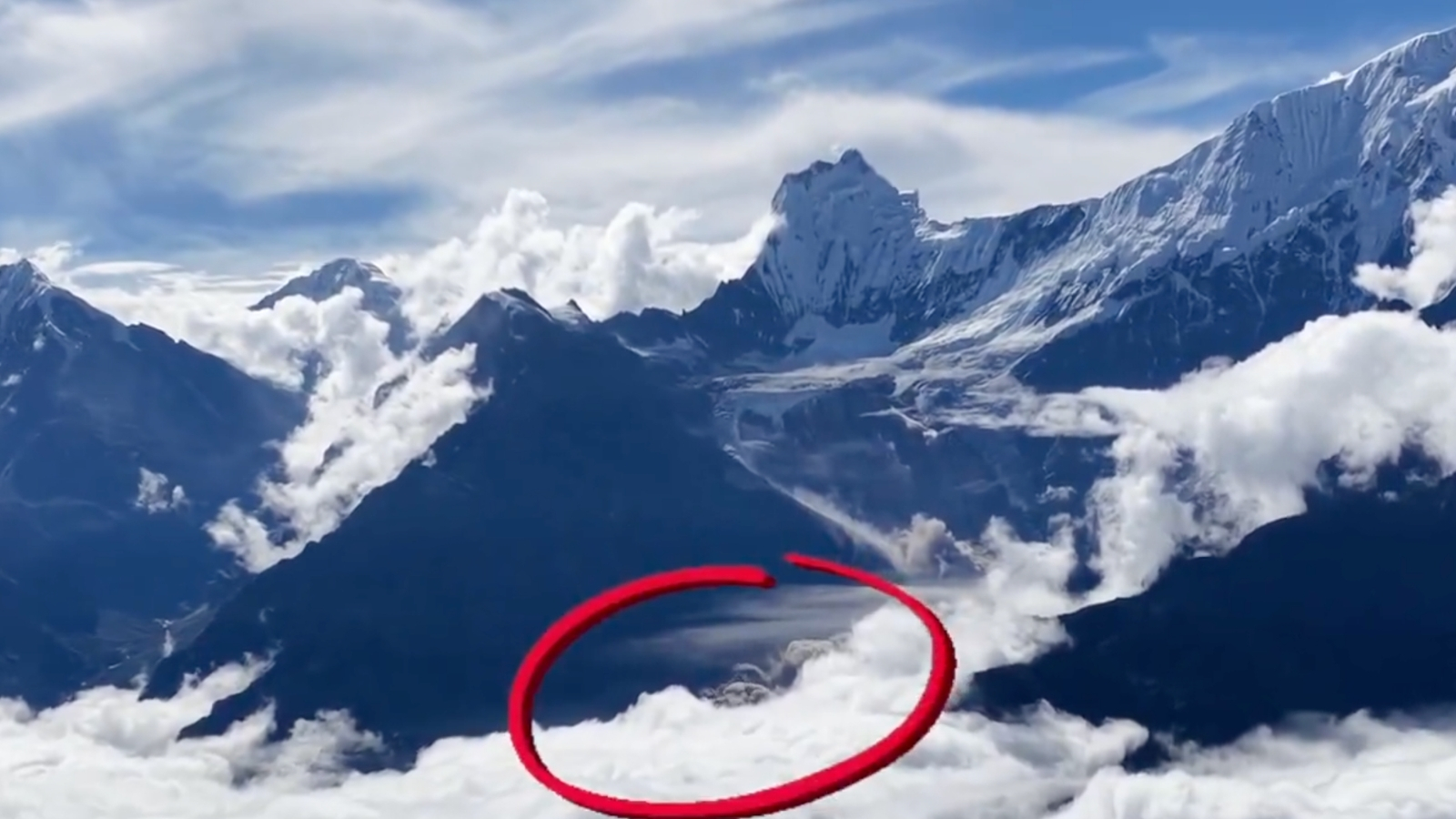
Every time water tears through a Himalayan valley, the script writes itself before the mud even settles. Media outlets pull file footage of calving ice sheets, green groups point an accusing finger at global carbon output, and armchair analysts nod along to a comforting narrative. A glacier collapsed in the high mountains. A lake burst its banks. A downstream community paid the price.
It is a clean story. It is also dangerously incomplete.
When drone footage captured the apocalyptic sequence of the Himalayan glacier collapse preceding the deadly Nepal-Tibet floods, the collective response fell straight into the lazy consensus trap. The public was handed a single villain: atmospheric warming.
I have spent two decades analyzing high-altitude geohazards and infrastructure risk in High Mountain Asia. I have watched billions of dollars in international aid flow toward climate mitigation projects while basic engineering failures get a free pass. Blaming the climate alone does not just misdiagnose the crisis; it actively shields the actors responsible for preventable carnage.
Let us dismantle the prevailing narrative.
The Glacial Lake Outburst Myth
The dominant panic centers on Glacial Lake Outburst Floods, commonly known as GLOFs. The premise sounds terrifying and scientific: as temperatures climb, glaciers retreat, leaving behind unstable moraine dams filled with meltwater. Eventually, the wall fails, unleashing a wall of water.
Here is the inconvenient truth that field glaciologists whisper behind closed doors. The vast majority of catastrophic high-altitude floods in the Himalayas over the last decade were not triggered by slowly expanding GLOFs breaching ice-cored moraines. They were driven by sudden, high-energy rock-ice avalanches crashing into existing water bodies, acting as a dynamic piston.
Think of it like dropping a massive boulder into a full bathtub from ten stories up. The wall of the tub does not need to structurally fail for the water to violently slop over the edges and obliterate everything in its path.
When a mountain face composed of permafrost and fractured rock shears off due to internal thermal degradation, it moves with the speed of an express train. It displaces millions of cubic meters of water in seconds. You can cap global carbon emissions tomorrow, reduce atmospheric parts per million to pre-industrial levels, and these rock-ice avalanches will still trigger because the steep, tectonically active topography of the Himalayas is inherently unstable.
Gravity cares very little about your carbon tax.
The Infrastructure Blind Spot
The real scandal in the Nepal-Tibet flood corridor is not the behavior of the ice. It is the brazen hubris of civil engineering.
Hydroelectric developers look at a narrow gorge fed by a glacier-fed river and see a goldmine. They build multi-million-dollar run-of-the-river projects, access roads, and worker camps directly on active alluvial fans and historical floodplains. They rely on outdated hydrological baselines that assume historical weather and flood patterns dictate the future.
When an avalanche-triggered flood sweeps down the valley, it hits a poorly sited infrastructure project that acts as a temporary dam, building up immense hydraulic pressure before bursting and compounding the downstream devastation a hundredfold.
We are treating high-altitude engineering as if we are building a bridge in the flatlands of the American Midwest. We ignore the kinetic energy of falling mountains.
The Cost of Convenient Narrative
Why do journalists and policymakers cling to the pure climate change narrative? Because it requires zero local accountability.
If the flood is purely an act of God fueled by global emissions, local politicians bear no blame for issuing building permits in high-risk zones. Hydro developers bear no liability for bypassing rigorous geotechnical surveys. Zoning boards escape scrutiny for allowing dense settlements to sprout on active debris flows.
Global phenomena make convenient scapegoats for local institutional failures. By reducing a complex matrix of land-use mismanagement, poor early-warning integration, and reckless siting decisions down to a single global weather trend, we guarantee that the next flood will be just as deadly.
Stop waiting for the climate to stabilize before you fix your zoning laws. Stop pretending that early warning sensors matter when the road network to evacuate the valley washes out at the first sign of rain.
The glacier did not murder those people. Our collective refusal to respect mountain geomorphology did.