The coffee in Marcus’s cup went cold hours ago. He didn't care. On the monitor in front of him, a spreadsheet glowed with numbers that looked less like financial projections and more like coordinates for deep space exploration. Revenue figures were climbing at a velocity that defied every traditional rule of venture capital. Hundreds of millions. Then billions. A vertical wall of green.
Yet, Marcus felt a cold knot tighten in his chest.
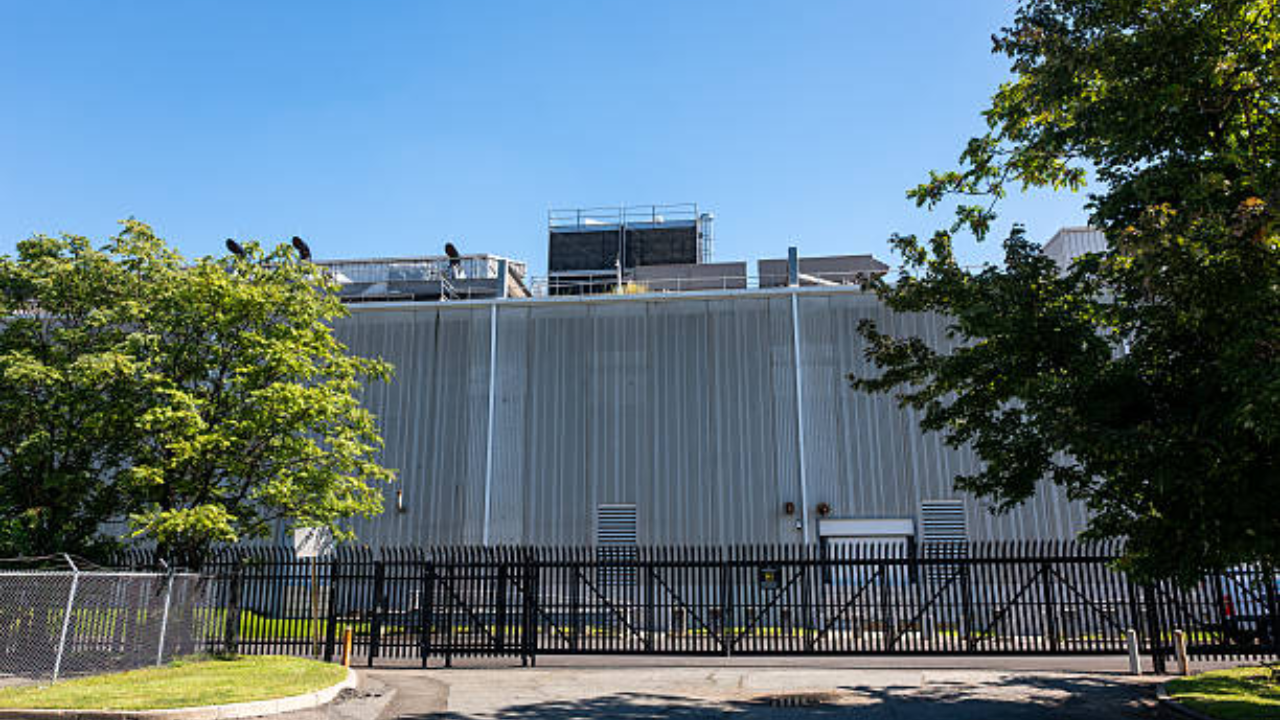
He looked away from the screen and out the window of his San Francisco office. Down on the street, the fog was rolling in, swallowing the tops of the skyscrapers. He knew what lived beneath those green numbers. He knew about the massive clusters of specialized silicon humming in windowless warehouses across Oregon and Ohio. He knew about the cooling fans screaming at decibels that could deafen a human being. He knew about the power plants burning coal and gas just to keep a single training run alive.
The revenue was real. But so was the fire burning it.
For companies like Anthropic, the journey toward a public market reckoning is unlike anything Wall Street has ever witnessed. For decades, software was an exercise in weightless economics. Once written, a line of code could be copied a million times for pennies. Margins hovered near eighty or ninety percent. It was a beautiful, clean machine.
Artificial intelligence broke that machine.
Consider what happens every time a user prompts a frontier model to write a legal brief, debug a complex piece of software, or compose a marketing strategy. A billion parameters ignite. Clusters of GPUs draw staggering amounts of electricity. Data centers strain local electrical grids. The cost is not zero. In fact, for every single interaction, a tiny, tangible slice of physical infrastructure is consumed.
This is the central paradox haunting modern investors. They are staring at a rocket ship with an ungodly amount of thrust, but they cannot see the bottom of the fuel tank.
To understand why this tension matters so much, step inside the office of Sarah, a chief technology officer at a massive global logistics firm in Chicago. Sarah is under intense pressure from her board to modernize their supply chain routing. For years, her team relied on rigid, deterministic algorithms that choked whenever a geopolitical crisis closed a port or a weather anomaly disrupted a shipping lane.
Last year, Sarah signed a enterprise contract with Anthropic. She deployed their models across her entire operations network.
The results were astonishing. Cargo rerouted itself in seconds rather than days. Millions of dollars were saved. The return on investment looked pristine on paper. Sarah felt like a genius. Her CEO praised her innovation during the annual shareholders meeting.
Then came the renewal conversation.
Behind closed doors, the finance department handed Sarah a revised cost structure. As her company’s usage scaled—as the model became woven into the permanent operational fabric of the business—the inference bills ballooned. The software was no longer a brilliant experiment; it was a permanent utility bill that rivaled the company's entire cloud storage budget.
"We love what it does," Sarah told her colleagues during a tense budgeting review. "We just don't know if our margins can survive loving it forever."
This is the human drama playing out in boardrooms across the globe. Customers are hooked on intelligence. They cannot imagine going backward to primitive search bars and rigid drop-down menus. Yet, the price of that intelligence is tethered to physical reality—to silicon supply chains, semiconductor manufacturing yields, and the grueling economics of energy generation.
When a company of this magnitude transitions from private backing to public markets, the psychological contract changes entirely. Private venture capital is an act of faith. Investors pour billions into a bottomless well because they are buying a ticket to a future state of civilization. They accept cash burn as the necessary price of dominion. They want scale first, profitability later.
Wall Street does not operate on faith. Wall Street operates on the relentless cadence of the quarterly earnings report.
When the bell rings on a public debut, the questions shift overnight. Analysts stop asking about the elegance of the transformer architecture or the nuances of safety alignment research. They pull out their calculators and demand answers to more uncomfortable inquiries. What is the gross margin on inference? How much of that surging revenue is being immediately funneled back into compute commitments with cloud giants? What happens when enterprise customers hit saturation and refuse to pay higher subscription tiers?
The answers are shrouded in a complex fog of proprietary contracts and amortized hardware costs.
Let's look closer at the mechanics of this vulnerability. Traditional software companies scale their revenue while their marginal costs shrink toward zero. Frontier AI labs scale their revenue while their marginal compute costs remain stubbornly, terrifyingly high. Every time a model becomes smarter, it often requires more parameters, more reasoning steps, and more computational horsepower to generate a single token.
Efficiency gains happen, of course. Engineers squeeze better performance out of smaller architectures through clever quantization and distillation techniques. But human demand expands to fill every available drop of intelligence. Give a company a smarter model, and they will immediately ask it to solve harder, more expensive problems.
It is an insatiable appetite.
Marcus rubbed his eyes and turned back to his monitor. He thought about the founders leading these organizations—brilliant minds who set out to map the contours of machine cognition, only to find themselves running massive, capital-intensive energy utilities in disguise. They did not ask to become landlords of data centers. They simply wanted to build a mind.
Yet, the market does not care about noble intentions. The market cares about the ledger.
As the public offering approaches, the debate among institutional investors grows increasingly polarized. One camp sees a generational monopoly, the defining infrastructure layer of the twenty-first century economy. They argue that compute is the new oil, and whoever controls the smartest models commands a tollbooth over all human productivity. To them, worrying about current margins is like criticizing the Wright brothers for the cost of their canvas.
The other camp looks at the depreciation schedules of high-end GPUs, the rising cost of electricity, and the inevitable commoditization of foundational models as open-source alternatives close the capability gap. They see a brutal race-to-the-bottom where revenue surges mask a terrifying structural deficit.
Both camps are looking at the exact same data. Both camps are right.
And that is what makes the impending reckoning so gripping. It is not merely a financial transaction. It is a collision between the boundless ambition of artificial intelligence and the stubborn laws of economic gravity.
Back in Chicago, Sarah approved the software budget for another year. Her firm could not afford to drop the tool; their competitors were already using it to outpace them in every market. She signed the paperwork, knowing full well that she was buying time, hoping that the technology would grow cheaper faster than her budget ran dry.
In San Francisco, Marcus finally closed his laptop. The room had grown dark as the fog enveloped the glass. The spreadsheet vanished, but the question remained hanging in the quiet air, waiting for a market that has not yet learned how to value a mind.