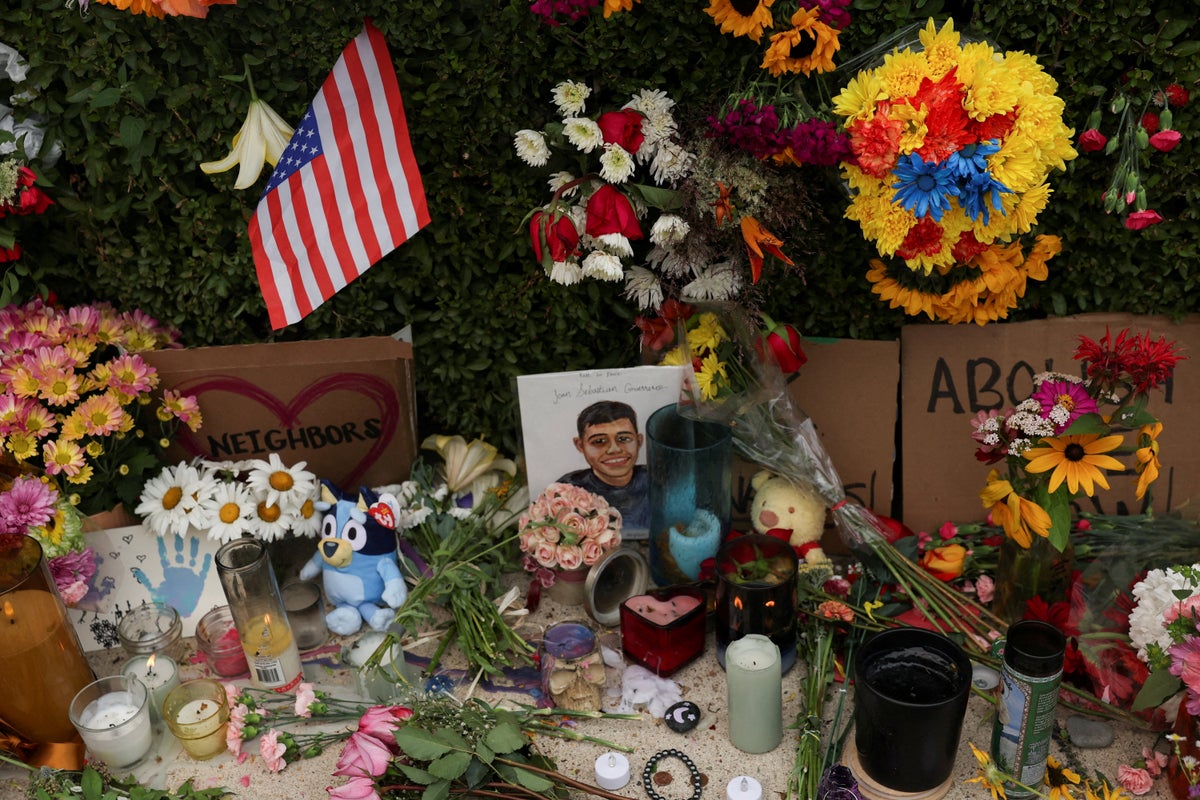
A young father starts his car on a quiet morning in Biddeford, Maine, getting ready for a normal workday. Minutes later, he is dead, shot through his car windshield by a federal officer.
The victim was Johan Sebastián Durán Guerrero, a 25-year-old Colombian national. He wasn't even the target of the immigration warrant.
But the real shock isn't just that Immigration and Customs Enforcement (ICE) shot the wrong man. It is the identity and history of the man who pulled the trigger.
The shooter, David Brouillette, is a 37-year-old Army veteran and ICE agent. According to his own family members, hundreds of court documents, and medical histories, Brouillette has struggled with severe, violent mental illness since childhood.
This raises an uncomfortable, urgent question: How did a man with a documented history of domestic violence, severe bipolar disorder, and suicidal ideation end up with a federal badge and a semi-automatic handgun?
A Pattern of Unchecked Violence
If you look at the official ICE statement, you get a highly sanitized version of reality. ICE spokesperson Lauren Bis defended Brouillette by pointing to his "nearly a decade of federal law enforcement experience" and standard use-of-force training.
But his family tells a completely different story. They describe a volatile, dangerous individual who should never have been trusted with public safety.
His first ex-wife, Ashley Brouillette, divorced him in 2009 after he became physically abusive. She alleges that he once threw boiling water at her while she was holding their baby.
The abuse didn't stop there. Court records from the Augusta District Court paint a grim picture of his second marriage. Filings describe Brouillette stalking his second ex-wife, tackling his teenage daughter, and dragging her through the house while she wept.
"Dave needs counseling or something for his PTSD & depression," his second ex-wife wrote in a 2021 protective order application. A judge granted that order. Yet, the federal government apparently saw no issue keeping him on active duty.
Even his own daughter, Madison, witnessed his extreme downward spirals. She recalled coming home from school to find her father sitting on a tree stump with a gun pressed to his head.
How the System Bypassed Its Own Red Flags
You might wonder how someone with this level of psychiatric instability gets past federal screening. The answer lies in systemic failure and desperation.
During his youth, Brouillette was diagnosed with manic bipolar disorder and ADHD. He was hospitalized multiple times and attempted suicide twice by age 12.
When he tried to enlist in the military, recruiters initially rejected him because of his psychiatric diagnoses. But instead of keeping him out, recruiters allegedly told him to go off his psychiatric medications for a year and reapply. He did exactly that.
According to an immediate relative, his subsequent deployment to Afghanistan only exacerbated his illness. "Afghanistan destroyed him," the relative said. "They took someone who was extremely mentally ill and turned him into a killing machine."
When Brouillette told his ex-wife late last year that he had been hired by ICE, she didn't believe him. She assumed he was having a delusional mental health episode. It turned out he was telling the truth. The Department of Homeland Security (DHS), in its rush to scale up immigration enforcement under aggressive federal mandates, bypassed basic common-sense vetting.
The Biddeford Shooting and What Happens Now
On Monday morning, that lack of vetting turned fatal.
ICE claims that Durán Guerrero's vehicle "attempted to flee" and that the officer fired out of fear for public safety. Brouillette has told his family the shooting was entirely justified because the victim tried to run him over.
But local eyewitnesses and physical evidence complicate that narrative. Nearby security footage shows Durán Guerrero's car rolling aimlessly into an intersection after the shots were fired, with bullet holes scattered across the windshield. The victim's family and local immigrant advocacy groups, like Project Relief Maine, are demanding a transparent investigation.
Crucially, the ICE agents involved were not wearing body-worn cameras. There is no objective video evidence from the agency to back up Brouillette's self-defense claim.
This tragedy isn't an isolated incident. It is the tenth death involving immigration agents since the latest federal immigration crackdown began. Just six days prior, another ICE agent fatally shot a man in Houston under similarly murky circumstances.
If you want to prevent these preventable deaths, change has to happen at the hiring and oversight level.
First, federal law enforcement must implement rigorous, ongoing psychological evaluations that don't rely solely on self-reporting.
Second, the "don't ask, don't tell" culture regarding military recruitment and mental health history must be dismantled.
Finally, the federal government must mandate body-worn cameras for all active ICE agents during field operations. Relying on the word of an officer with a documented history of domestic terror and psychiatric instability is simply no longer an option.