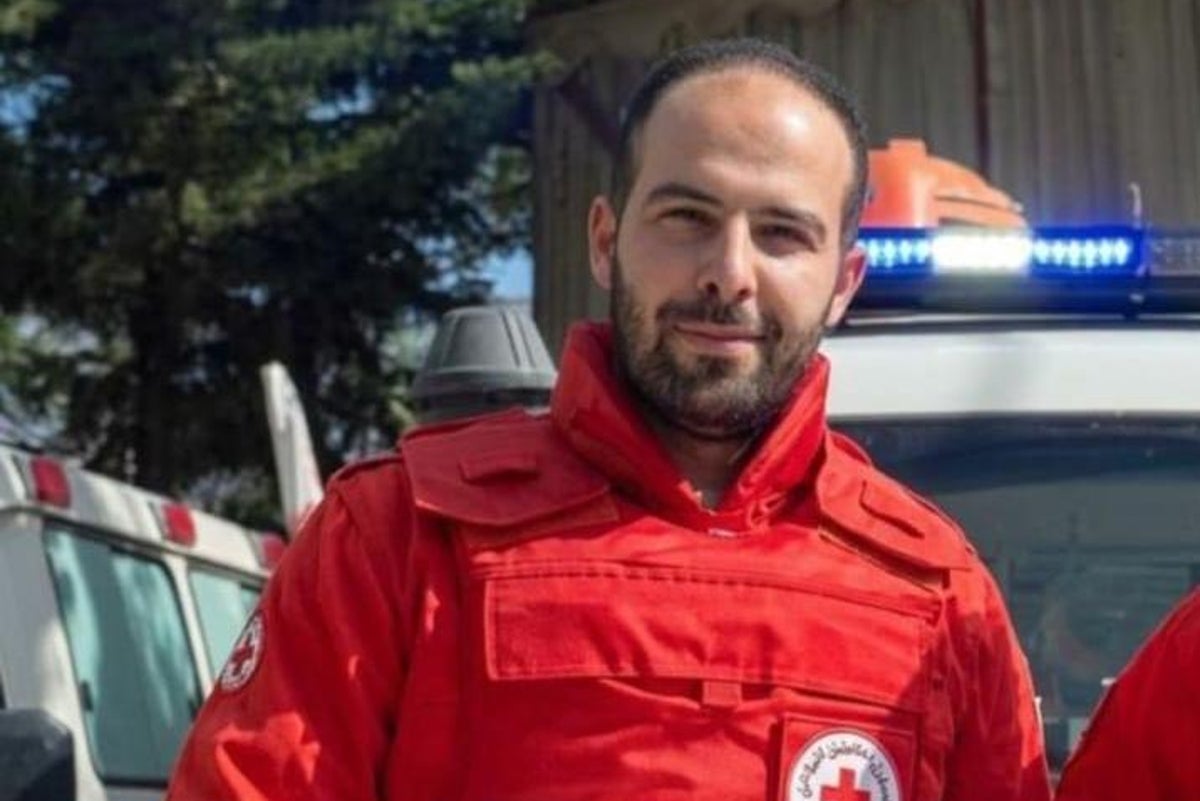
Helping people shouldn't be a death sentence. Yet, in southern Lebanon, putting on a neon vest and jumping into an ambulance has become a gamble with life that most of us couldn't imagine taking. While the world watches headlines about geopolitical shifts and military strategy, the people actually scraping the victims off the pavement are being systematically picked off.
Let's talk about the reality of being a first responder right now. It's not just about the long shifts or the trauma of seeing war up close. It's about the fact that even when you follow every rule in the book—coordinating with the UN, lighting up your vehicle like a Christmas tree, and sticking strictly to civilian rescue—you're still a target.
The Myth of Protected Status
The Geneva Convention is supposed to make medical workers off-limits. In theory, that red cross or red crescent on an ambulance acts as a shield. In reality? It's often just a bullseye. Recently, the Lebanese Red Cross lost one of its own, Youssef Assaf, a volunteer who didn't have to be there but chose to be. He was hit during a rescue mission in Majdal Zoun. He wasn't a fighter. He wasn't carrying weapons. He was a 35-year-old guy who loved basketball and his four-year-old son.
Assaf's death isn't an isolated "oops" moment. It’s part of a terrifying pattern. Since the escalation in early 2024, the numbers are staggering. We aren't just talking about a few accidents. We’re looking at dozens of strikes specifically hitting ambulances and medical centers. According to Lebanon’s Health Ministry, over 200 health and rescue workers were killed by late 2024. In a single month, March 2026, the toll spiked again with 38 healthcare workers killed in just a few weeks.
The Israeli military usually claims these sites are being "misused" by Hezbollah. But when you see a Red Cross ambulance—coordinated through the UN and the Lebanese Army—get hit by a drone, that excuse starts to feel pretty thin. Organizations like Human Rights Watch have already flagged these as apparent war crimes. If you’re a paramedic in Tyre or Nabatieh, you’re basically operating in a "no red lines" zone.
Life Inside the Siren
Imagine the mental state of these volunteers. Every time the radio chirps with a coordinate, they know they might be heading into a "double-tap" strike. That’s when a site is bombed, and then, once the rescuers arrive to pull people out of the rubble, it’s bombed again. It’s a tactic designed to maximize casualties and terrify the people trying to help.
Rescuers like Hassan Bedawi, killed more recently in Beit Yahoun, operate under a constant state of high-alert anxiety. They aren't just worried about the bombs; they’re worried about the silence from the international community. When a Red Cross worker is killed, there’s a brief flutter of "outrage" on social media, a few sternly worded letters from the UN, and then... nothing. The drones keep buzzing, and the ambulances keep burning.
Why This Matters to You
You might think this is just another tragic story from a corner of the world that's always in the news. But it's deeper than that. When medical workers are targeted with impunity, the entire framework of international law collapses. If a paramedic isn't safe, nobody is.
It’s easy to get desensitized to the "death toll" numbers. They start to feel like sports scores after a while. But each of those "units" is a person like Youssef Assaf, who had a wife waiting for him to come home and a kid who still asks when Dad is coming back from work.
Honestly, the bravery required to keep driving those ambulances is't something you can teach. It’s a level of grit that comes from a desperate need to maintain some shred of humanity while everything else is falling apart.
What Actually Needs to Happen
We can stop with the "thoughts and prayers" at this point. They aren't working. If we actually want to protect these people, there needs to be real accountability.
- Independent Investigations: Stop letting the perpetrators "investigate" themselves. We need third-party forensics on every strike hitting a marked medical vehicle.
- Consequences for Coordination Failures: If an ambulance coordinates its path through UNIFIL and still gets hit, the chain of command responsible for that strike needs to face more than just a "complaint."
- Direct Support for Families: Most of these rescuers are volunteers. When they die, their families are left with nothing. Supporting the Lebanese Red Cross directly ensures that the people left behind aren't just forgotten statistics.
Don't just read this and move on. Check out the work the Lebanese Red Cross is doing. They’re the ones on the ground when everyone else is running away. If you want to help, give to the people who are actually doing the work, not just talking about it. The next time you see a headline about a "paramedic killed," remember that it wasn't an accident. It was a choice.