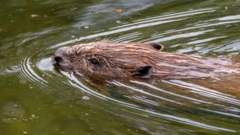
Bureaucracy is the primary predator of the British countryside. While civil servants in suits spend five years debating the "environmental impact" of a rodent that has existed for millions of years, the land is washing away. The "illegal release" of beavers isn't a crime against nature. It is a necessary intervention against institutional paralysis.
The media loves the word "illegal." It implies chaos. It suggests a bunch of hooded radicals throwing animals out of the back of a transit van into pristine streams. The reality is far more clinical, far more effective, and frankly, far more scientific than the government-led trials that take a decade to prove what we already know. The "lazy consensus" says we must wait for permission. I say permission is a luxury the British ecosystem can no longer afford.
The Myth of the Controlled Trial
For years, the official stance on beaver reintroduction has been one of "cautious observation." We have seen it in Devon, we’ve seen it in Scotland. We build enclosures. We tag every ear. We monitor every twig. We treat $Castor : fiber$ like a hazardous chemical leak rather than a keystone species.
This caution is a mask for cowardice. I have sat in rooms with "stakeholders" where the primary concern isn't biodiversity—it's paperwork. They worry about the insurance liability of a flooded footpath. They fret over the precise legal definition of "wild" versus "feral." Meanwhile, our rivers are biologically dead, choked with agricultural runoff and stripped of the complexity required to sustain life.
The illegal releases—or "guerilla rewilding"—bypass the red tape. They recognize a fundamental truth: nature does not need a permit to function.
Hydrology 101 for the Paper Pushers
The opposition usually cites flooding as the primary concern. Farmers fear their fields will become swamps. Let's dismantle that with basic physics.
A straightened, dredged river—the kind humans love—acts like a high-speed drain. When it rains, water rushes downstream at maximum velocity, hitting the nearest town with the force of a hammer. This is how you get catastrophic flooding in places like Hebden Bridge or Shrewsbury.
A beaver dam is a natural shock absorber. It creates a "leaky" system. Using the Darcy-Weisbach equation as a conceptual framework, we can see that increasing the "roughness" of the channel bed through woody debris and damming reduces the flow velocity.
$$h_f = f \cdot \frac{L}{D} \cdot \frac{v^2}{2g}$$
By reducing $v$ (velocity), you reduce the kinetic energy of the water. You don't "stop" the water; you store it in the headwaters. You trade a sudden, violent surge for a slow, managed release. The "illegal" beavers are doing for free what the Environment Agency spends millions of pounds failing to achieve with concrete and steel.
The Carbon Sequestration Lie
The current obsession with "tree planting" is often a distraction. You can plant a billion saplings, but if the soil is dry and the water table is low, those trees are just future kindling.
Beaver wetlands are carbon sinks that outperform dry forests by a massive margin. The anaerobic conditions in the silt behind a dam prevent organic matter from breaking down and releasing $CO_2$ and $CH_4$ back into the atmosphere. When someone releases a pair of beavers into a drainage ditch, they aren't just "letting an animal go." They are activating a carbon-capture technology that doesn't require a Silicon Valley pitch deck or a government subsidy.
I’ve seen "official" projects spend £200,000 on feasibility studies for a single site. A pair of beavers costs almost nothing. The ROI on a "rogue" release is mathematically superior to any government grant scheme in existence.
Why "Consultation" is a Scam
The competitor article focuses on the lack of "stakeholder engagement." This is code for "giving everyone a veto."
If you ask a landowner if they want beavers on their property, they will say no. Not because they hate nature, but because they fear the unknown. They fear a loss of control. But the ecosystem isn't a factory floor. It shouldn't be controlled.
The "illegal" approach works because it creates a fait accompli. Once the beavers are there, once the dams are built, and once the kingfishers, dragonflies, and otters return, it becomes politically impossible to remove them. The public loves the results; they just hate the process. Guerilla rewilders understand that it is easier to ask for forgiveness than for permission—especially when the results are objectively better for the planet.
Addressing the "Disease" Scaremongering
One of the favorite weapons of the anti-beaver lobby is the fear of Echinococcus multilocularis (a type of tapeworm). They claim that illegal releases risk the health of the British public.
This is a classic "red herring" (or perhaps a red beaver). Every animal being released by serious rewilding groups—even the "illegal" ones—is sourced from health-screened stock. These aren't random animals plucked from a dirty canal in Europe. They are often surplus animals from existing, legal enclosures in the UK. The "risk" is a bureaucratic fiction designed to maintain the monopoly on who gets to decide what the countryside looks like.
The Cost of the Status Quo
Let’s look at the "battle scars" of the current system. I’ve seen projects where beavers were kept in enclosures for so long that they lost their natural foraging instincts. I’ve seen millions of pounds wasted on "impact assessments" that simply confirm what 400 years of North American and European ecology have already proven: beavers create life.
While we wait for the Department for Environment, Food & Rural Affairs (DEFRA) to finish its latest round of consultations, we are losing:
- Invertebrate biomass: Decreasing at an alarming rate.
- Soil health: We have roughly 60-100 harvests left in many parts of the UK due to erosion.
- Water quality: Our rivers are essentially open sewers for water companies.
A beaver dam acts as a massive bio-filter. It traps sediment. It breaks down nitrates. It cleans the water for free. To call their release "vandalism" is like calling a firefighter a trespasser because he didn't wait for the homeowner's signature before putting out the fire.
Stop Asking the Wrong Questions
People always ask: "How will we manage them?" or "Who pays for the damage to the trees?"
These are the wrong questions. The right question is: "How much is it costing us not to have them?"
It costs us in flood insurance premiums. It costs us in water treatment bills. It costs us in the psychological toll of living in a "green and pleasant land" that is actually a biological desert of rye-grass and sheep-wrecked hills.
The "illegal" release is a response to a broken system. It is the tactical deployment of a biological solution to a mechanical problem. It is messy. It is confrontational. It ignores the traditional hierarchies of land ownership.
And that is exactly why it is working.
The beavers don't care about the law. They don't care about property lines. They care about depth, flow, and willow. They are the ultimate contrarians, turning "productive" farmland back into the life-sustaining marshes that this island used to be before we decided everything had to be a straight line.
If you find a beaver in your local stream that "isn't supposed to be there," don't call the authorities. Keep your mouth shut and watch the water come back to life. The radicals with the transit vans are doing the work the government is too scared to do.
Let them work.


