Every winter, the Teesta River does something terrifying. It shrinks.
For the millions of farmers in northern Bangladesh who rely on its waters, this is not just a seasonal change; it is a slow-motion catastrophe. Dust replaces current. Silt chokes the channels. Crops wither under a pale sun. Then, during the monsoon, the opposite happens. The river transforms into a churning monster, bursting its banks, swallowing entire villages, and leaving thousands homeless overnight.
Water is life, but the Teesta has become an unpredictable, volatile master.
For decades, Bangladesh has looked across its northern border to India, hoping for a water-sharing treaty that could tame this wild artery. The river originates in the Himalayas, flows through Sikkim and West Bengal, and enters Bangladesh. India controls the upstream flow through a network of dams and barrages. When India needs water for its own fields during the dry season, the flow into Bangladesh slows to a trickle. When the monsoon rains overload Indian reservoirs, the gates open, and Bangladesh drowns.
It is a classic geopolitical deadlock. But recently, a new player walked onto the field, carrying a massive checkbook and a blueprint that changed everything. That player is China.
The Trillion-Taka Lifeline
Dhaka had a plan. Frustrated by years of stalled negotiations with New Delhi, the Bangladeshi government conceived the Teesta River Comprehensive Management and Restoration Project. It is an ambitious, multi-billion-dollar engineering mega-project designed to dredge the riverbed, build massive embankments, stabilize the banks, and construct reservoirs to store water for the dry season.
It promised to turn a seasonal nightmare into a controlled, year-round economic engine.
But projects of this scale require astronomical funding and deep engineering capability. Enter Beijing. China eagerly offered to fund and execute the project, embedding it within its sweeping Belt and Road Initiative. For Bangladesh, it looked like a dream come true—a way to finally secure its water future without waiting for India’s permission.
Then, Bangladesh Prime Minister Sheikh Hasina took a high-stakes trip to New Delhi, followed closely by a visit to Beijing. The diplomatic gears began to grind. India, watching its strategic rival prepare to dig up a river right on its sensitive chicken’s neck corridor—the narrow strip of land connecting Northeast India to the rest of the country—panicked. New Delhi suddenly countered with its own offer to fund and manage the Teesta project.
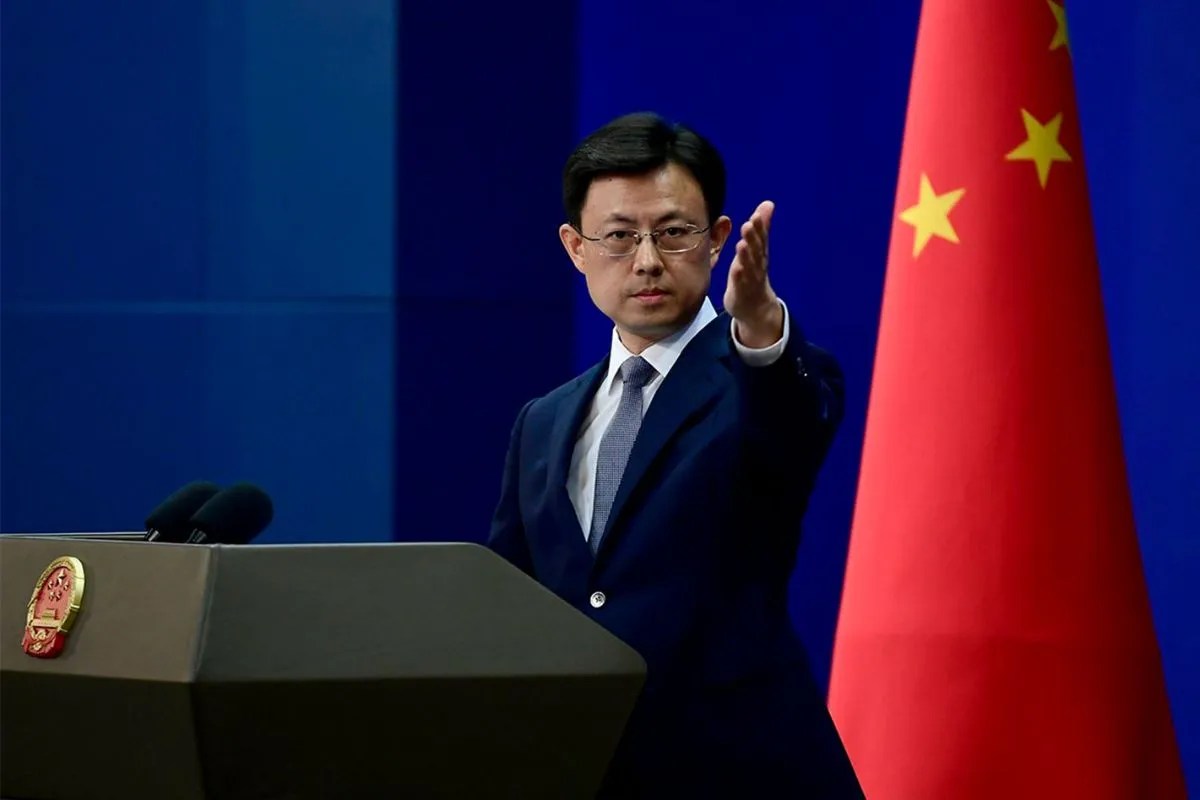
The tug-of-war reached a fever pitch when Beijing broke its silence. The Chinese Foreign Ministry issued a sharp, public statement, noting that while they respect Bangladesh's sovereignty and decisions, they stand fully ready to execute the Teesta project whenever Dhaka gives the green light.
The subtext was deafening. China was telling India: We are at the gates, and we are waiting.
The Invisible Stakes on the Riverbank
To understand why this matters, you have to leave the air-conditioned diplomatic offices of New Delhi and Beijing and stand on the muddy banks of the Teesta in Lalmonirhat, Bangladesh.
Consider a farmer named Mofizul. He is a hypothetical face for a very real crisis. Mofizul does not understand the nuances of the Belt and Road Initiative. He does not track the military movements in India's Siliguri Corridor. What Mofizul understands is the sound of cracking earth under his boots in January. He understands the panic of seeing his small patch of rice paddy turn yellow because the local canal has run dry.
For Mofizul, whoever manages the Teesta controls his children’s breakfast.
If China steps in, they will deploy their state-of-the-art dredging vessels and engineering teams. They will reshape the river. On paper, Mofizul gets his water. But dependency shifts. The hand on the tap changes from an old, familiar neighbor to a distant superpower with a history of creating debt traps in developing nations.
This is the emotional core of the Teesta issue. It is not about diplomatic protocol; it is about survival disguised as infrastructure.
Why New Delhi Is Sweating
India’s anxiety is not paranoia. It is rooted in geography and military strategy.
The Teesta River flows dangerously close to the Siliguri Corridor, a stretch of land just 22 kilometers wide at its narrowest point. If an adversarial power like China gains a permanent footprint in this region under the guise of an engineering project, India's military strategy faces a severe vulnerability.
Imagine Chinese state-owned enterprises operating heavy machinery, building reservoirs, and maintaining a permanent presence of engineers and workers just kilometers from India’s most sensitive border. The line between civilian infrastructure and military intelligence is famously thin in Beijing’s strategic playbook.
There is also the data problem. Managing a river means controlling its hydrological data—flow rates, silt levels, seasonal variances. In the modern era, data is weaponry. If China controls the Teesta's infrastructure, they control the data flowing out of India’s backyard.
But India faces a moral and diplomatic dilemma. For years, New Delhi failed to deliver on a water-sharing treaty due to domestic political opposition from the state of West Bengal. Chief Minister Mamata Banerjee has consistently argued that West Bengal does not have enough water to share during the dry season. India cannot comfortably tell Bangladesh to reject Chinese billions while offering no viable alternative of its own.
The Dangerous Game of Equilibrium
Sheikh Hasina’s diplomatic balancing act has been nothing short of a high-wire performance.
Bangladesh knows it cannot afford to alienate India, its closest neighbor and historical ally. But it also cannot ignore the economic might of China, which can build bridges, deep-sea ports, and river systems faster than anyone else.
During her visits, Hasina played her cards skillfully. She acknowledged India’s security concerns, hinting that Bangladesh would prioritize India's involvement in the Teesta project because it is an upstream neighbor. Yet, by keeping the Chinese offer alive on the table, Dhaka forced India’s hand, compelling New Delhi to finally commit resources to a problem it had ignored for a generation.
But playing two superpowers against each other on a single river is a volatile strategy.
Rivers are living ecosystems, not political boundaries. If a project is executed poorly, or if it becomes a geopolitical battleground, the river suffers. Heavy dredging can alter the water table permanently. Massive concrete embankments can destroy local fisheries.
The true danger is that in the rush to secure geopolitical dominance, the actual health of the Teesta—and the people who live along its banks—might become secondary to the contract signatures.
The Sound of the Current
The diplomatic statements from Beijing will continue to be polished and precise. India will continue to hold high-level security briefings. Bangladesh will continue to weigh its financial options on a delicate scale.
Meanwhile, the water keeps moving.
Tonight, the Teesta flows silently through the dark, crossing borders without a passport, carrying the silt of the mountains down to the bay. It does not care about the Siliguri Corridor, nor does it care about Beijing's master plan. But the people sleeping in the bamboo huts along its edge are listening to the water, wondering if the force that feeds them will tomorrow become the property of a nation thousands of miles away.