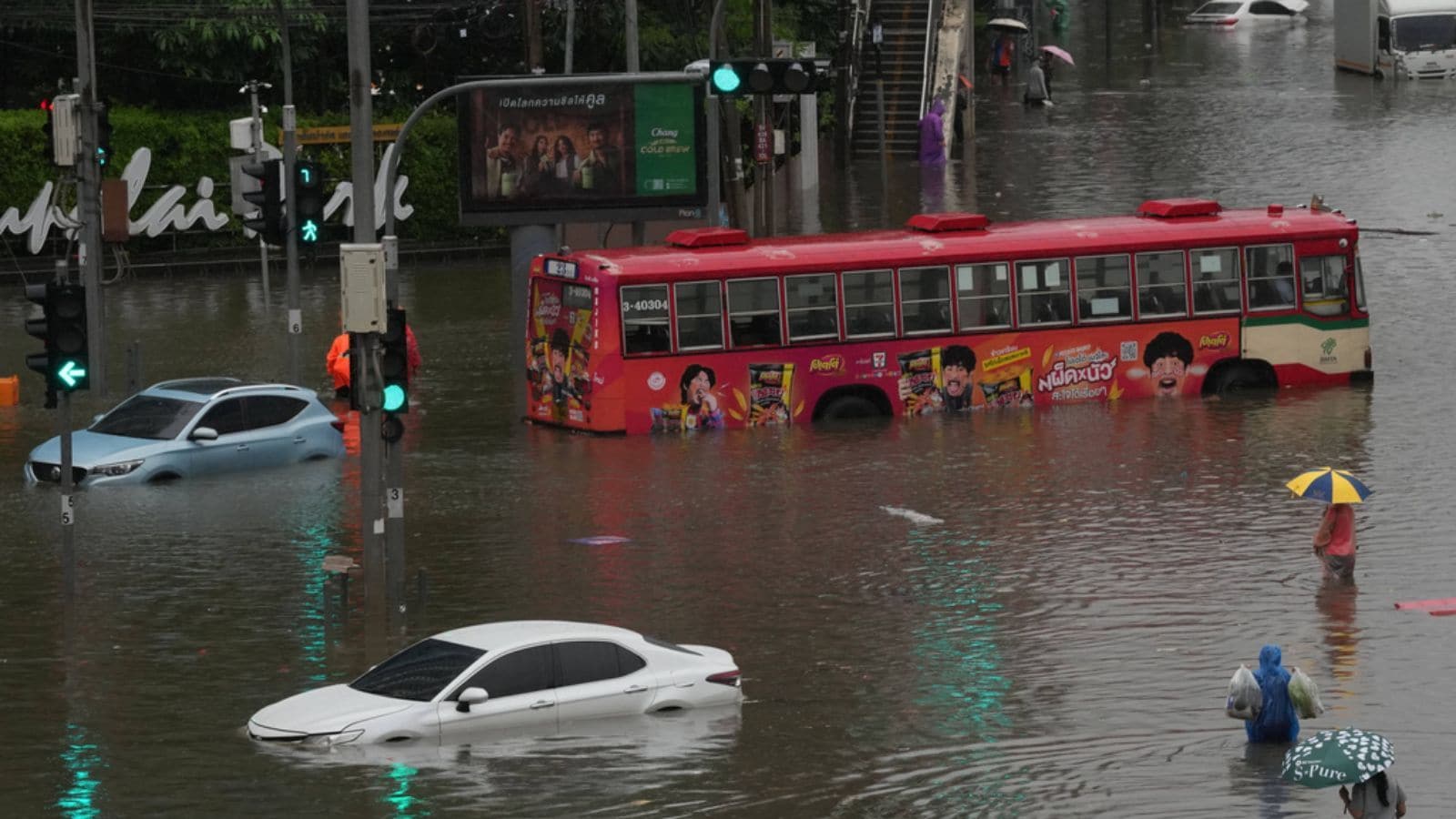
Nearly 300 millimeters of rain dropped on Bangkok in less than two days, turning major thoroughfares into murky rivers and leaving hundreds of vehicles stranded in the middle of intersections. When the sky opens up like that over Thailand's capital, the urban drainage system simply gives up. You see cars half-submerged on avenues like Sukhumvit, drivers standing helplessly on roofs, and commuters wading through waist-high water just to reach higher ground.
If you've ever tried navigating Bangkok during a severe cloudburst, you know it's a completely different city. But why does a metropolis of this scale paralyze so fast?
The Anatomy of a Bangkok Flood
Bangkok sits on a flat, low-lying delta near the Gulf of Thailand, barely a meter or two above sea level. It was practically built to collect water. Decades ago, the city relied on a massive network of natural canals, known locally as khlongs, to drain seasonal runoff into the Chao Phraya River.
As concrete replaced wetlands, those natural arteries got choked. Governor Chadchart Sittipunt pointed out that every single major canal hit max capacity during the recent deluge. When the canals are already full to the brim, heavy rain has nowhere to go. It backs up through the storm drains, bubbling up onto asphalt like an overflowing sink.
The Bangkok Metropolitan Administration declared all 50 districts disaster zones as the crisis deepened. Over 10,000 military personnel rolled in with heavy trucks to assist with rescue operations and clear out garbage clogs at drainage gates.
Surviving the Gridlock and Submerged Streets
Driving through Bangkok floodwaters is a gamble you usually lose. Modern sedans and compact cars stall out the second water creeps past the exhaust pipe or floods the air intake. Once an engine sucks in water, you're looking at a destroyed block and a massive repair bill.
Thousands of motorists learned this the hard way, abandoning vehicles in lanes that quickly turned into lakes. Authorities scrambled to offer free parking in elevated MRT transit lots to encourage drivers to move vehicles before the next tide rolled in, but flash floods move faster than municipal warnings.
Vendors near the city's northern canals reported water rising to their waists within hours. Local businesses spent hours filling sandbags, stacking them two or three high against storefronts just to keep the brown, debris-laden sludge outside.
What Needs to Change
Pumping millions of gallons of water back into an already swollen river is a temporary fix. Experts have argued for years that Bangkok needs massive underground retention tunnels and sponge-city architecture—parks designed to intentionally flood and absorb excess water before it hits residential streets.
Until those infrastructure projects scale up, residents are left dealing with the immediate aftermath. If you live in a low-lying zone or near a major canal, keep an eye on local meteorological updates, move your vehicle to elevated multi-story structures at the first sign of persistent heavy rain, and keep emergency supplies packed. When the next storm hits, you won't have much time to react.


