The chattering classes have found their latest villain, and it wears the face of a gray cooling tower.
While tech executives drink champagne in Washington, a media narrative has solidified: the public is turning on artificial intelligence. The indictment is predictable. Chatbots are a parlor trick. Data centers are ecocidal monsters devouring the power grid. The entire industry is a bubble waiting to pop.
It is a neat, tidy story. It is also entirely wrong.
The current panic over data center energy consumption and the supposed "utility fatigue" of conversational software misses the structural economic shift happening right beneath our feet. We are not witnessing the death of an overhyped trend. We are witnessing the brutal, necessary birthing pains of a new computing architecture.
The critics are measuring tomorrow’s infrastructure with yesterday’s metrics. Here is the reality they refuse to acknowledge.
The Grid Panic is an Infrastructure Skill Issue
Let's address the favorite weapon of the modern Luddite: power consumption.
The media loves to run terrifying charts showing data center energy demands spiking exponentially. They look at Northern Virginia or the Dublin grid and declare an imminent blackout crisis. I have sat in boardrooms with utility executives who are sweating through their custom shirts over these projections.
But this panic relies on a flawed premise: that grid capacity is static and energy efficiency is linear.
Historically, computing power scales far faster than energy consumption. This is driven by Koomey’s law, the lesser-known but equally vital cousin of Moore’s law. The amount of battery power needed for a fixed computational load falls by half roughly every 1.5 years. When the transition from general-purpose CPUs to specialized accelerators (like modern graphics processing units and tensor processing units) occurred, efficiency per watt did not just tick upward—it leapt.
Traditional Compute Architecture (CPU-heavy):
[Grid Power] -> [High Latency Operations] -> [Massive Thermal Waste]

Modern AI Compute Architecture (XPU/Accelerator-heavy):
[Grid Power] -> [Parallelized Matrix Math] -> [High Throughput per Watt]
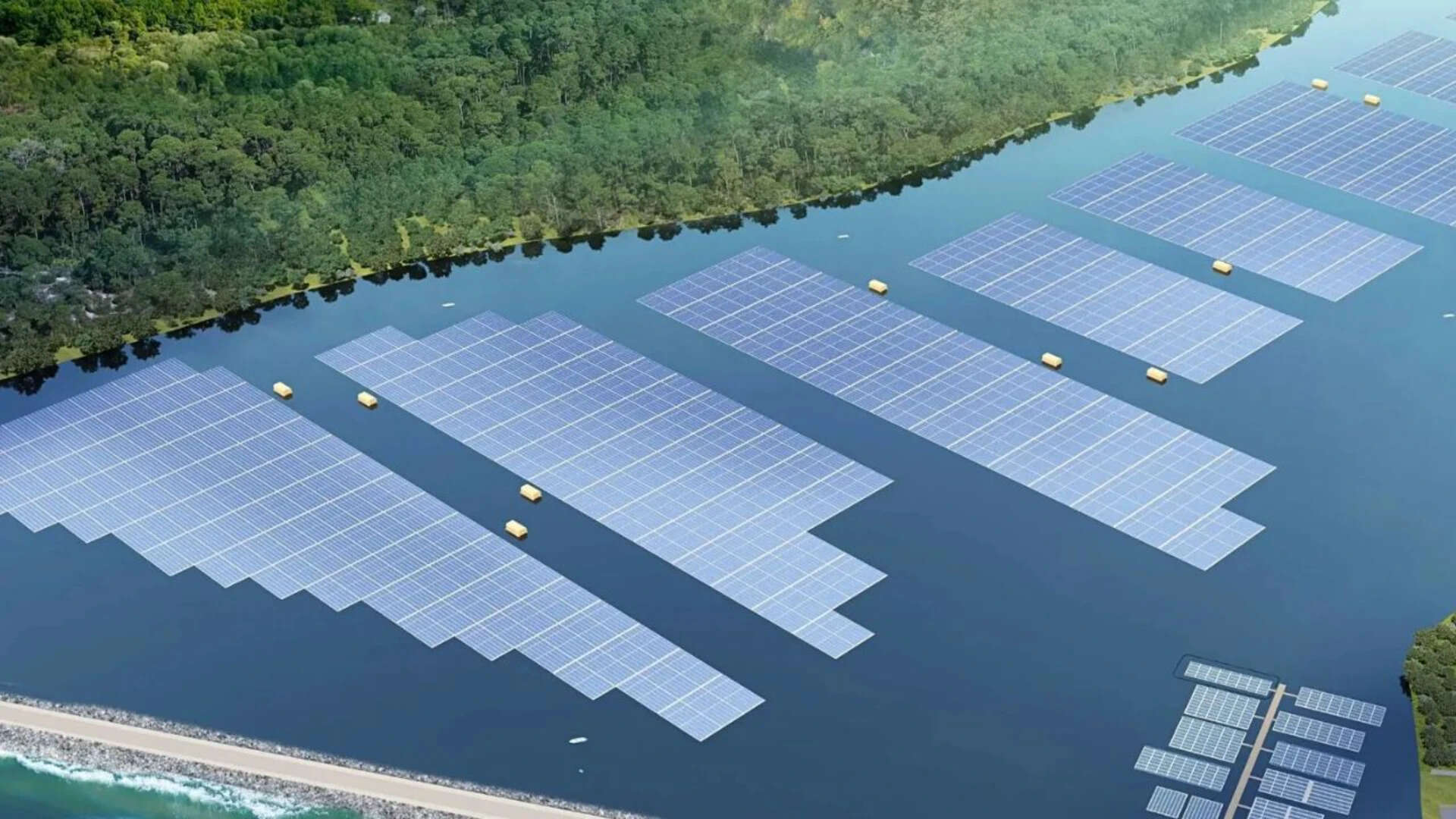
Furthermore, the narrative implies that data centers simply extract wealth from communities while leaving a smoking crater where the local utility used to be. In reality, hyper-scalers are the largest corporate buyers of renewable energy on the planet. They are single-handedly financing the modernization of aging energy grids.
Imagine a scenario where a legacy manufacturing plant shuts down, leaving a town with a dying economy and a stagnant grid. A modern computing facility moves in. Yes, it demands massive baseload power. But it also signs a 20-year power purchase agreement (PPA) that guarantees funding for next-generation nuclear, geothermal, or advanced solar installations.
The problem isn't that tech infrastructure consumes too much juice. The problem is that national energy policy has spent two decades making it impossible to build new transmission lines. The grid isn't failing because of chips; it's failing because of bureaucracy.
The Flawed Premise of Chatbot Fatigue
The second pillar of the current backlash is the claim that the average consumer is "souring" on conversational software. Skeptics point to plateauing monthly active user numbers for consumer apps and declare the revolution dead.
This is a fundamental misunderstanding of product evolution.
The standalone browser chat interface was always a temporary bridge. It was a tech demo masquerading as a product. Judging the long-term viability of this technology by looking at consumer engagement on web-based text boxes is like judging the future of the internet in 1995 by counting how many people visited Yahoo's homepage directory.
The value isn't in asking a box to write a poem about your cat. The value is in systemic automation.
The real transformation is happening in silent, invisible layers. It is the automated reconciliation of multi-million dollar supply chain discrepancies. It is the instantaneous translation of complex medical jargon into clear patient discharge instructions in hospitals. It is the code refactoring pipelines that do three weeks of human labor in ninety seconds.
I’ve watched enterprise software companies quietly strip out the phrase "AI-powered" from their marketing because customers don't want a shiny buzzword anymore—they want a feature that works. The tech is becoming infrastructure. It is disappearing into the background, which is exactly what mature technology is supposed to do.
When technology becomes ubiquitous, it becomes invisible. You don’t celebrate your electricity when you flip a light switch; you only notice it when it goes out.
Dismantling the "People Also Ask" Delusions
If you look at public forums and search trends, the anxieties of the public reveal a deep confusion about how economic value is created. Let’s dismantle the two most prominent assumptions.
Will data centers cause national blackouts?
No. This assumes tech companies are passive consumers waiting for permission to pull power from the wall. The largest players are aggressively decoupling themselves from public utilities. We are seeing tech giants buy land directly adjacent to nuclear power plants. They are investing in small modular reactors (SMRs). They are becoming independent power producers. The data center of 2030 will not be a drain on the public grid; it will likely be an anchor tenant that stabilizes it.
Is generative tech just a capital expenditure bubble?
The bears love to point to the hundreds of billions spent on hardware and ask, "Where is the revenue?" They compare it to the telecom bubble of the late 1990s when thousands of miles of fiber-optic cable were laid and went dark.
But they forget one crucial detail: that "useless" dark fiber is what made the modern high-speed internet economy possible a decade later. Even if there is a short-term correction in hardware spending, the physical capacity being built right now is an unprecedented economic asset. The compute capital expenditure of today is the foundational infrastructure of the next fifty years of human productivity.
The Downside of the Hard Truth
To be absolutely fair, this aggressive transition has a dark side that the techno-optimists in Washington like to ignore during their gala dinners.
The capital intensity of this new era is create a terrifyingly small oligopoly. The barrier to entry to build a competitive, world-class computing cluster is no longer a few million dollars raised in a Silicon Valley garage. It is tens of billions of dollars, sovereign-wealth-fund backing, and direct pipelines to energy monopolies.
We are moving away from the democratized internet of the 2000s and into a neo-industrial era where compute is treated like steel or oil. The companies that control the infrastructure will hold unprecedented leverage over global commerce.
That is a legitimate crisis of centralization. But it is a completely different crisis than the one the mainstream media is crying about. They are whining about chatbots being annoying; they should be looking at who owns the physical foundations of global thought.
Stop Looking at the Interface
The public isn't souring on the technology; they are souring on the hype cycle. And frankly, who can blame them? The marketing departments of the tech world promised a utopian future where nobody has to work and every problem vanishes. Instead, people got targeted ads, weird hallucinated recipes, and higher utility bills in their counties.
But do not confuse bad PR with bad fundamentals.
The transition from traditional, step-by-step programming to probabilistic, neural computation is the most significant shift in human capability since the printing press. It requires an industrial footprint. It requires concrete, copper, silicon, and massive amounts of electricity.
If you are waiting for the data centers to empty out and the chatbots to go away, you are going to be waiting a very long time. The physical world is adjusting to the digital reality, not the other way around.
Stop looking at the chat window. Look at the substations. The future is being built out of concrete and steel, and it doesn't care about your fatigue.