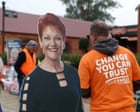
The traditional two-party system in Australia didn't just crack this week. It completely shattered.
If you thought federal politics was a predictable, boring race between Labor and the Coalition, a devastating new Redbridge Group/Accent Research poll just blew that assumption to pieces. Pauline Hanson's One Nation has surged to 31% in the primary vote, leapfrogging Anthony Albanese's Labor party at 28%. The Coalition has plummeted to a distant third at a miserable 20%.
Let that sink in. A minor protest party is now theoretically the most popular political force in the country.
It’s an absolute disaster for the major parties, and honestly, they brought it on themselves. Voters are completely fed up, and this poll is a massive, flashing warning sign that the status quo is dead.
The Budget Backfire
Prime Minister Anthony Albanese staked his political survival on the May 12 federal budget, hoping some cost-of-living relief would fix his sliding numbers. It didn't work. Instead, it did the exact opposite.
Voters didn't buy what Labor was selling. The Redbridge data shows a staggering 63% of Australians believe the country is heading in the wrong direction. People are drowning in high grocery bills, skyrocketing rents, and mortgage stress. Throwing complex tax tweaks at a structural economic crisis felt out of touch to ordinary people.
The recent DemosAU poll numbers back this up, with 43% of Australians rating the budget as flat-out bad, compared to just 23% who viewed it favorably. Labor's major changes, like tinkering with negative gearing for new home purchases and slashing the capital gains tax discount, completely failed to win over the public. A majority of everyday Australians felt those adjustments would just make their lives harder.
When people feel trapped, they look for an escape hatch. Right now, that hatch is Pauline Hanson.
Ditching the Canberra Playbook
Appearing on Seven's Sunrise, high-profile One Nation MP Barnaby Joyce didn't mince words about what the party would do if they actually held the reins of power. He stated plainly that One Nation would scrap the federal climate change department and dump most of Labor's current budget.
It’s aggressive, direct, and exactly what frustrated voters want to hear. Joyce called the poll results an "incredible honour" but warned against hubris, noting that it's an indicator of a massive shift in the public mood rather than a final election outcome.
Senior Labor Minister Tanya Plibersek quickly hit back on the same program, using the standard major-party playbook by claiming One Nation offers a "long list of complaints and no solutions."
Usually, that critique sticks. This time, it isn't. When 63% of the country thinks the system is broken, a party that validates their anger is incredibly attractive, even if their policy book is thin.
The Coalition Is Invisible
The most shocking part of this political realignment isn't just Labor's fall. It’s the utter collapse of the Liberal-National Coalition. Sitting at 20% primary support means the official Opposition has essentially become a spectator in Australian politics.
New Liberal Party President Tony Abbott tried to steady the ship on the Today Show, refusing to criticize Hanson directly while insisting a strong Coalition is the only way to deliver good government. But the numbers tell a different story. Conservative and working-class voters who used to default to the Coalition are fleeing to One Nation in droves.
Look at the personal popularity contest. No major leader has a positive net rating, but the trend lines are brutal for the establishment:
- Anthony Albanese sits at a grim minus 19 net favorability.
- Liberal Leader Angus Taylor is at minus 4.
- Pauline Hanson sits at a clean zero net favorability, outperforming them both.
Albanese still leads as preferred Prime Minister at 31%, but Hanson is hot on his heels at 25%. Angus Taylor is left in the dust at 14%.
What Happens From Here
Don't expect the major parties to wake up overnight, but the strategy has to change if they want to survive. If you want to understand where this chaotic political climate goes next, watch these key pressure points.
First, watch how Labor handles the pressure on housing and immigration. The budget failed because it didn't offer immediate relief to renters and first-home buyers. If the government keeps defending their long-term plans while people suffer right now, their primary vote will keep sliding toward the mid-twenties.
Second, see if the Coalition tries to out-populist One Nation. They are losing their base. To get them back, the Liberals will likely have to pivot hard right on cultural and economic issues, effectively reading from Hanson's script.
The era of predictable majority governments in Australia is likely over. We are staring down the barrel of a highly fractured, chaotic hung parliament where minor parties dictate the future of the nation. It's time to get used to the new reality.