The air in Jakarta tasted like powdered glass.
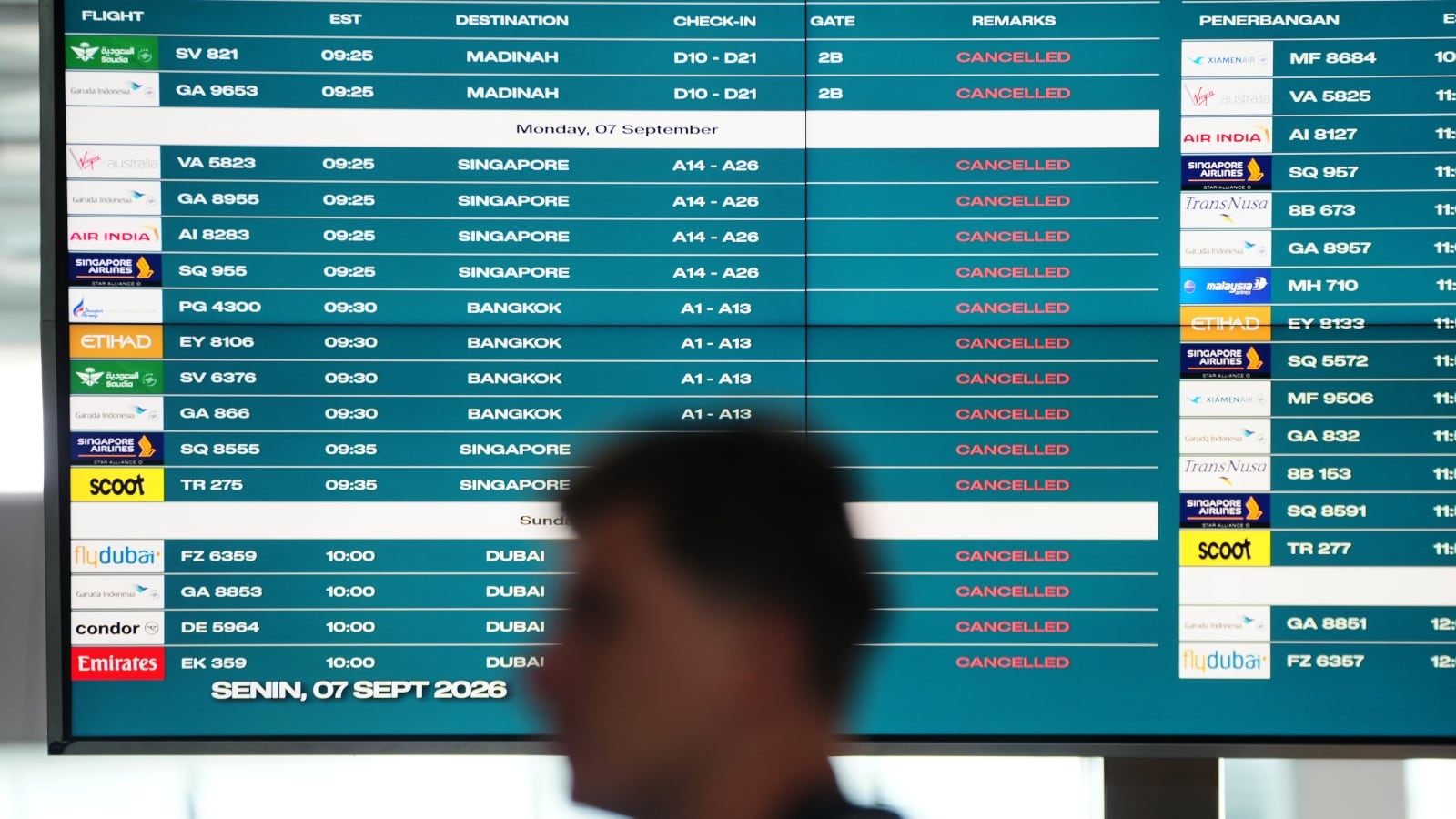
Outside the floor-to-ceiling windows of Terminal 3, the morning sun did not shine; it bruised. It hung in the troposphere as a dull, copper coin, filtered through a veil of microscopic grit that had drifted across the Sunda Strait. On the departure boards, rows of glowing amber letters blinked an unforgiving message that every seasoned traveler dreads: Delayed. Cancelled. Suspended. If you found value in this article, you might want to read: this related article.
For forty-eight hours, the archipelago’s busiest aviation arteries had suffered a silent, heavy stroke. Anak Krakatau, the volcanic child of the legendary 1883 cataclysm, had stirred in its sleep. It roared, it vomited tons of ash into the jet streams, and in doing an ancient geological dance, it brought modern human mobility to a grinding, silent halt.
We forget how fragile the modern bridge actually is. We buy a ticket, slide our boarding pass across a glass scanner, and trust in the invisible clockwork of global aviation. We assume that the sky is a permanent highway, infinitely wide and eternally open. But nature remains an uninvited guest at our technological banquet. When Anak Krakatau exhaled, it reminded millions of people that humanity does not conquer the planet; we merely rent space on it while it isn't paying attention. For another look on this development, refer to the latest update from National Geographic Travel.
Consider Maya. She is a hypothetical software consultant based in Singapore, though her anxiety that Tuesday morning was entirely real and shared by thousands. Her laptop bag rested heavily against her knees as she sat on a sticky plastic terminal chair, her phone glowing with the fourteenth notification from her airline. She was supposed to be in Jakarta for a merger closing that would dictate the next three years of her professional life. Instead, she was staring at a cup of lukewarm airport coffee, watching the ash settle on the tarmac outside like gray snow in the tropics.
Her panic wasn't unique. It was multiplied by thirty thousand.
When a volcano erupts near a mega-city of ten million souls, the immediate danger is physical—falling debris, toxic sulfur dioxide, and respiratory collapse. But the secondary shockwave is logistical. Jet engines do not negotiate with volcanic ash. Unlike ordinary dust, volcanic ash is pulverized rock, glass, and crystal. Ingested into a turbine screaming at thousands of revolutions per minute, it melts instantly in the combustion chamber, turns into molten glass, and coats the turbine blades. The engine chokes, gasps, and dies.
Aviation authorities do not guess with these stakes. When the Volcanic Ash Advisory Center in Darwin picked up the satellite signatures of Anak Krakatau’s plume drifting northwest toward Java, the decision was binary. Close the airspace. Ground the fleet. Protect the lives overhead by freezing them on the ground.
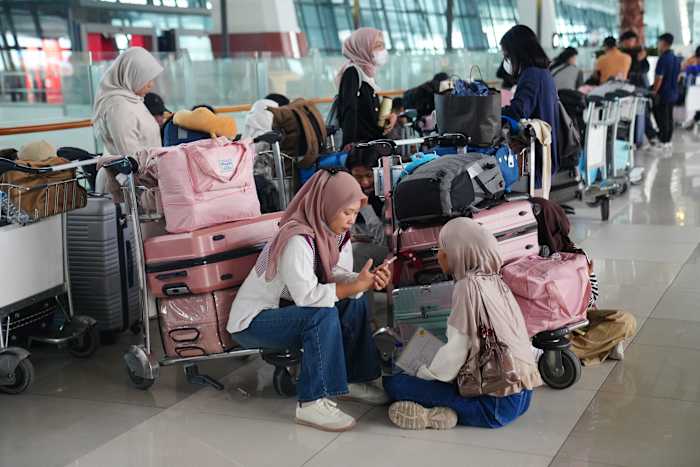
For two days, Soekarno-Hatta International Airport became a sprawling, silent city of stranded souls. Suitcases became makeshift ottomans. Floor space near power outlets turned into coveted real estate. Families traveling for weddings, businessmen chasing contracts, and backpackers heading toward the beaches of Bali found themselves united in a strange, exhausting limbo. There is a specific kind of fatigue that comes from waiting for a mountain to stop breathing. You cannot reason with it. You cannot tweet at it. You cannot demand a manager. You simply wait, staring at the horizon, wondering when the sky will clear.
And then, quietly, the wind shifted.
Satellites tracked the plume thinning out. Engineers from multiple carriers ran test flights through the upper corridors, sweeping their fingers across diagnostic screens to check for residual particulate matter. The numbers cleared. The threshold of safety was crossed.
On the third morning, the departure boards flickered. The amber letters shifted from cancellation to boarding.
Maya stood up, her lower back aching, and zipped her laptop case. As her flight climbed out over the Java Sea, banking sharply away from the brooding silhouette of the strait, the view through the cabin window told a story of resilience. Down below, the dark waters shimmered under a healing sun. The ash had settled into the ocean floor, feeding the microscopic life of the deep, while overhead, the human highway was open once more.
We returned to our seats, adjusted our seatbelts, and pretended for a moment that we are entirely in control. But somewhere down there, beneath the blue waves, the child of Krakatau is still breathing.