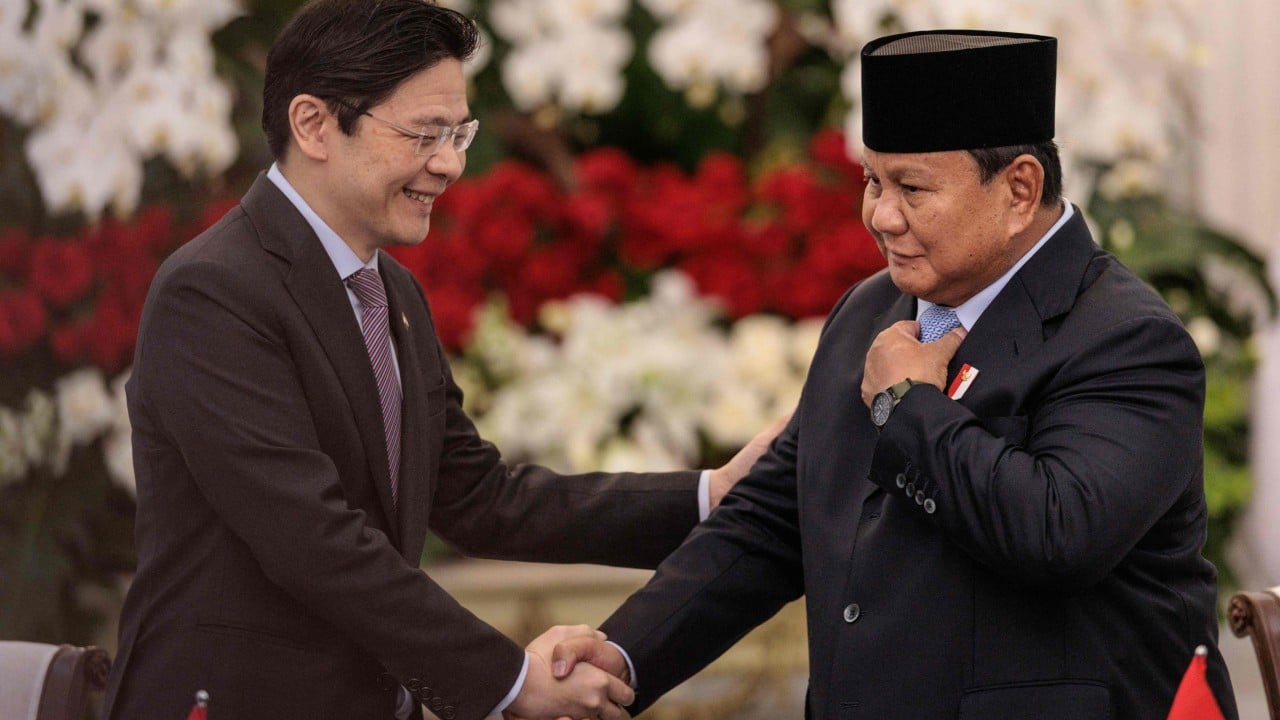
The energy sector loves a grand narrative, and right now, the favorite fairy tale in Southeast Asia is the cross-border green electricity boom. Commentators look at Singapore’s recent conditional approvals for 2 gigawatts of electricity imports from Indonesia and see the dawn of an interconnected regional super-grid. They claim this bilateral deal will kick-start the long-delayed ASEAN Power Grid (APG).
They are dead wrong.
What is being hailed as a historic catalyst is actually a highly localized, hyper-premium commercial transaction. It is not a blueprint for regional cooperation; it is an expensive workaround for a wealthy island city-state with zero land for solar panels. Believing that a bespoke subsea cable between the Riau Islands and Singapore will magically resolve the geopolitical, technical, and protectionist roadblocks of a ten-nation grid is not just optimistic. It is financially irresponsible.
The mainstream analysis misses the core mechanics of how energy infrastructure actually gets built, funded, and protected.
The Sovereignty Trap: Why Nations Do Not Share Electrons
The fundamental flaw in the regional grid fantasy is political, not technical. Energy security is national security. The moment a country relies on an international cable for its baseload power, it yields a portion of its sovereignty to its neighbors.
The ASEAN region operates on a strict principle of non-interference. This political framework is excellent for diplomacy, but it is fatal for a unified power grid. A regional grid requires a centralized regulatory body with the teeth to enforce transmission rules, settle pricing disputes, and dictate dispatch schedules. Southeast Asia has no such authority.
Look at the actual behavior of the players involved, rather than their press releases.
- Indonesia's Domestic Priorities: Jakarta did not sign off on exporting green energy to Singapore out of regional altruism. They did it after securing massive concessions, including requirements for local manufacturing of solar modules and batteries. Indonesia's primary goal is building its own domestic supply chain and powering its own industrial centers, like the Morowali Industrial Park. Exporting power is a secondary side-hustle.
- The Resource Nationalism Precedent: In 2022, Indonesia abruptly banned coal exports to protect domestic supply. In 2023, Malaysia restricted renewable energy exports before partially lifting the ban under strict conditions. When push comes to shove, domestic voters and local factories will always get the electrons first.
I have watched state-owned utilities across this region negotiate for decades. They do not trust each other. A utility executive in Jakarta or Kuala Lumpur is not going to risk a blackout in their capital city to keep the air conditioning running in a Singaporean data center during a regional supply crunch.
The Physical Reality of Transmission Loss and Curtailed Solar
The second myth to dismantle is that building thousands of kilometers of High-Voltage Direct Current (HVDC) cables is a simple matter of writing a big enough check.
The proposed routes for an ASEAN-wide grid require crossing deep marine trenches, navigating contested waters in the South China Sea, and traversing seismically active zones. The engineering challenges are staggering, but the economic math of transmission loss is worse.
Consider the physics. Even with advanced $\pm 500 \text{ kV}$ HVDC lines, you lose roughly 3% to 4% of your power per 1,000 kilometers traveled, plus converter station losses at each end. When you are transmitting intermittent solar energy—which already operates at a low capacity factor of 15% to 20% in this cloud-heavy equatorial region—the economics degrade rapidly.
[Intermittent Solar Source] ➔ [Converter Station (Loss)] ➔ [1,000km Subsea Cable (3-4% Loss)] ➔ [Grid Delivery]
To deliver a guaranteed, stable megawatt-hour of clean power to an import hub, you have to overbuild the generation asset and the battery storage system at the source to a absurd degree.
Who pays for that premium? Singapore can afford it because its retail electricity prices are among the highest in the region, driven by a wealthy economy and a desperate need to meet corporate net-zero targets. The rest of Southeast Asia cannot. Vietnam, Thailand, and the Philippines are wrestling with affordable access. They need cheap, reliable electron delivery to fuel manufacturing. They cannot subsidize the massive capital expenditure required for subsea HVDC infrastructure that benefits external buyers.
The False Promise of the LTMS Project
Optimists always point to the Laos-Thailand-Malaysia-Singapore (LTMS) Power Integration Project as proof of concept. They note that Laos successfully transmitted power down the peninsula to Singapore as a sign that multilateral trading works.
Let's look closer at the reality of the LTMS project. It was a 100-megawatt trial. In the world of utility-scale power grids, 100 megawatts is a rounding error. It represents less than 1% of Singapore’s peak demand.
Furthermore, that project utilized existing, under-allocated overland transmission lines. It did not require laying new subsea cables or building massive converter stations. Expanding that model to gigawatt-scale commerce requires entirely new infrastructure that none of the transit countries are willing to fund. Why should Malaysia allow its land to be used for massive transmission lines to feed Singapore’s tech sector without extracting a toll that destroys the economic viability of the entire trade?
The LTMS project did not prove a regional market exists. It proved that a tiny amount of excess hydropower could be routed through legacy infrastructure under highly specific, heavily negotiated political conditions. It is an exception, not a rule.
Stop Chasing the Grid: The Micro-Grid Alternative
The obsession with a unified regional grid is actively harming Southeast Asia’s energy transition. It diverts capital, intellectual bandwidth, and political will away from solutions that actually work.
Instead of burning billions trying to connect Jakarta to Bangkok, the region must pivot toward decentralized, domestic infrastructure.
Decentralized Micro-Grids over Macro-Grids
The archipelago geography of Indonesia and the Philippines is fundamentally hostile to a centralized grid. The cost of connecting hundreds of isolated islands via subsea cables is prohibitive. The smarter play is investing in regional micro-grids paired with localized energy storage. Keeping generation close to consumption eliminates transmission risk and bypasses cross-border geopolitical friction entirely.
Industrial Co-location
If Singapore wants clean energy, the solution is not to build a 250-kilometer subsea cable to import it. The solution is for energy-intensive industries—like AI data centers and semiconductor fabrication plants—to move to where the green energy is natively generated. We are already seeing the beginning of this. Data center operators are quietly shifting their expansion plans from Singapore to Batam and Johor. This is the natural economic correction. You do not move the power to the data; you move the data to the power.
The downside to this contrarian approach is obvious: it forces a painful economic restructuring for centralized hubs like Singapore, which lose out on direct tax revenues and infrastructure dominance. But it is the only path rooted in geographical and economic reality.
The Brutal Math of Capital Allocation
Global infrastructure funds have finite capital. They look at risk-adjusted returns.
A cross-border energy project in ASEAN requires navigating the regulatory approvals of multiple sovereign governments, clearing environmental hurdles in multiple jurisdictions, and betting on long-term currency stability across volatile emerging markets. The risk premium is massive.
If an infrastructure fund has $5 billion to deploy, they will not risk it on a bureaucratic quagmire of a multi-nation subsea cable. They will put it into a domestic solar-plus-storage project in Vietnam or a targeted grid upgrade in West Malaysia where the regulatory pathway is clear, the buyer is a single state-backed utility, and the political risk is contained within one border.
The Singapore-Indonesia deal is a unicorn. It works because Singapore is desperate enough to sign long-term, high-priced Power Purchase Agreements (PPAs) that de-risk the project for Indonesian developers. Do not mistake a specialized luxury purchase for a systemic shift.
The ASEAN Power Grid as a grand, interconnected network is a dead idea walking. The future of Southeast Asian energy is fragmented, fiercely nationalistic, and hyper-local. The sooner developers and policymakers accept this, the sooner they can stop chasing a mirage and start building infrastructure that actually turns the lights on.