NASA is selling you a wardrobe change when they should be selling you a vacuum-hardened robot.
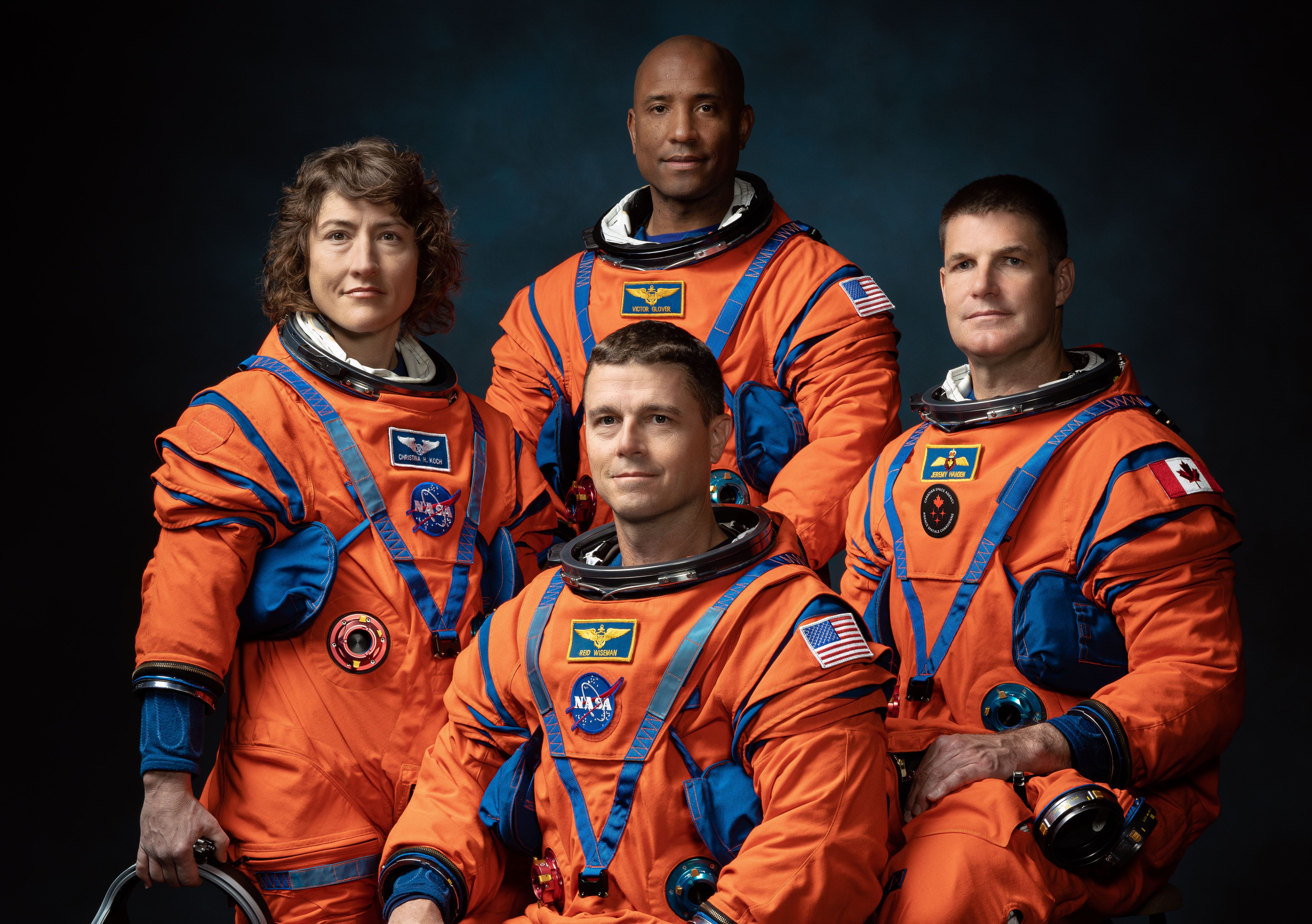
The media coverage surrounding the Axiom Extravehicular Mobility Unit (AxEMU) has been nothing short of a PR masterclass. We see glossy photos of sleek, dark-clad astronauts posing in "next-gen" fabrics. We hear about "increased mobility" and "gender-neutral sizing." It is a narrative built on the comfort of the familiar—the idea that to go to the Moon, we just need a slightly better version of the puffy white suits we used in 1969. You might also find this similar article useful: Newark Students Are Learning to Drive the AI Revolution Before They Can Even Drive a Car.
It is a lie. A multi-million dollar, taxpayer-funded lie that ignores fifty years of materials science and robotic advancement in favor of nostalgia.
The Myth of Mobility
The current industry consensus is that the AxEMU represents a "giant leap" in joint articulation. Journalists swoon over videos of testers doing squats in a lab. They miss the fundamental physics of a pressurized vessel. As discussed in detailed reports by ZDNet, the implications are widespread.
A spacesuit is not clothes. It is a human-shaped balloon.
When you pressurize a soft suit to roughly 4.3 pounds per square inch (psi) against the vacuum of space, it becomes rigid. Every time an astronaut bends an elbow or a knee, they are fighting the internal pressure of the suit. It is constant, exhausting physical labor.
NASA and Axiom claim the new cable-driven joints and "high-mobility" bearings solve this. They don't. They just move the friction point. I have seen engineers burn through entire budgets trying to shave five percent off the torque required to rotate a shoulder joint. It is a losing battle against thermodynamics.
If we actually cared about mobility, we would have abandoned the soft-suit architecture in the 1970s. We would be talking about Hard Upper Torso (HUT) designs or, better yet, Variable Pressure Suits. Instead, we are stuck with "evolved" Apollo tech because it looks better on a recruitment poster.
The Dust Catastrophe No One Is Talking About
The Artemis mission isn't going to the equatorial plains where the dust was manageable. It is heading to the South Pole.
Lunar regolith isn't sand. It is crushed glass, electrostatically charged by solar radiation. It sticks to everything. It shreds seals. It destroys bearings. During Apollo 17, Gene Cernan’s suit joints became nearly immobile after just a few days of exposure.
The "revolutionary" fabric layers Axiom is touting are still permeable at a microscopic level. By relying on a suit that the astronaut has to climb out of inside the lunar cabin, we are guaranteeing that toxic, abrasive dust will enter the habitat.
The industry is ignoring the only logical solution: the Suitport.
Imagine a scenario where the suit is permanently attached to the outside of the rover. The astronaut climbs in through a hatch in the back. The dusty exterior never enters the clean environment. Why aren't we doing this? Because it doesn't fit the "heroic astronaut walking down a ladder" imagery that Congress wants to see. We are sacrificing mission safety for a 1960s aesthetic.
The Bio-Waste Reality Check
Let’s talk about the part of the lab tours the cameras always skip: the Maximum Absorbency Garment.
Despite the "cutting-edge" label, the solution for human waste in a 200-million-dollar suit is still, essentially, a high-tech diaper. We are sending "the first woman and the next man" to the Moon with the same waste management technology as a toddler.
Axiom talks about "extended mission durations" of eight hours. Spend eight hours working at peak physical exertion while literally sitting in your own waste. The cognitive decline caused by discomfort and hygiene breakdown is a documented risk. Yet, we see no innovation here. No integrated catheterization, no closed-loop processing. Just more padding and a better fit.
The $228 Million Redundancy
NASA awarded Axiom Space an initial $228 million task order for this suit. That is just the beginning.
While we are obsessing over the stitch count of a glove, the private sector is proving that we don't need humans on the surface for 90% of the planned Artemis tasks. A teleoperated rover with haptic feedback can perform geological sampling with 0% risk to human life and 1/100th of the cost.
We are building the suit to justify the mission, not because the mission requires the suit.
The Failure of "One Size Fits All"
The "inclusive sizing" pitch is the most egregious example of PR overreaching.
In a vacuum, fit is everything. If a suit is too large in the torso, the astronaut "floats" inside it, losing the leverage needed to move the limbs. If it is too small, it creates pressure points that lead to "suit trauma"—bruising, skin abrasions, and fingernail delamination. (Yes, astronauts frequently lose their fingernails because of the pressure in the gloves).
Axiom claims their modular system covers 90% of the population. In reality, modularity creates "dead spots" in the pressure bladder. You cannot optimize a life-support system for a "range" of people without compromising the safety of the individual. We should be 3D-scanning every astronaut and weaving custom, one-off pressure layers. Instead, we are getting the "off-the-rack" version of space exploration.
The Actual Solution: Mechanical Counter-Pressure
If we wanted to disrupt the industry, we would stop using gas to pressurize suits.
We should be using Mechanical Counter-Pressure (MCP). These are suits that use tight, elastic materials to apply direct pressure to the skin, leaving only the head in a pressurized helmet.
- Pros: You can breathe at a different pressure than your body is held at. You have full range of motion because you aren't fighting a balloon. If you get a tear in your sleeve, you don't explode; you just get a bruise.
- Cons: They are incredibly difficult to put on.
The industry "experts" at NASA dismissed MCP decades ago because it was "too hard to don and doff." So, instead of solving a zipper problem, we decided to keep building 300-pound gas bags that are a nightmare to move in. It is a classic case of the "not invented here" syndrome.
Stop Asking If The Suit Works
The question isn't whether the AxEMU can survive a lunar stroll. It can. It’s a well-engineered piece of legacy technology.
The real question is: Why are we spending a quarter-billion dollars to iterate on a flawed 50-year-old concept?
We are trapped in a loop of "safe" innovation. We choose the soft suit because we know how to build it. We choose the diaper because we’re embarrassed to talk about biology. We choose the ladder because the photos look good.
Artemis is supposed to be about the future, but as long as we are dressing our astronauts in glorified Apollo replicas, we are just LARPing the past at a much higher price point.
The suit isn't a tool. It's a tether. Until we cut it and move toward haptic robotics or MCP, we aren't "conquering" the Moon. We’re just visiting it in very expensive pajamas.